Kata
Kata are the formal sequences at the heart of Kyokushin. Every movement is set out below, step by step, with the photographs that go with it. Choose a kata from the list to begin.
Select Kata
Pinan Sono Ni in Ura
Safe and secure. Ura is a stage to help perfect fast turning movements. Also, it enables the development of fast spinning kicks and balance through spinning movements on the ball of the foot.
- Stances
- Fudo Dachi Uchi-Hachi-Ji-Dachi Yoi Dachi Kokutsu Dachi Kiba Dachi Tsuru-Ashi-Dachi Zenkutsu Dachi
Pinan Sono Ni in Ura
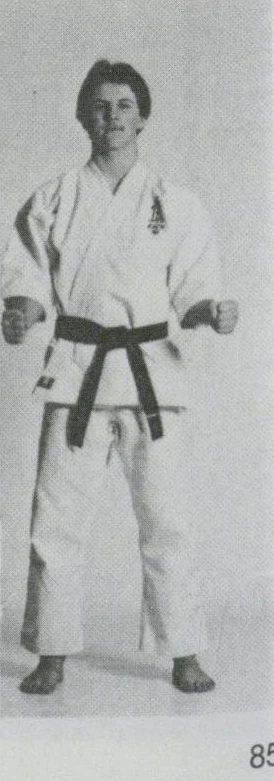
Start the kata in fudo dachi (fig. 1).
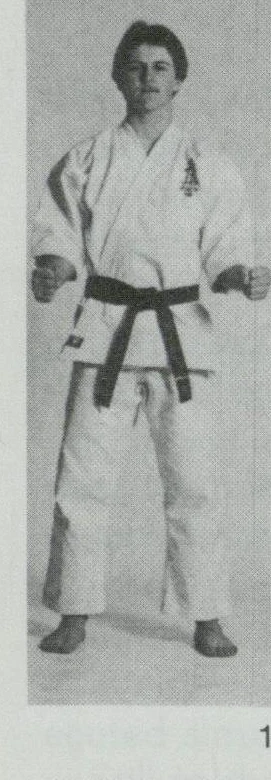
On the command “Yoi” move into the yoi stance (figs. 2 and 3).
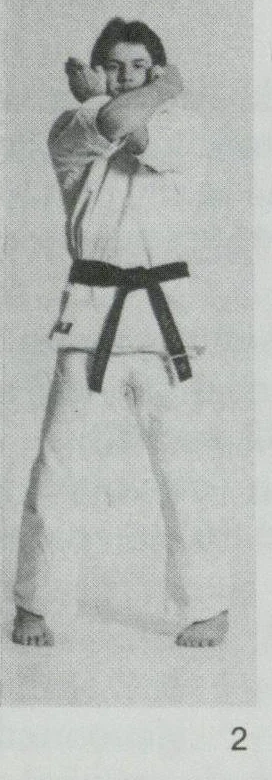
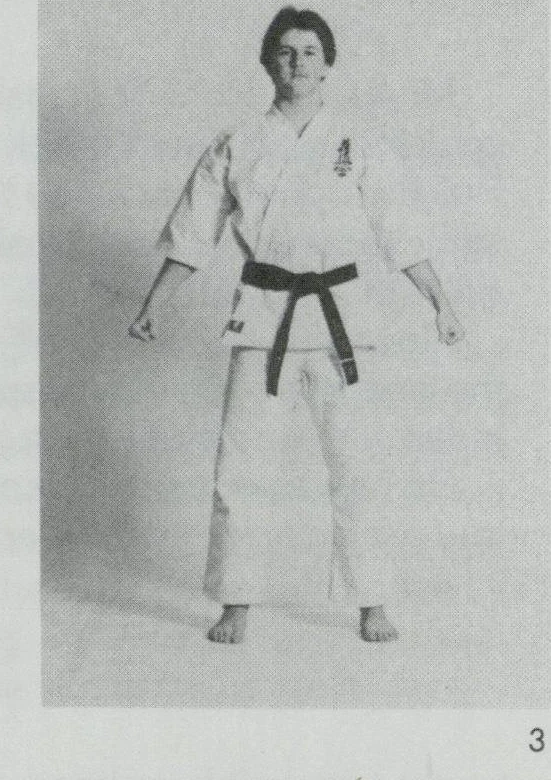
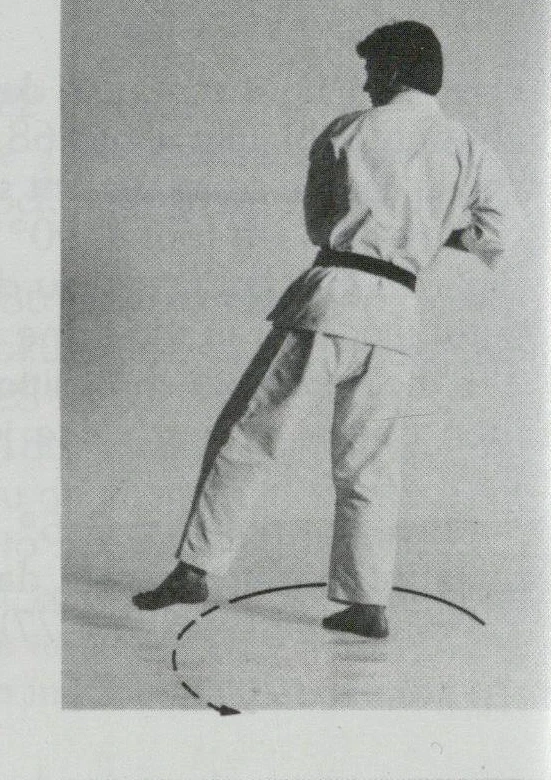
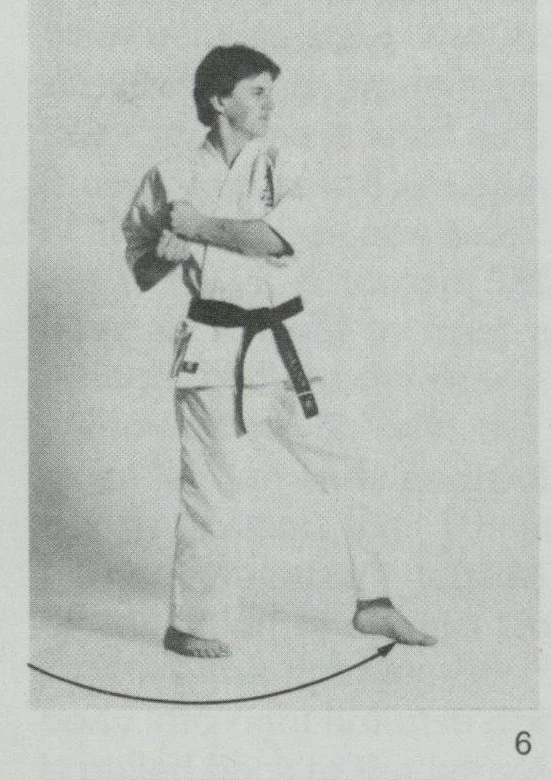
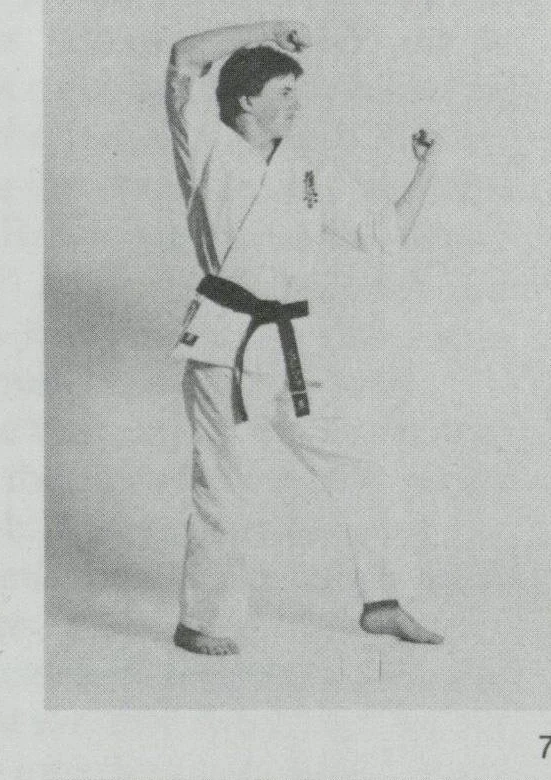
On the command “Hajime” move the left leg 360° anti-clockwise (ura) turning the body into left kokutsu dachi, simultaneously the right fist is pulled back to the right side to the ready punch position and the left fist is positioned immediately on, and vertical to, the right fist (figs. 4 to 6). Without moving the body or its direction raise the right arm into a jodan uke position (to the side of the head) and move the left arm across into a chudan uchi uke position (fig. 7) (n.b. fist approximately at chin height). Both these movements are to be executed simultaneously.
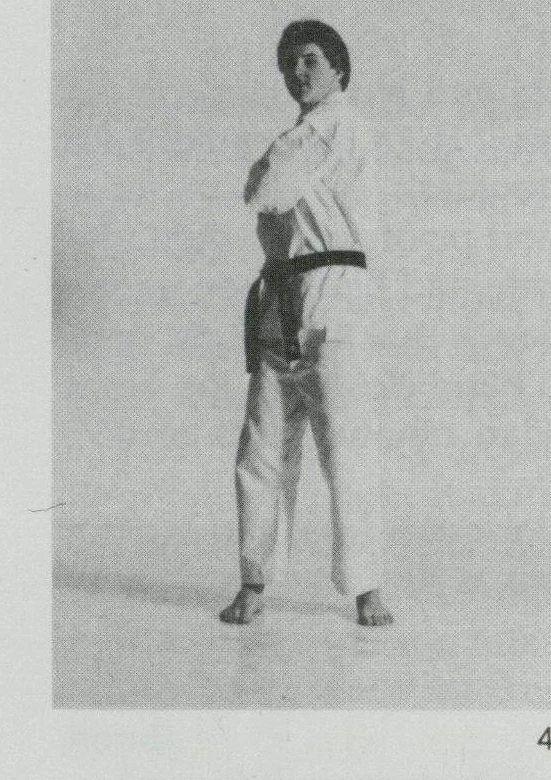
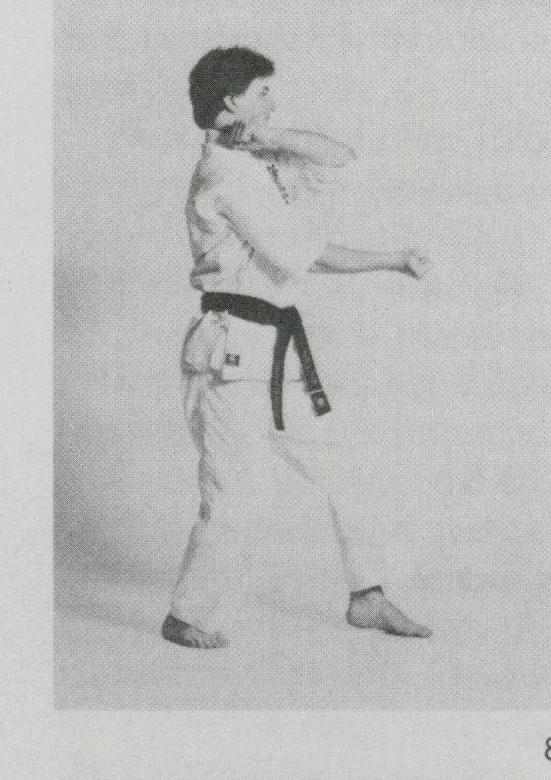
Still in the kokutsu dachi position strike right tettsui hizo uchi twisting the hips square. The left fist is simultaneously brought back over the right shoulder so that the elbow is level with the jaw (fig. 8) (n.b. the fist is approximately 3 cm above the shoulder and the back of the fist faces upwards). Retaining the same stance the right fist is turned 180° so that the knuckles are directed straight in front as if to cover, the left fist is brought back to the ready punch position (fig. 9).
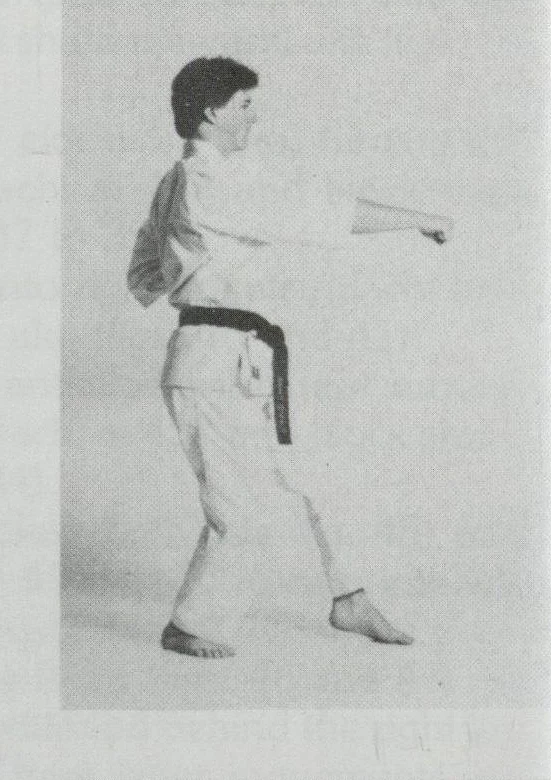
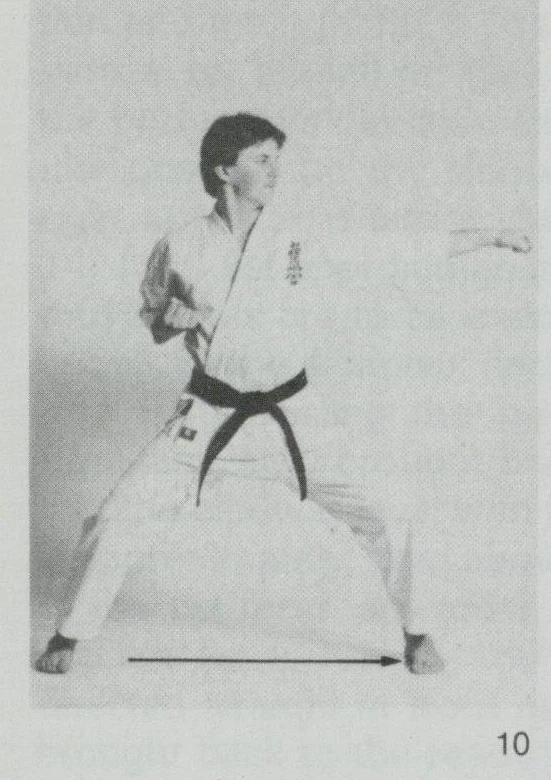
Move through with the left leg into kiba dachi and strike left jun tsuki and pull the right fist into the ready punch position (fig. 10) (n.b. it is essential to use the hip movement in jun tsuki and the eyes are directed in the direction of the jun tsuki).
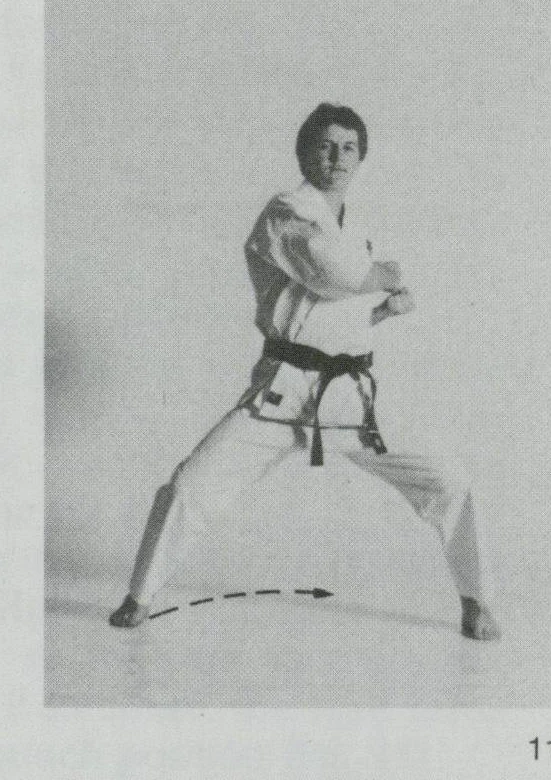
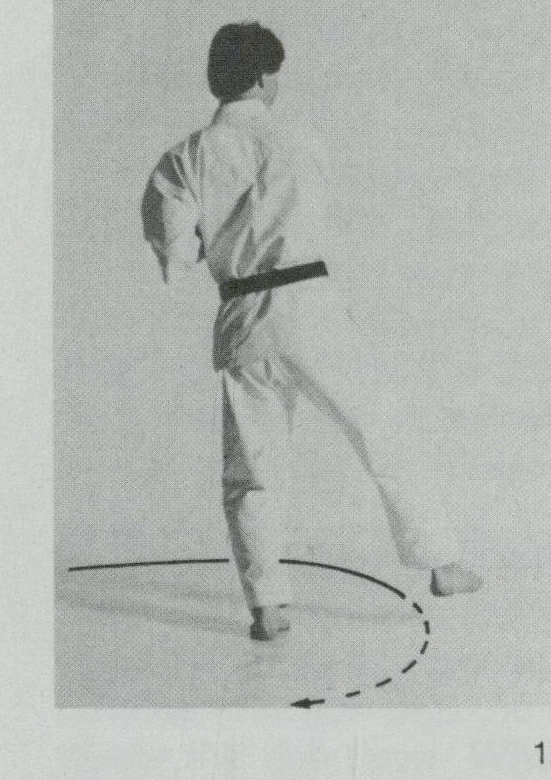
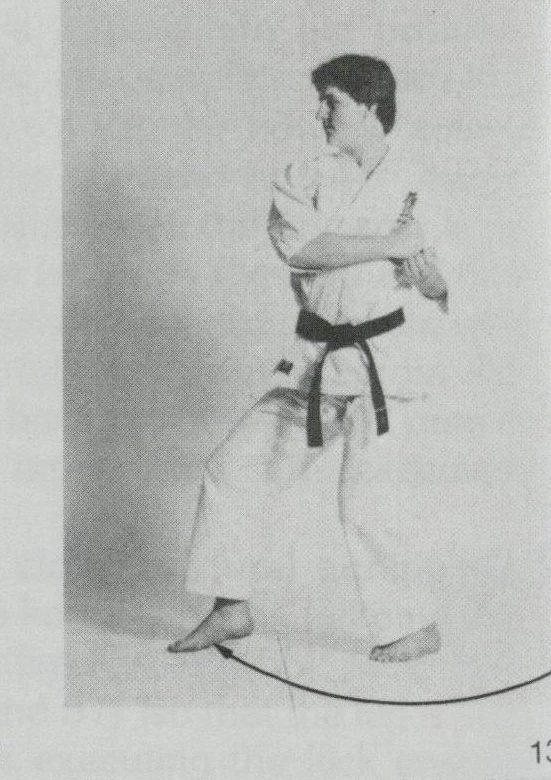
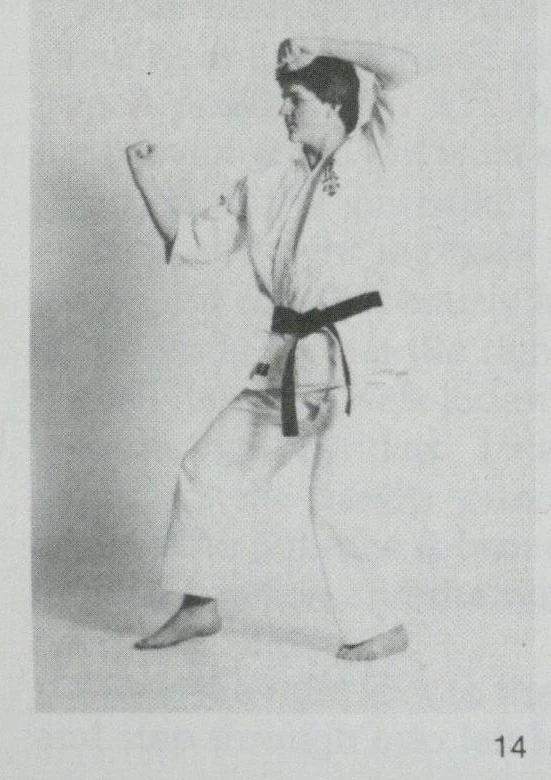
Move the right leg 360° clockwise (ura) turning the body into right kokutsu dachi simultaneously the left fist is pulled back to the left side into the ready punch position and the right fist is positioned immediately on, and vertical to, the left fist (figs. 11 to 13). Without moving the body or its direction raise the left arm into a jodan uke position (to the side of the head) and move the right arm across into a chudan uchi uke position (fig. 14) (n.b. fist approximately at chin height). Both these movements are to be executed simultaneously.
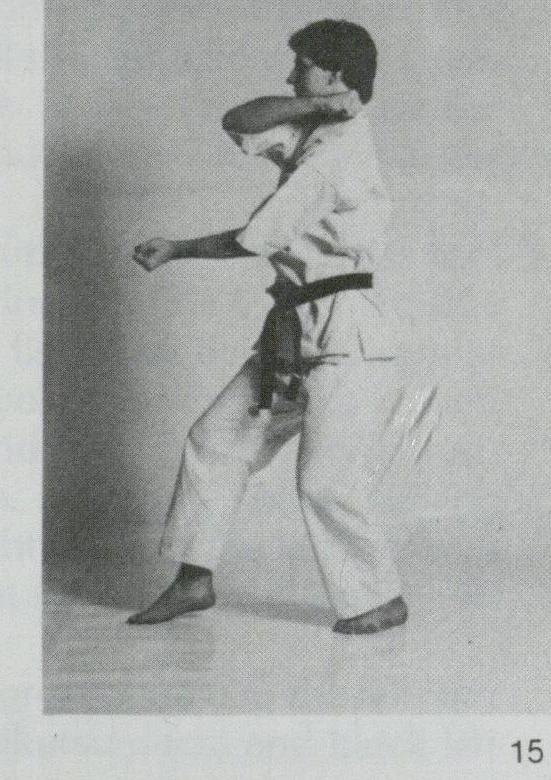
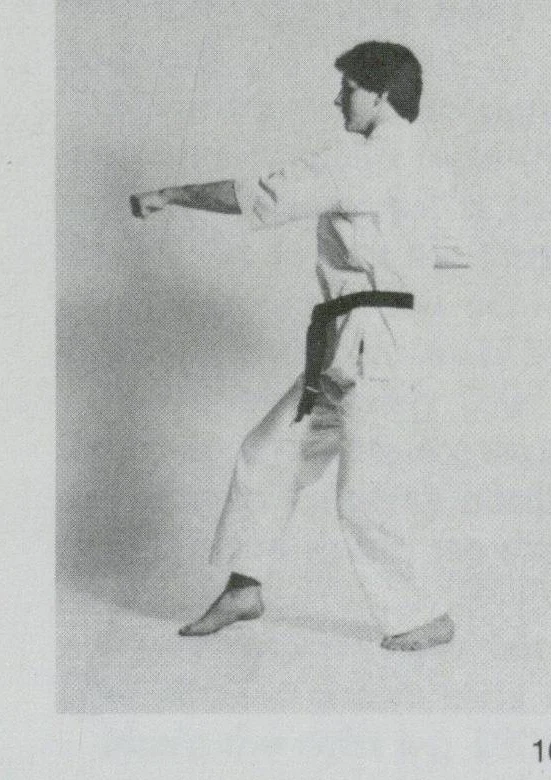
Still in the kokutsu dachi position strike left tettsui hizo uchi twisting the hips square. The right fist is simultaneously brought back over the left shoulder so that the elbow is level with the jaw (fig. 15) (n.b. the fist is approximately 3 cm above the shoulder and the back of the fist faces upwards). Retaining the same stance the left fist is turned 180° so that the knuckles are directed straight in front as if to cover, the right fist is brought back to the ready punch position (fig. 16).
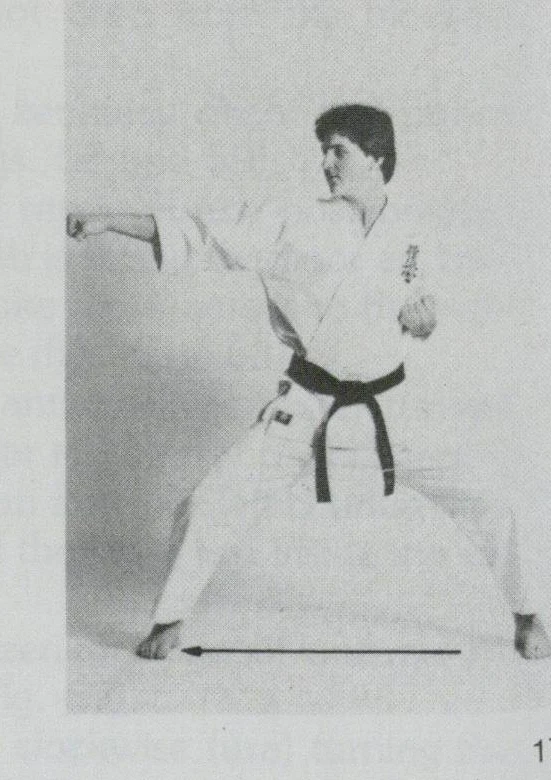
Move through with the right leg into kiba dachi and strike right jun tsuki and pull the left fist into the ready punch position (fig. 17) (n.b. it is essential to use the hip movement in jun tsuki and the eyes are directed the direction of the jun tsuki).
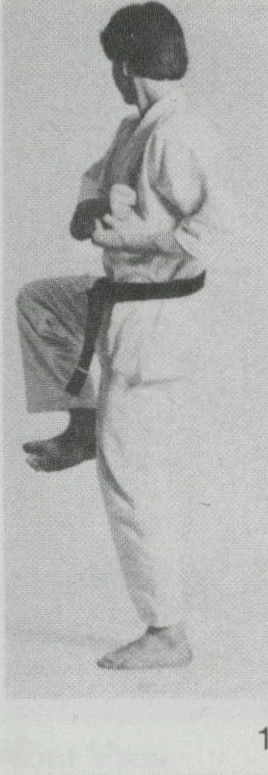
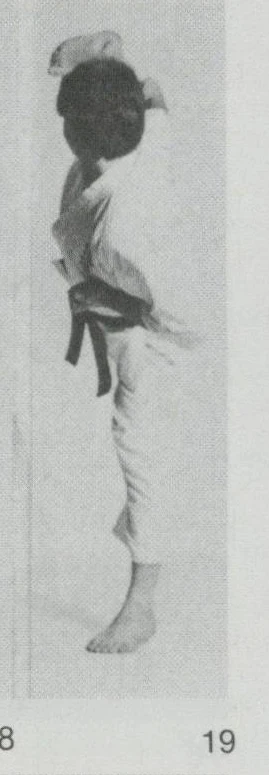
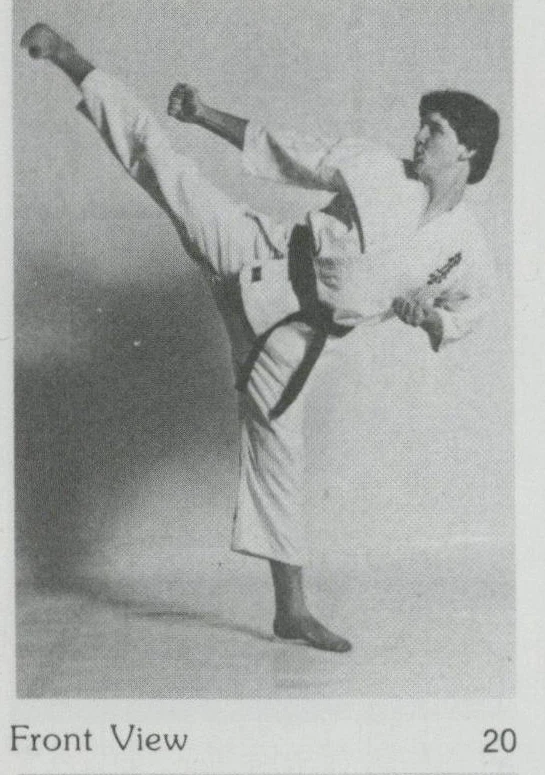
Bring the right leg back turning 90° into tsuru ashi dachi and simultaneously bring the fists to the left side of the body so that the right fist is positioned on top of the left (fig. 18). Kick jodan yoko geri and strike uraken with the right fist (figs. 19 and 20) (n.b. the left fist remains in the ready punch position). After striking uraken the right fist is brought back to the left fist in its original position and the right leg returned to tsuru ashi dachi (fig. 21).
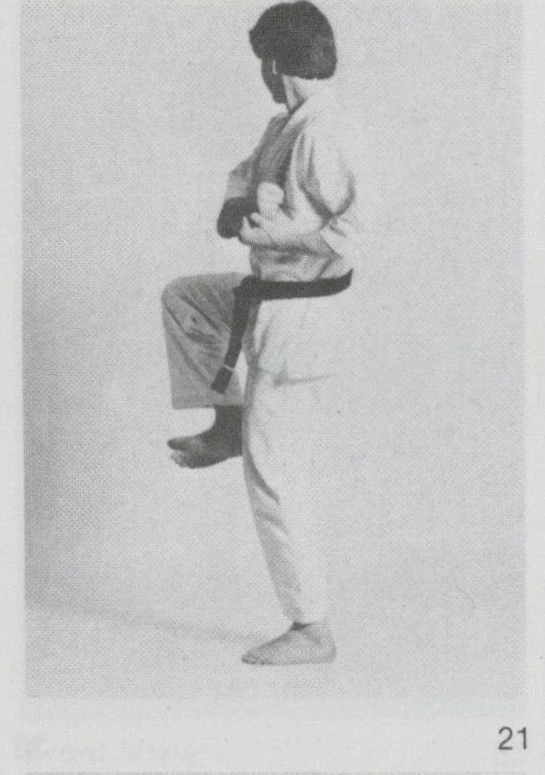
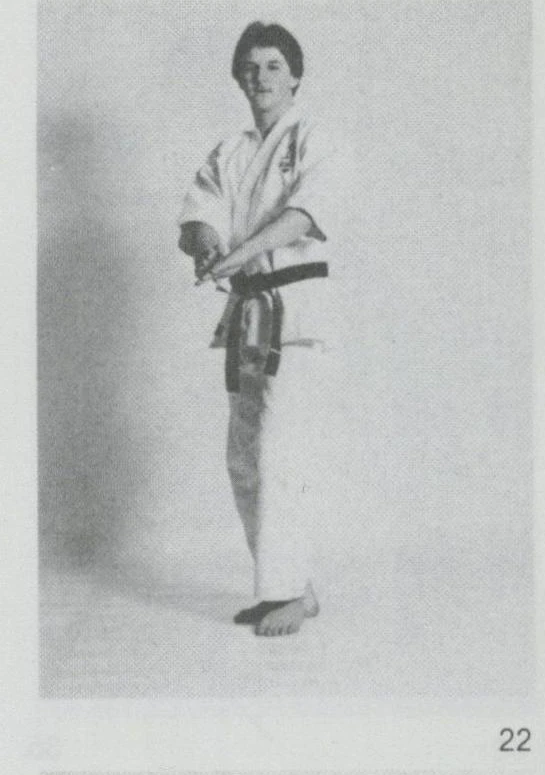
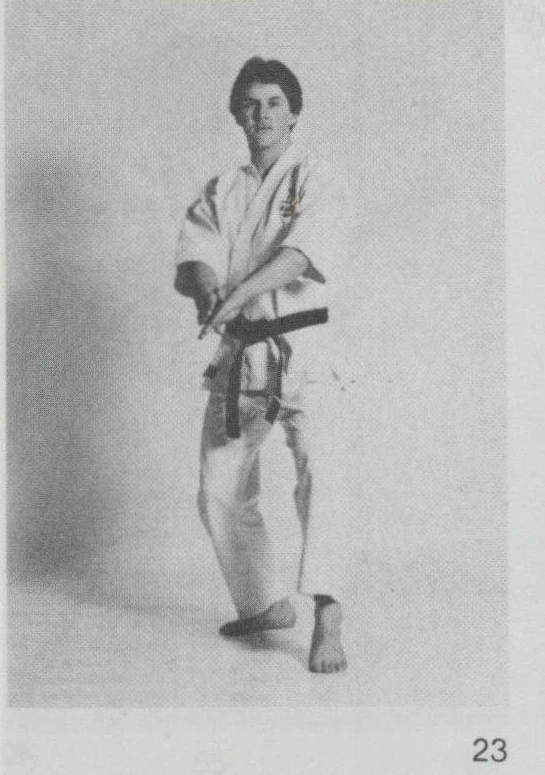
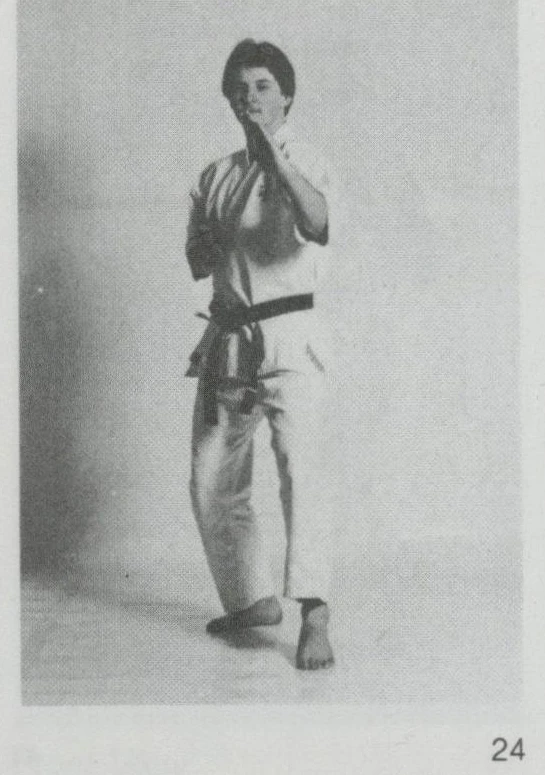
Move the right foot to the ground next to the left foot and step through into left kokutsu dachi and block left shuto mawashi uke (figs. 22 to 24).
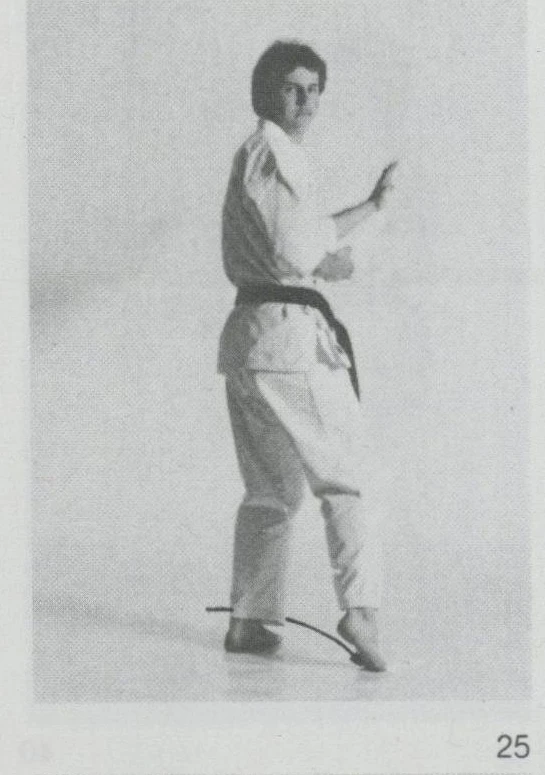
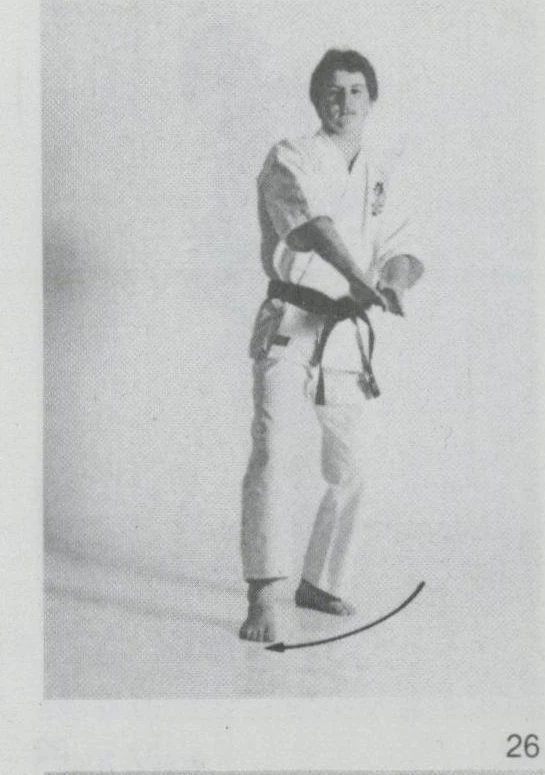
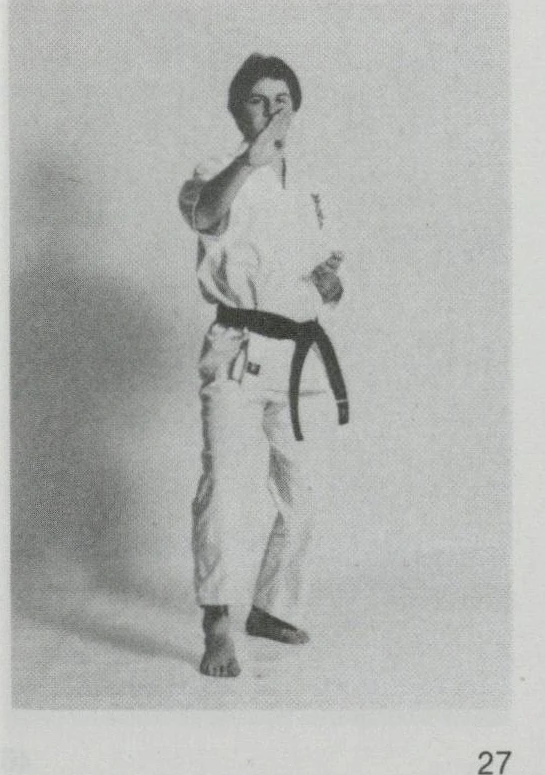
With the right leg move 180° clockwise (ura) into right kokutsu dachi and block right shuto mawashi uke (figs. 25 to 27).
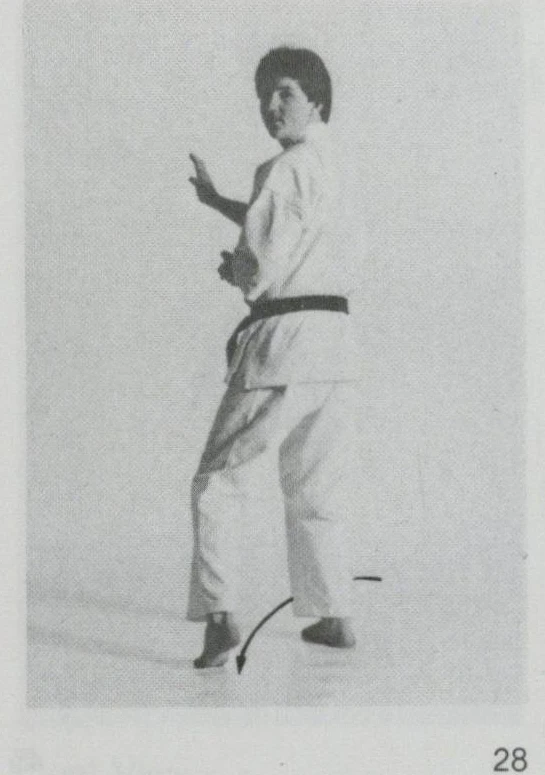
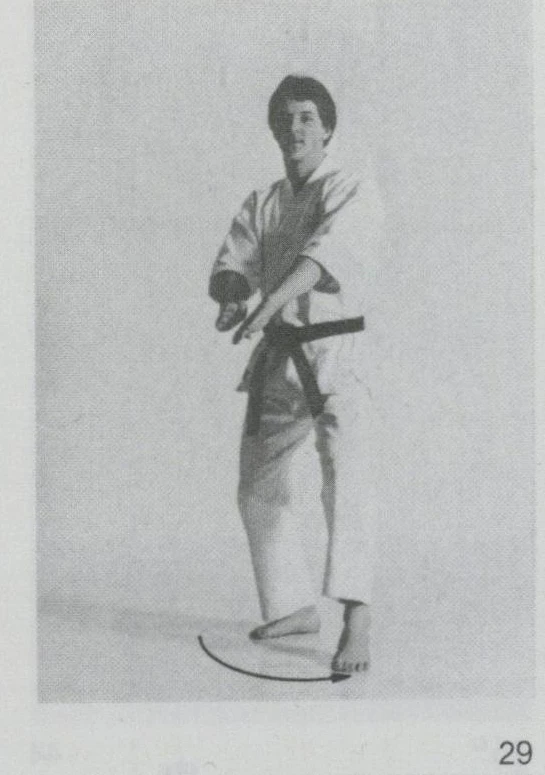
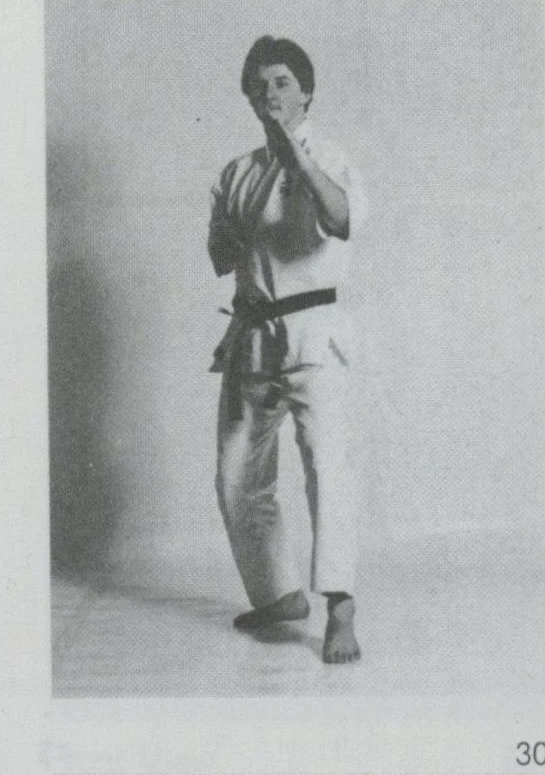
With the left leg move 180° anti-clockwise (ura) turning the body into left kokutsu dachi and block left shuto mawashi uke (figs. 28 to 30).
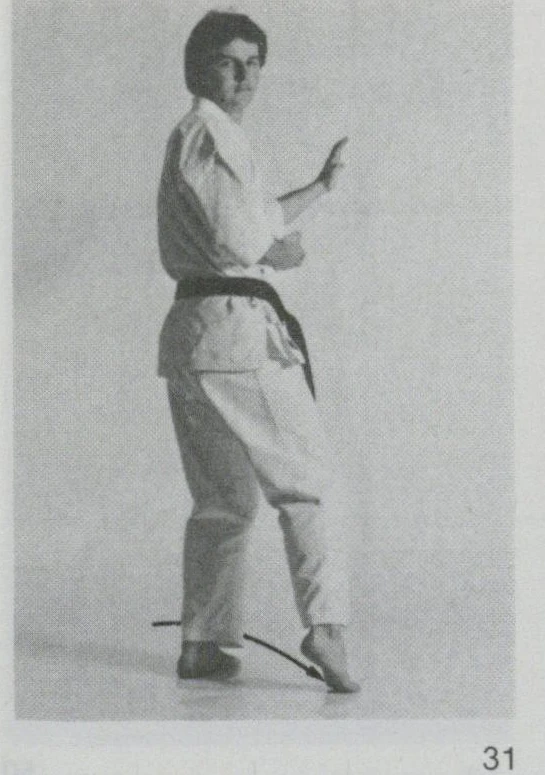
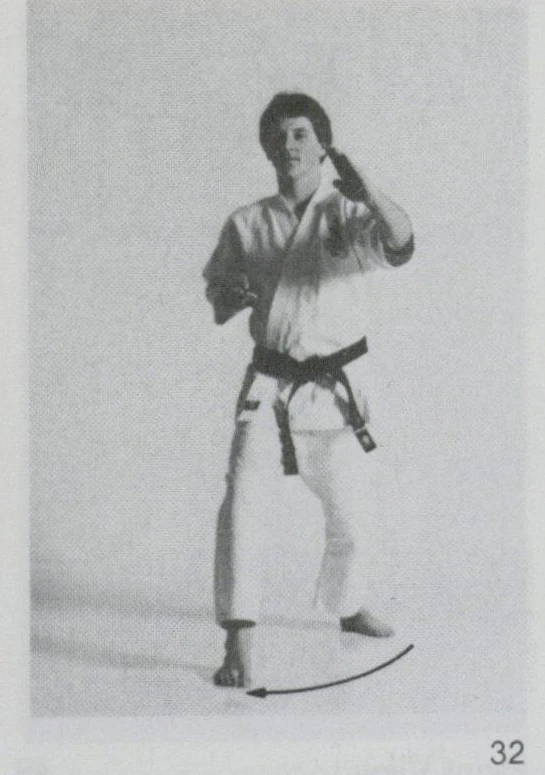
With the right leg move 180° clockwise (ura) turning the body into right zenkutsu dachi and block with a left gyaku shuto uke (figs. 31 to 33).
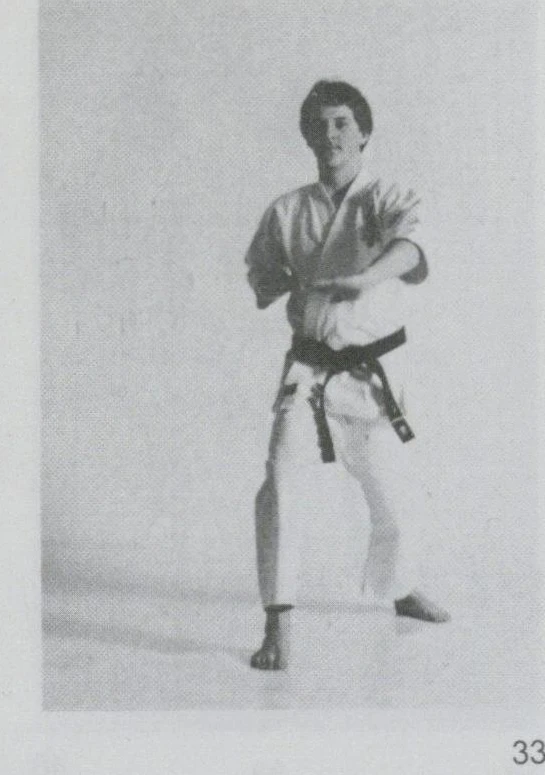
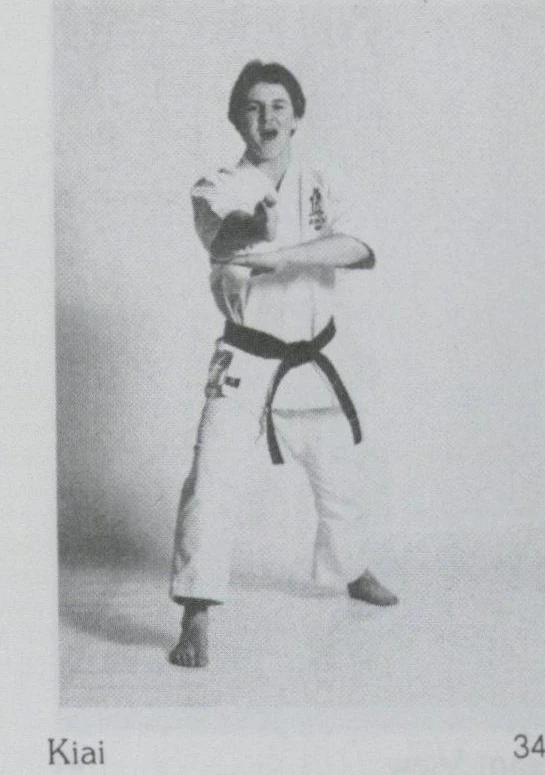
Move forward into right zenkutsu dachi and strike right chudan yonhon nukite and KIAI (fig. 34) (n.b. the right elbow should be 3 cm immediately above the left hand).
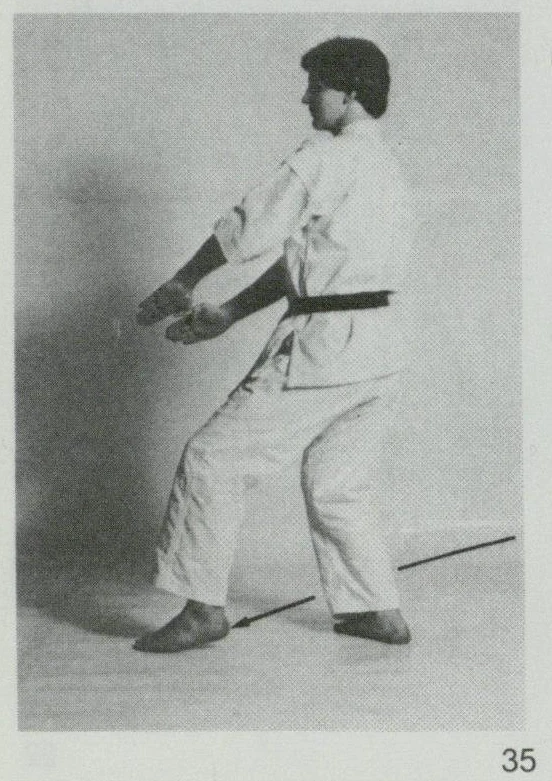
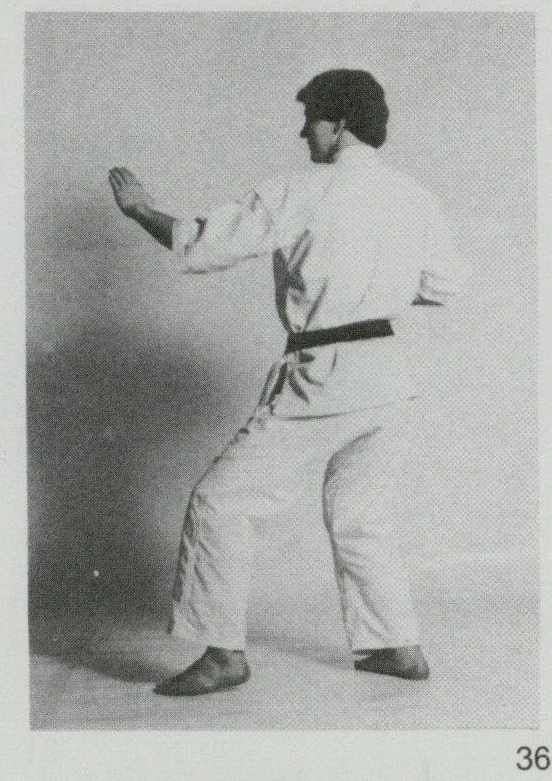
Turn 90° anti-clockwise (ura) to the right into left kokutsu dachi and block left shuto mawashi uke (figs. 35 and 36).
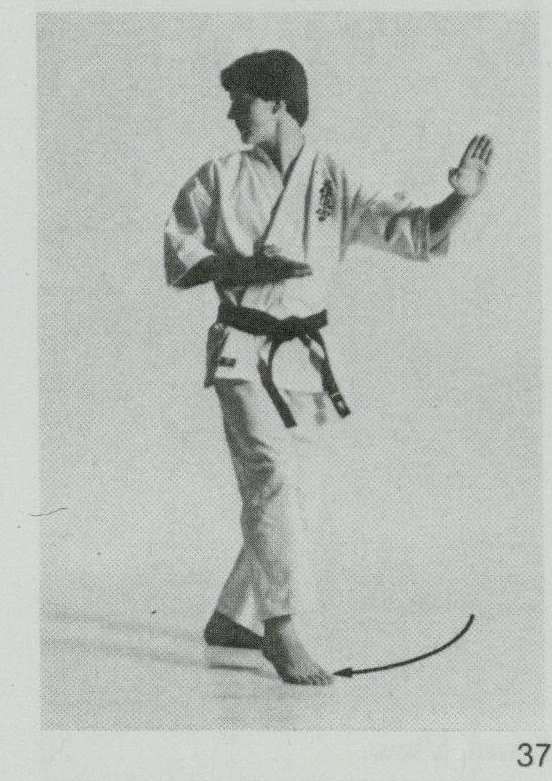
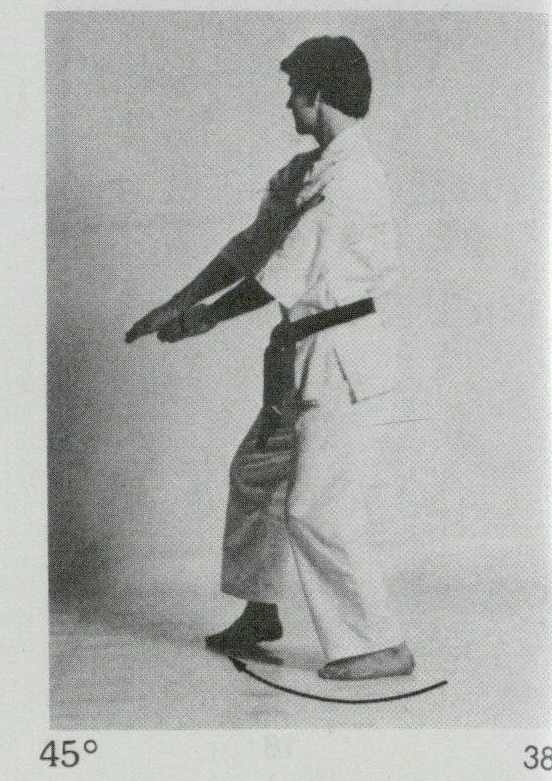
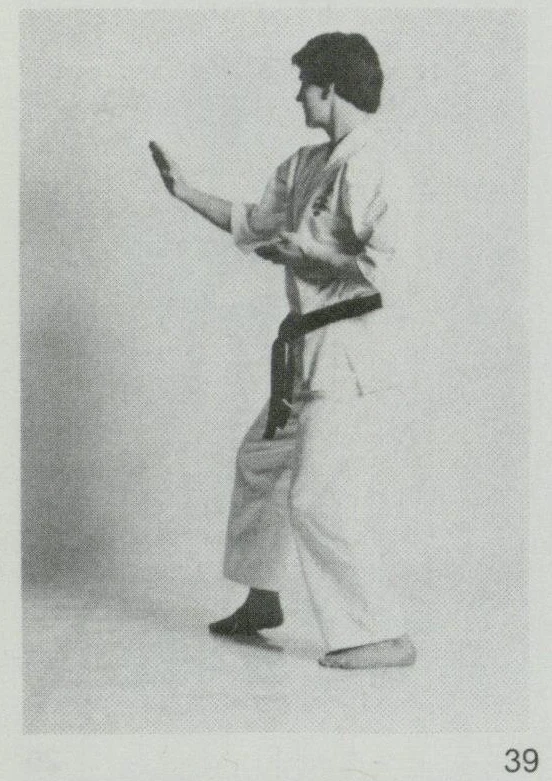
Move the right leg 225° clockwise (ura) turning the body into right kokutsu dachi at 45° and block right shuto mawashi uke (figs. 37 to 39).
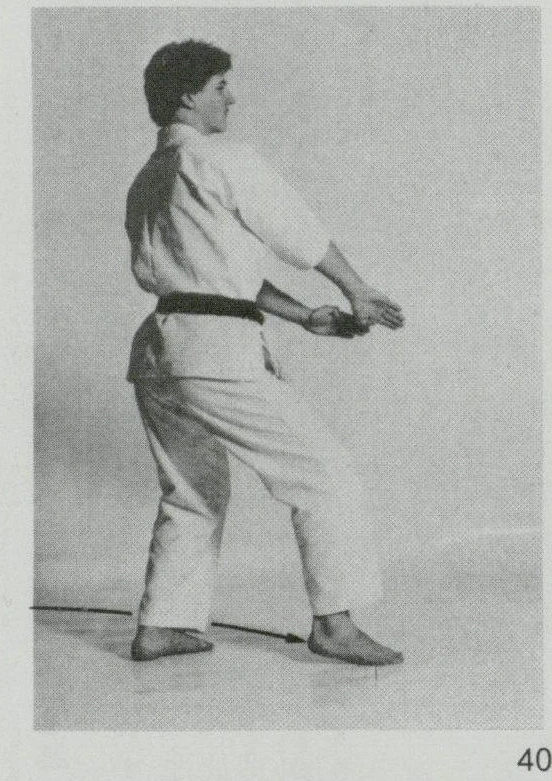
Turn 135° to the right into right kokutsu dachi and block right shuto mawashi uke (figs. 40 and 41).
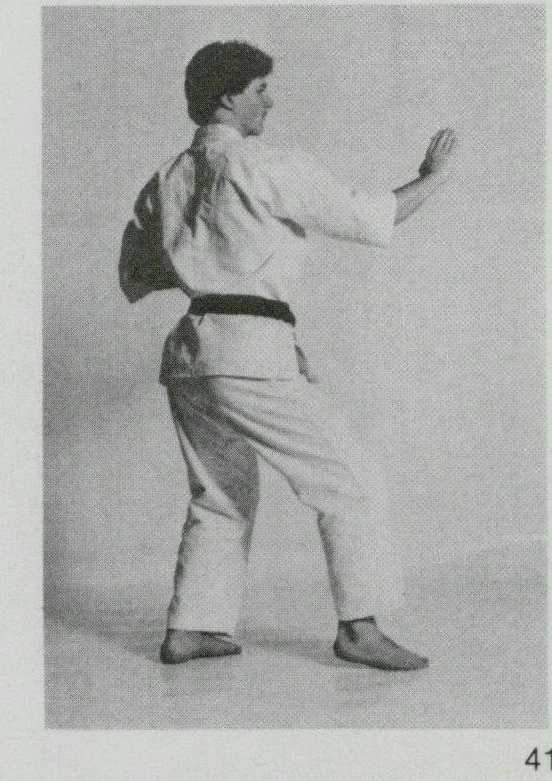
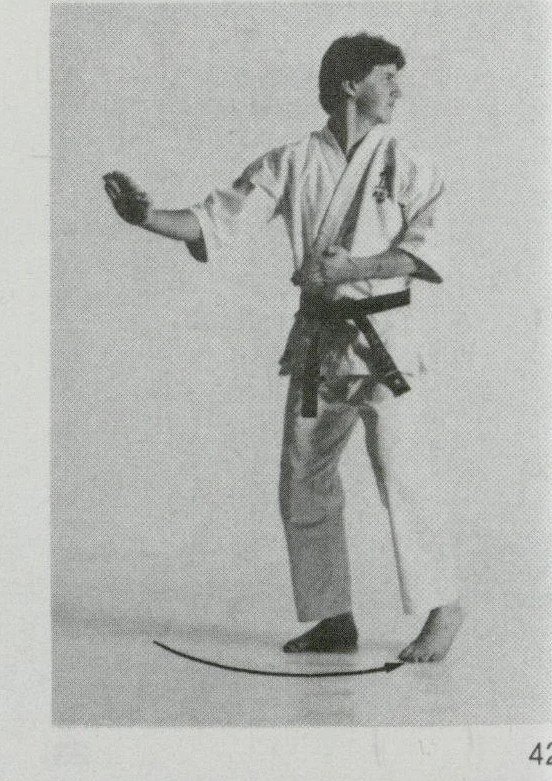
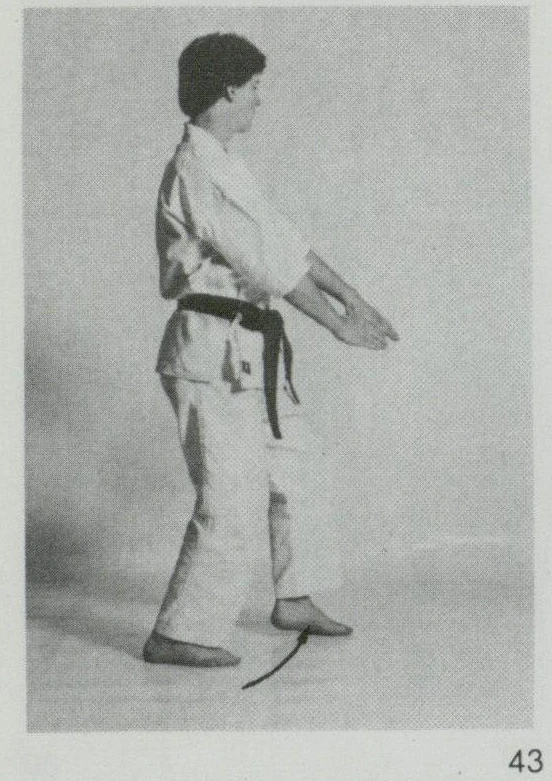
Move the left leg 225° anti-clockwise (ura) turning the body into left kokutsu dachi at 45° and block shuto mawashi uke (figs. 42 to 44).
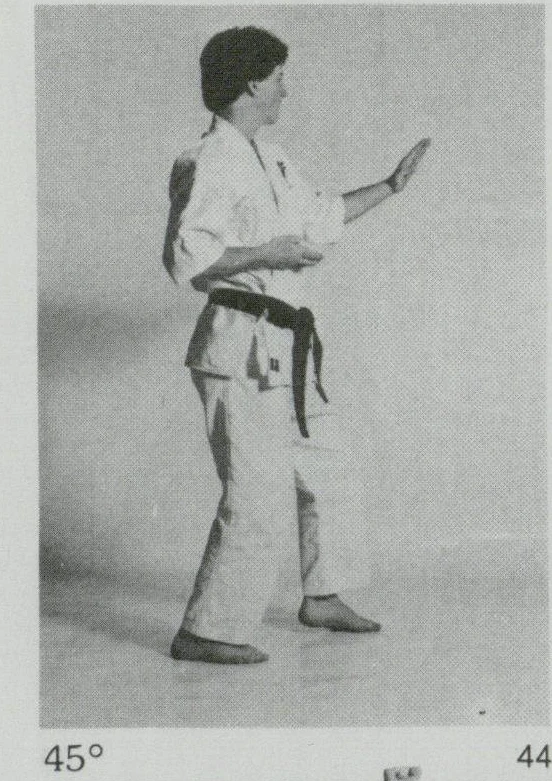
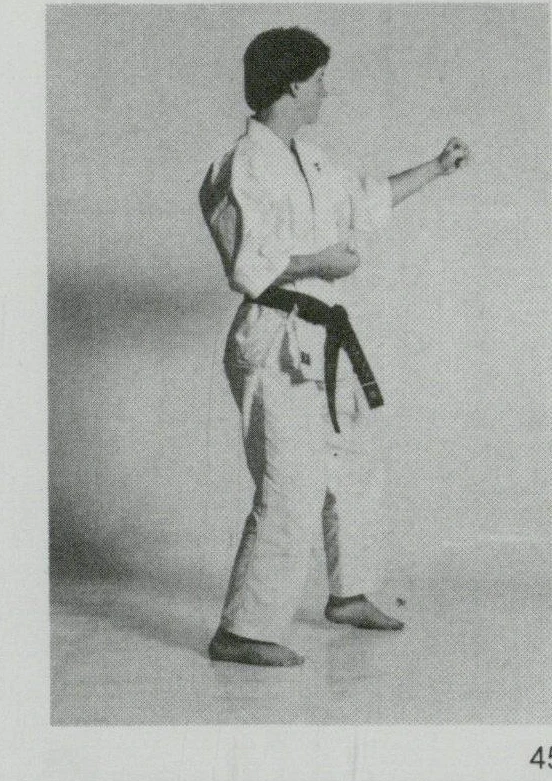
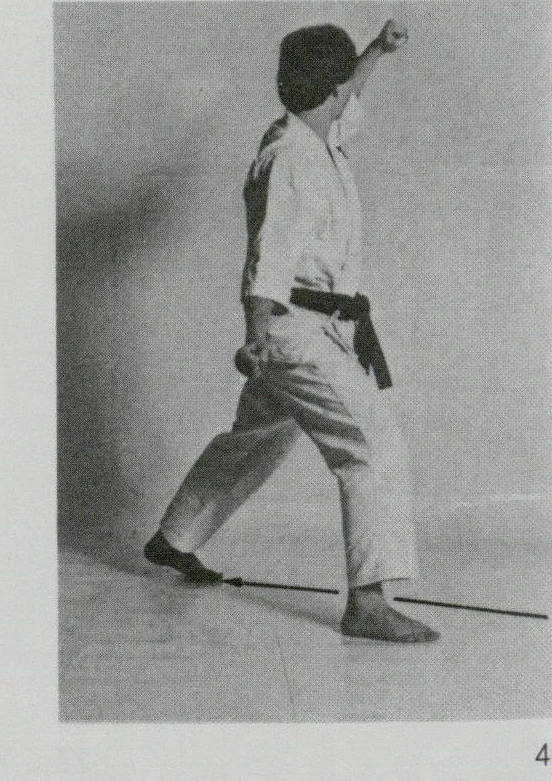
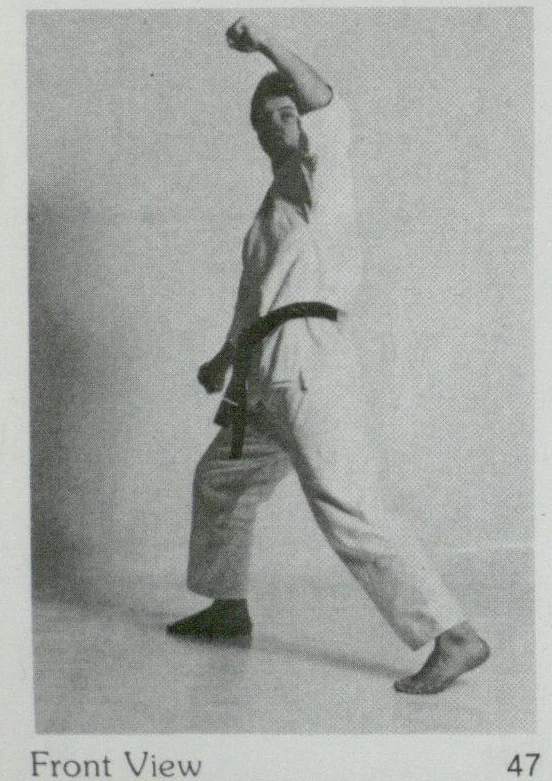
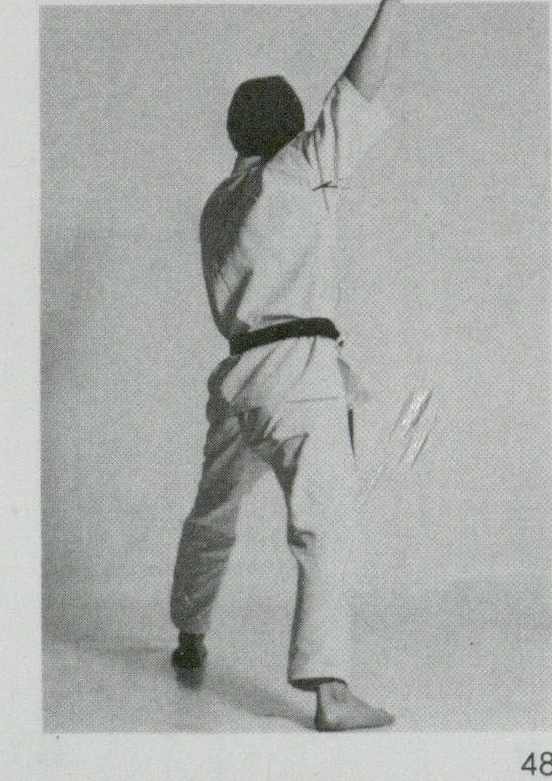
Still in the same stance close both fists (fig. 45) and move the left leg across at 45° ready to turn into left zenkutsu dachi, simultaneously the left forearm is positioned at 45° in front of the head (figs. 46 and 47). In addition the right arm is positioned behind the right leg (thumb facing upwards). These latter movements are executed whilst the body is turning into the position preparing for zenkutsu dachi. To complete the turn the right hand moves quickly in a circular bowling action (with the fist closed) over the shoulder at a 45° angle (figs. 48 and 49) (n.b. at this stage the left arm is in front of the body) across the left thigh (figs. 50 and 51) and then across the body with a right chudan uchi uke (figs. 52 and 53). (As the right arm moves across the body the left fist is pulled back into the ready punch position) (n.b. all these movements are executed quickly).
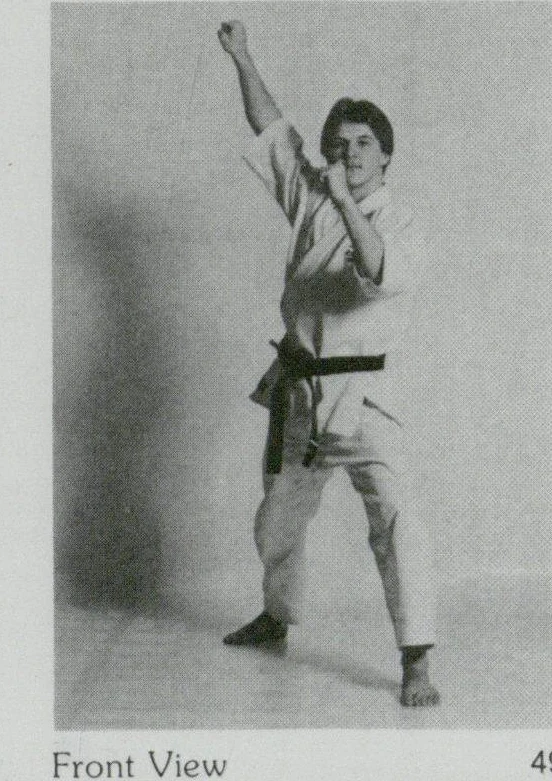
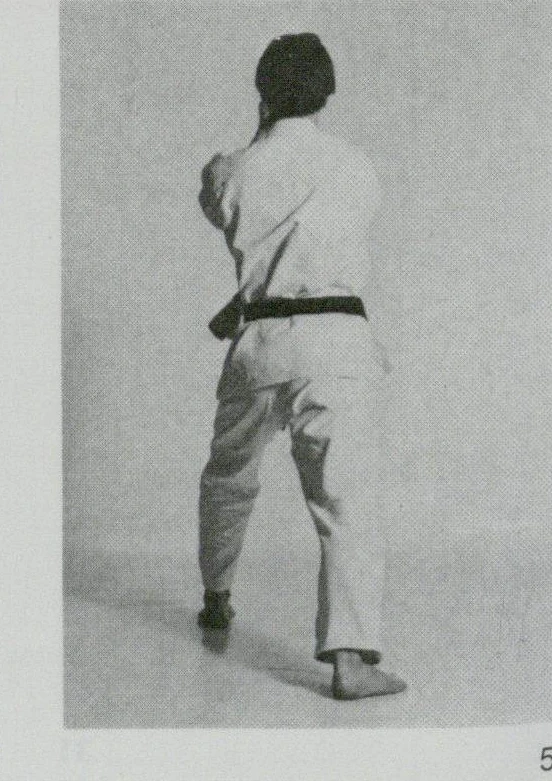
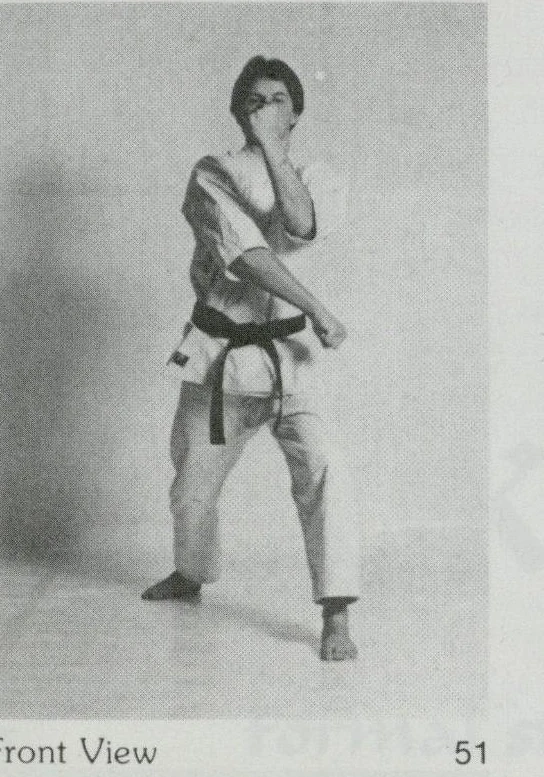
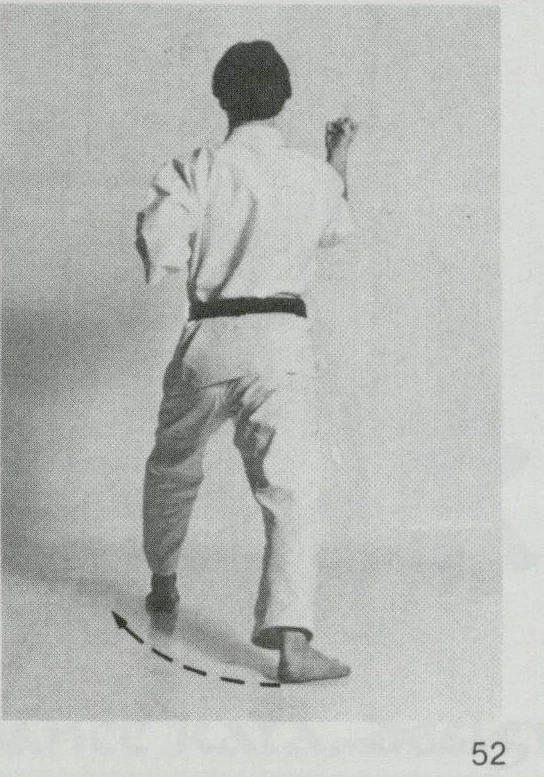
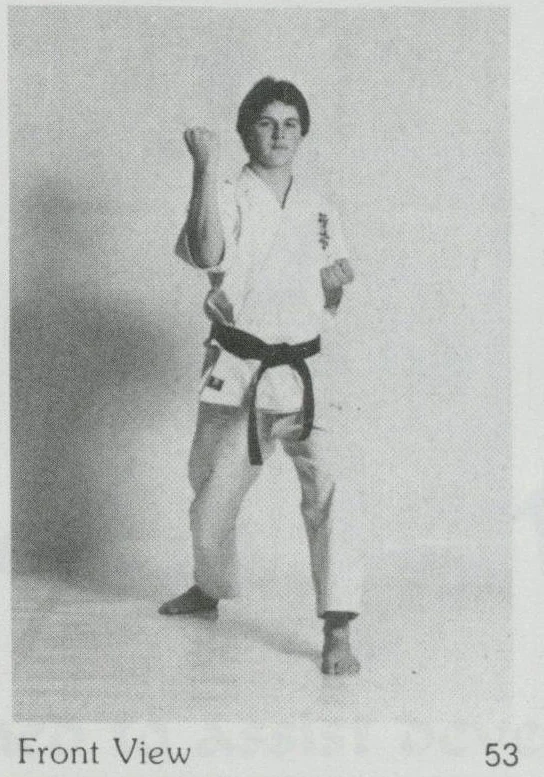
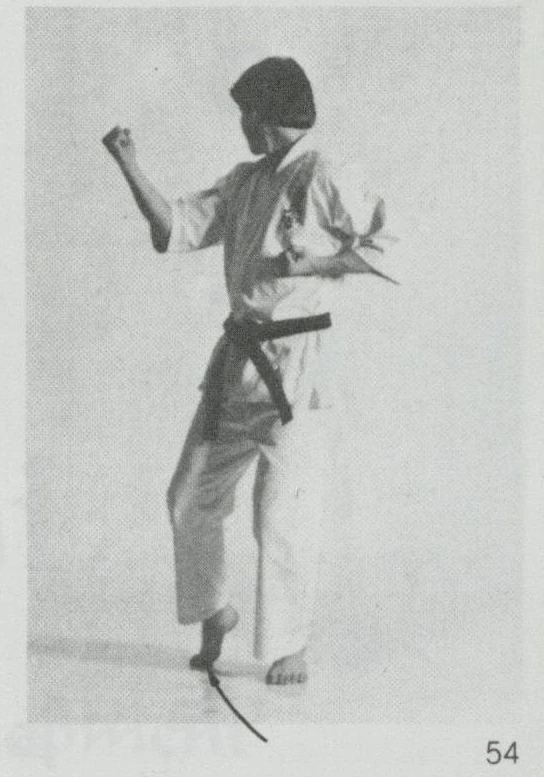
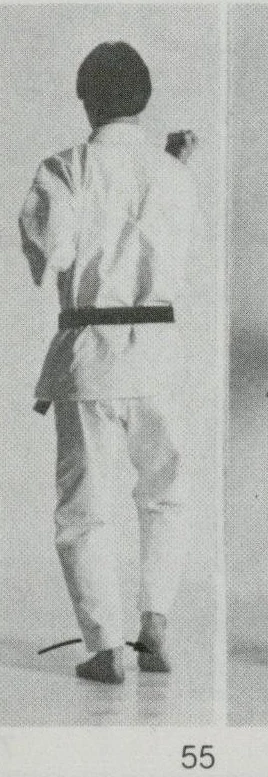
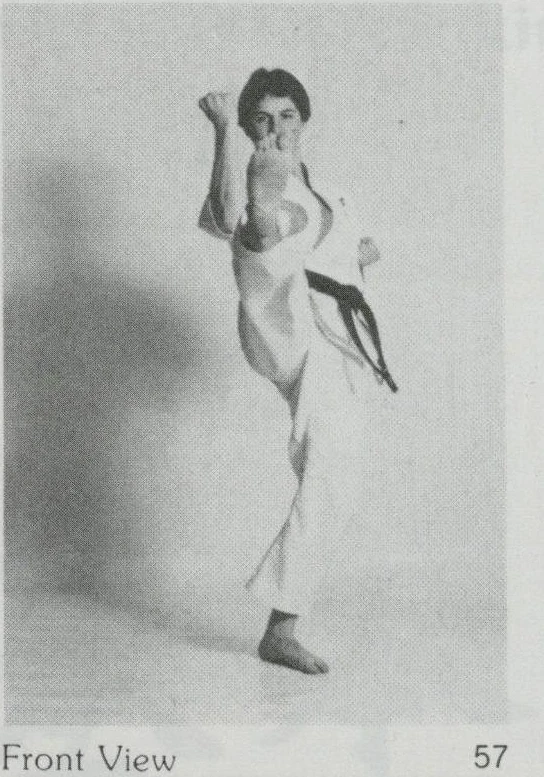
Move the right leg 180° clockwise (ura) turning the body into a stance similar to kokutsu dachi, keeping the arms in the same position (figs. 54 and 55), kick right chudan mae geri (figs. 56 and 57) (so that the leg is just inside the right arm. When executing the kick ensure that the right arm does not drop from the blocking position).
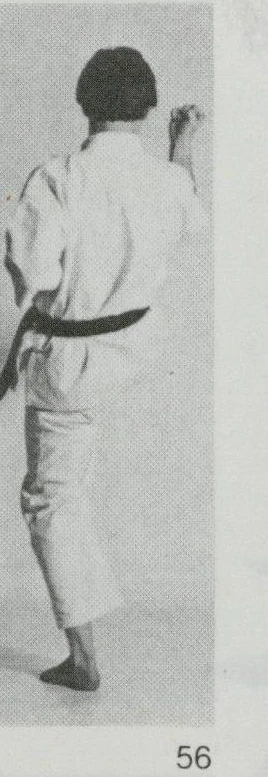
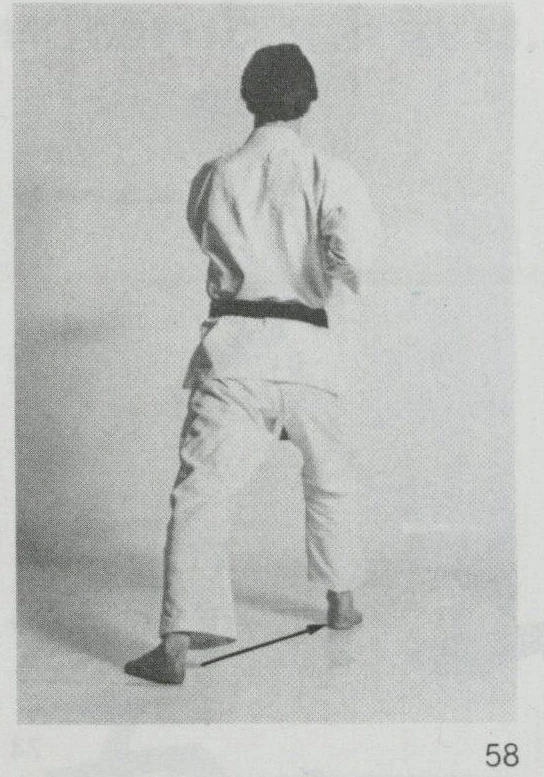
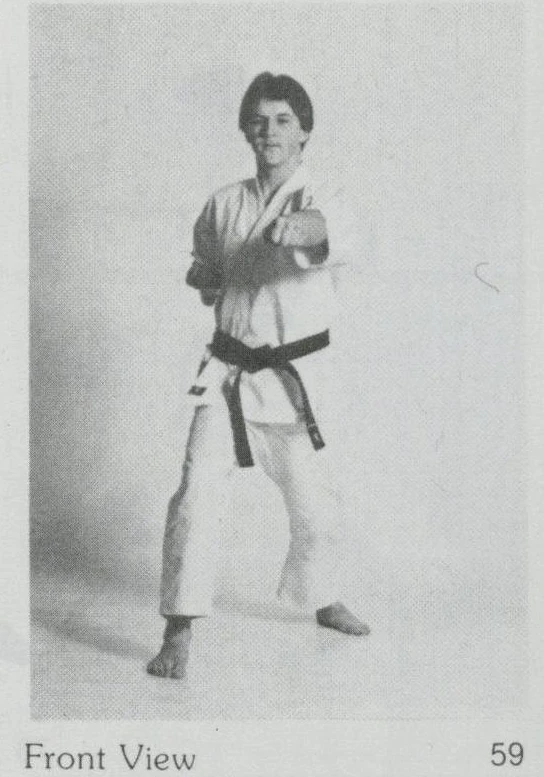
Move forward into right zenkutsu dachi and punch left chudan gyaku tsuki (figs. 58 and 59).
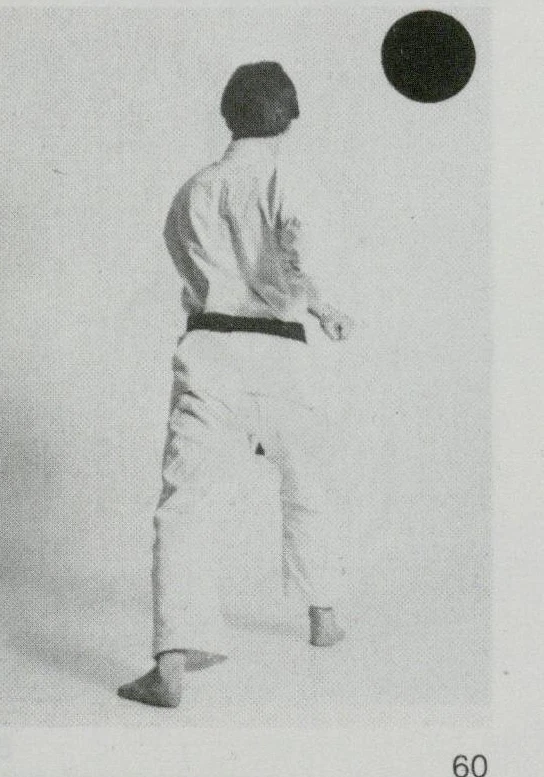
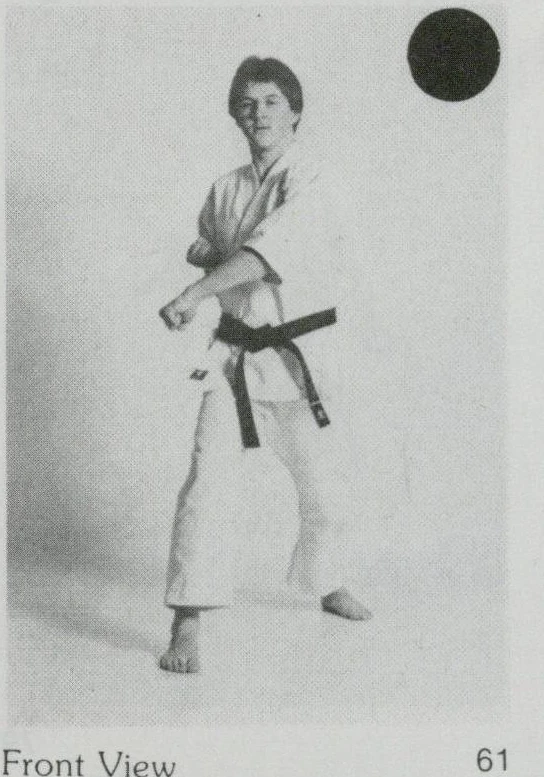
With the right fist in the ready punch position turn the left fist so that the thumb is facing the floor and execute a slow chudan uchi uke block across to the right thigh to a mental count of five (figs. 60 to 63).
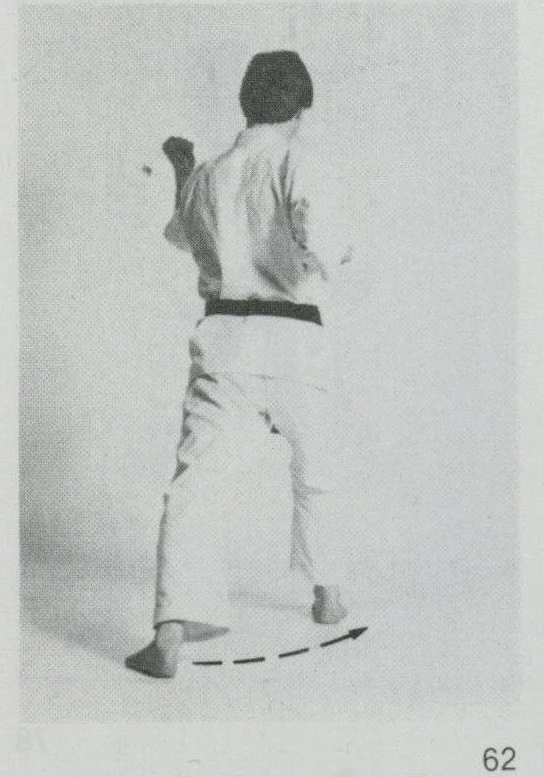
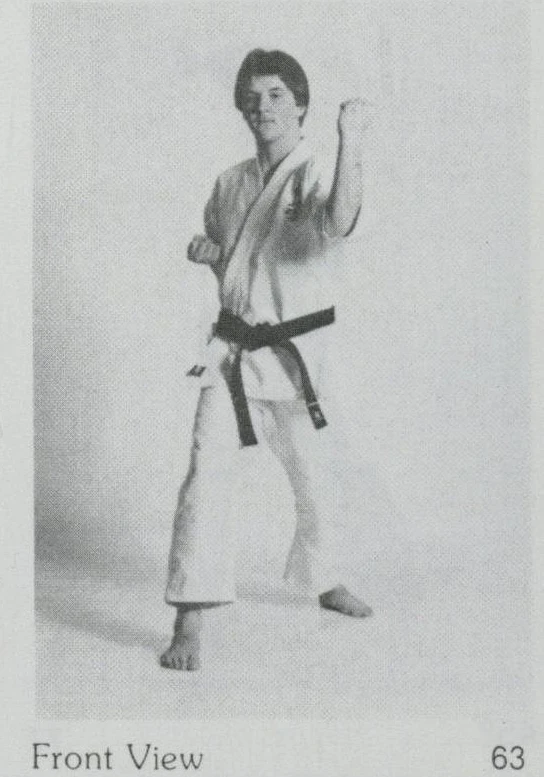
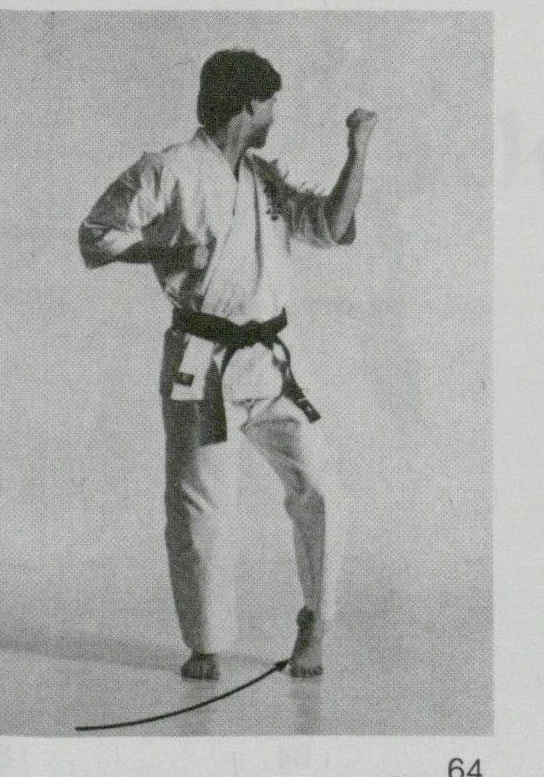
Move the left leg 180° anti-clockwise (ura) turning the body into a stance similar to kokutsu dachi keeping the arms in the same position and kick left chudan mae geri (figs. 64 to 66) (so that the leg is just inside the left arm).
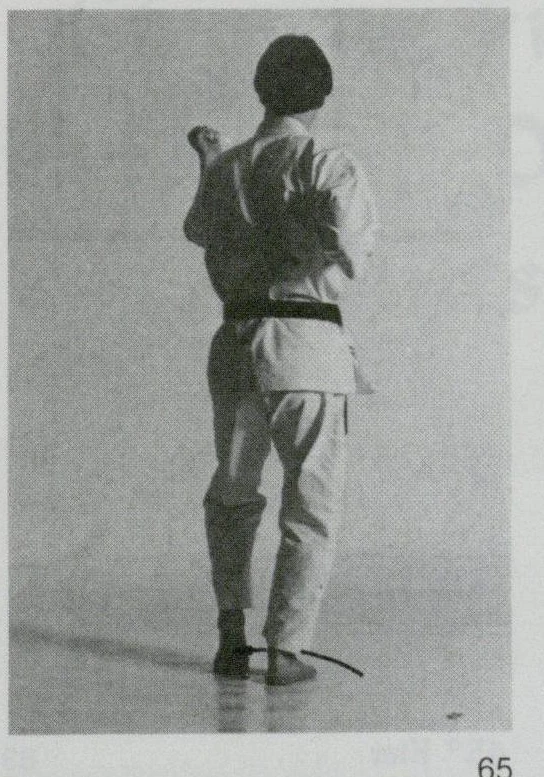
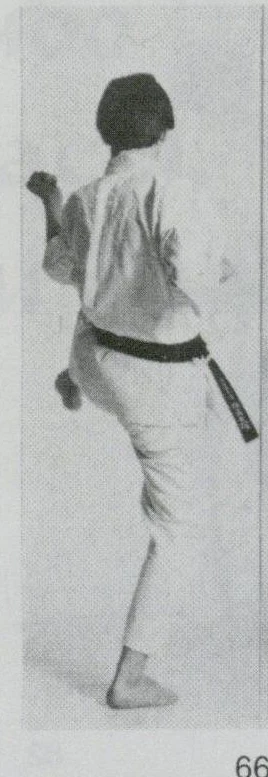
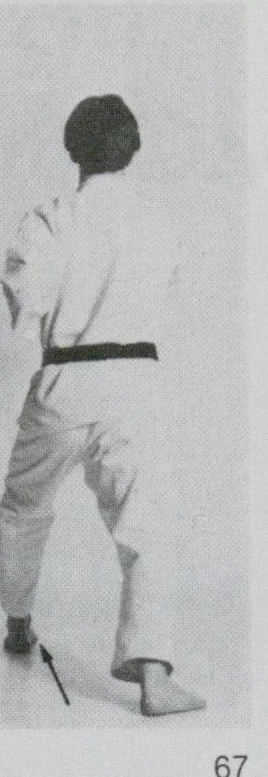
Move forward into left zenkutsu dachi and punch right chudan gyaku tsuki (fig. 67).
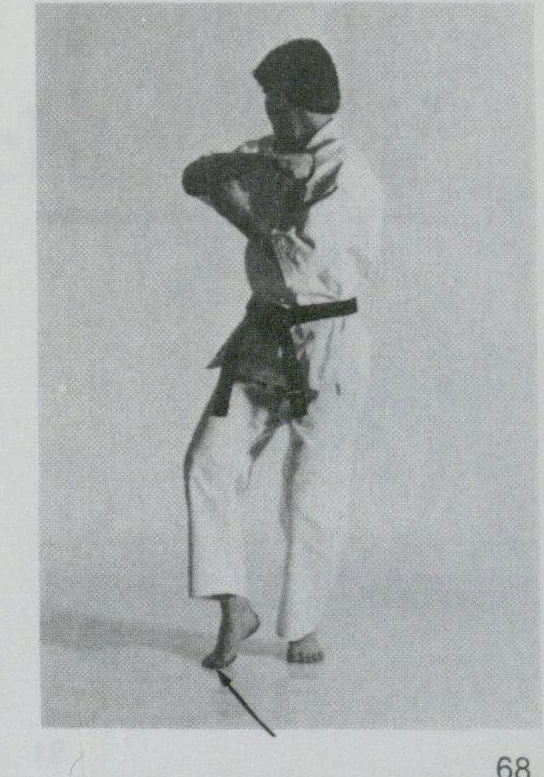
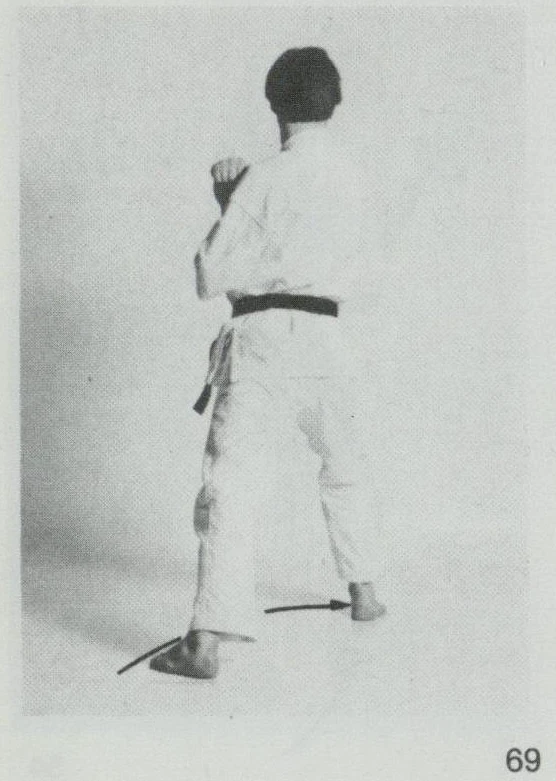
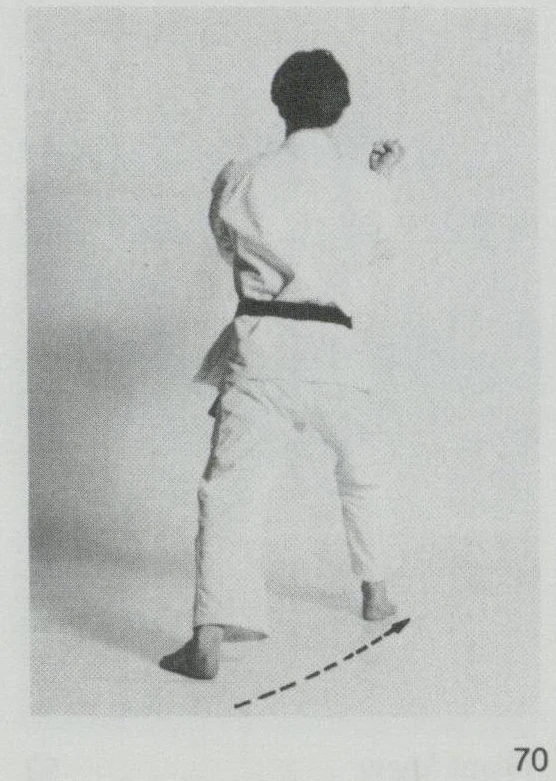
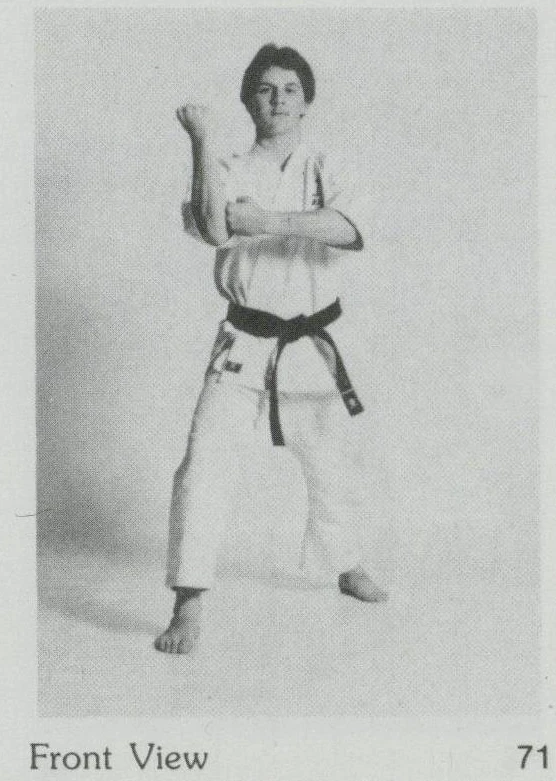
Move the right leg 180° clockwise (ura) turning the body into right zenkutsu dachi and block right morote chudan uchi uke (figs. 68 to 71) (n.b. the right fist should come from the left shoulder).
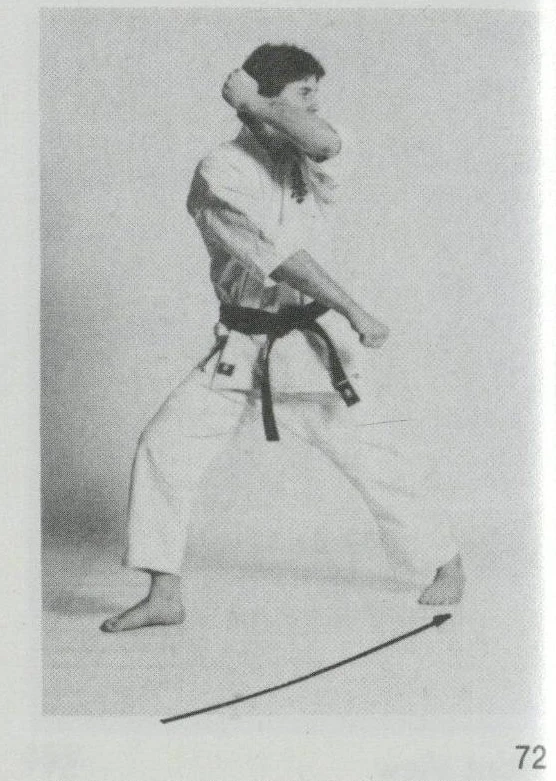
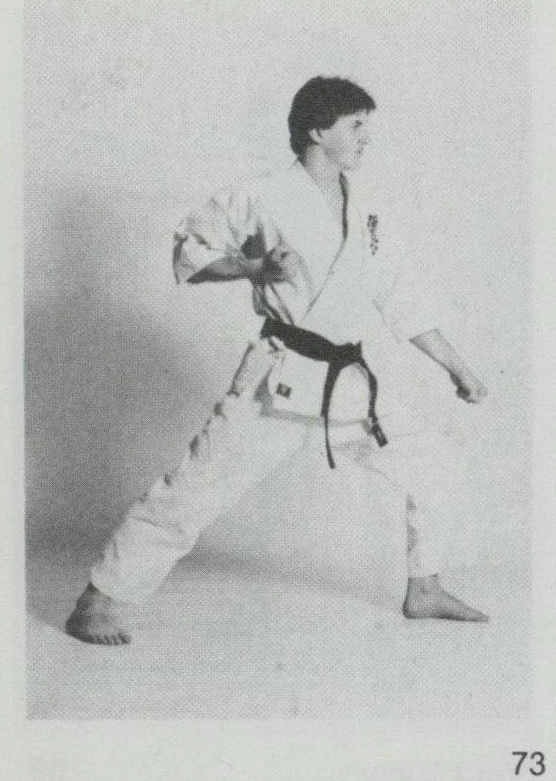
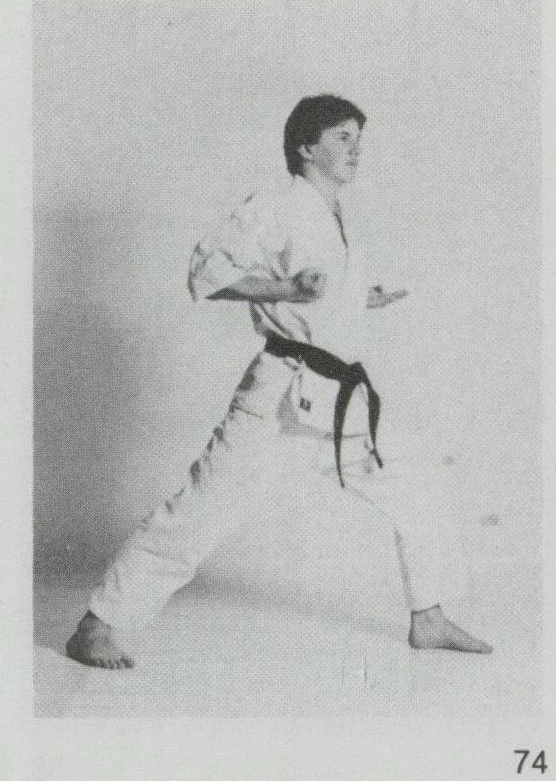
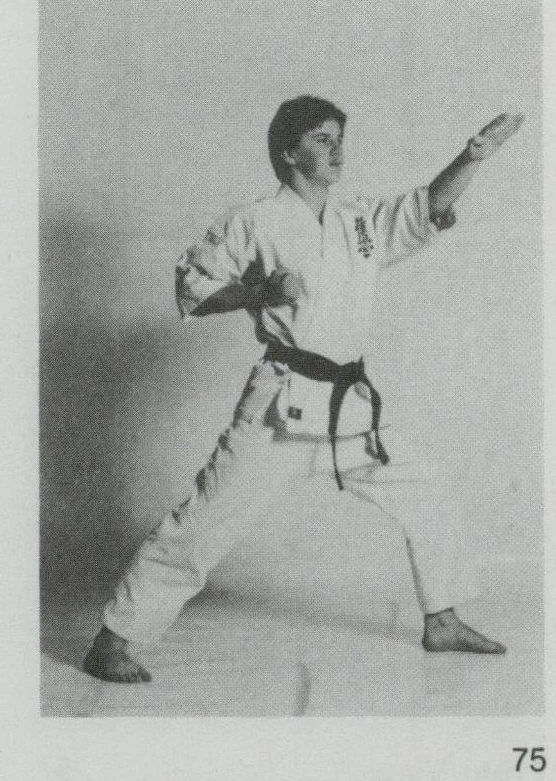
Move the left foot at 90° and pivot on the right foot (fig. 72) into left zenkutsu dachi and block mae gedan barai (fig. 73). In the same stance pull the left fist back into the ready punch position hand closed — the hand then opens as you strike jodan nihon nukite at 45° (figs. 74 and 75).
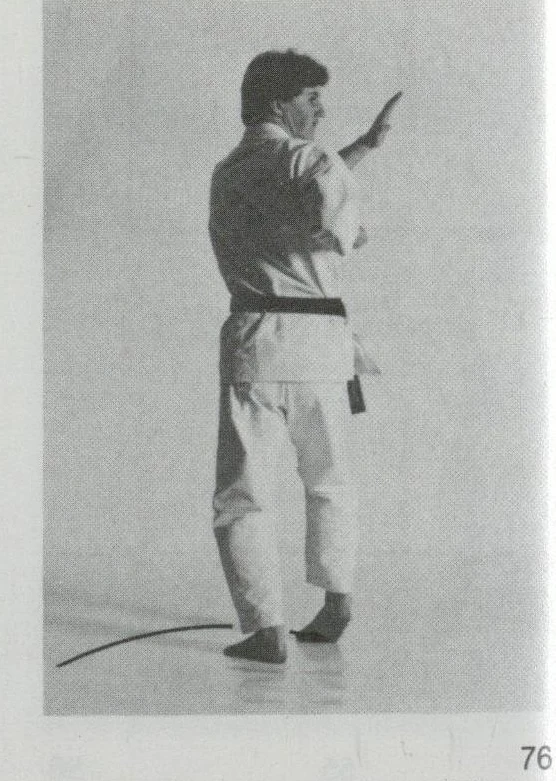
Move the right leg 225° clockwise (ura) turning the body into right zenkutsu dachi at 45° and block right jodan uke (figs. 76 and 77).
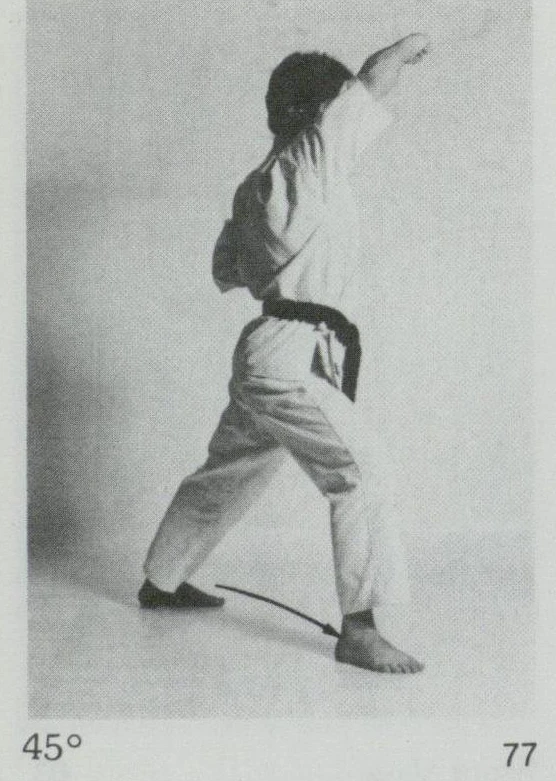
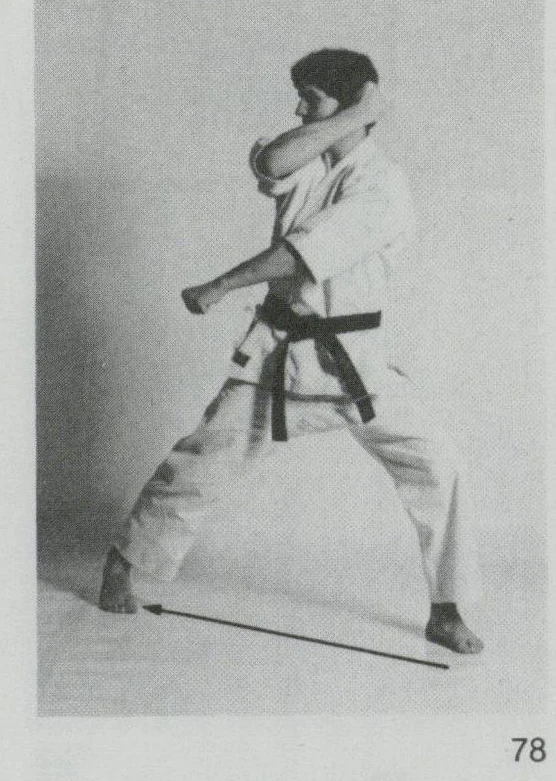
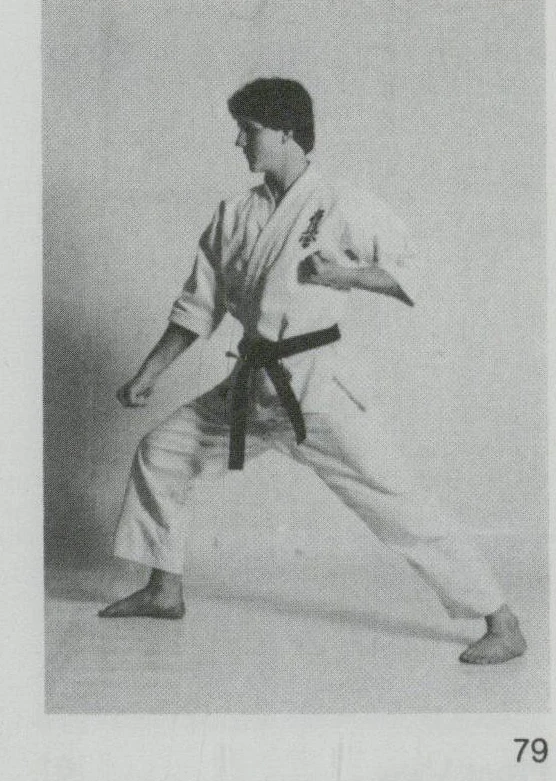
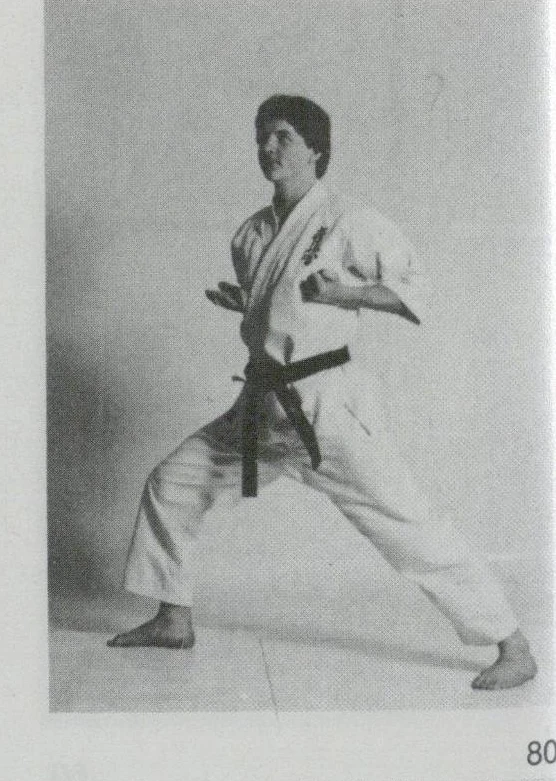
Move the right foot back 135° (fig. 78) into right zenkutsu dachi and block mae gedan barai (fig. 79). Pull the right fist back into the ready punch position and strike jodan nihon nukite at 45° as previously described (figs. 80 and 81).
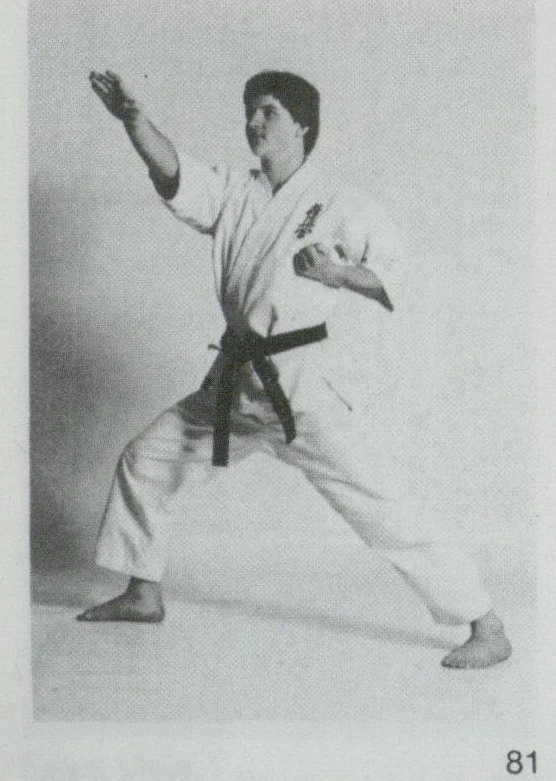
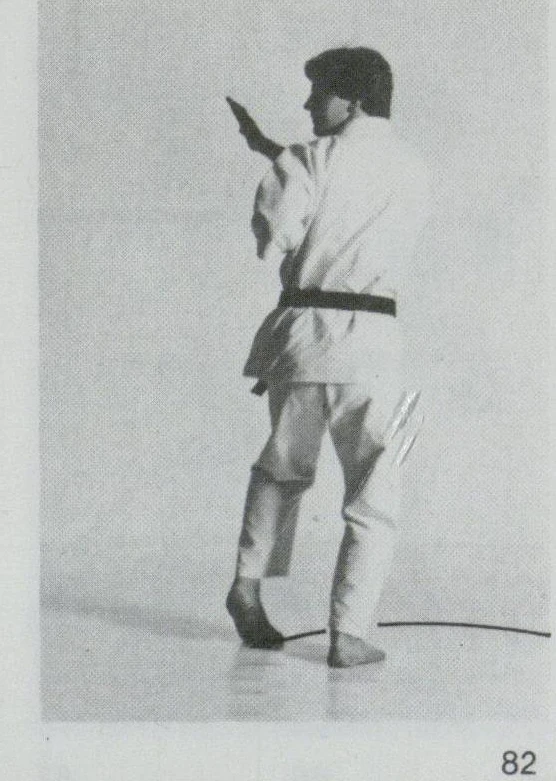
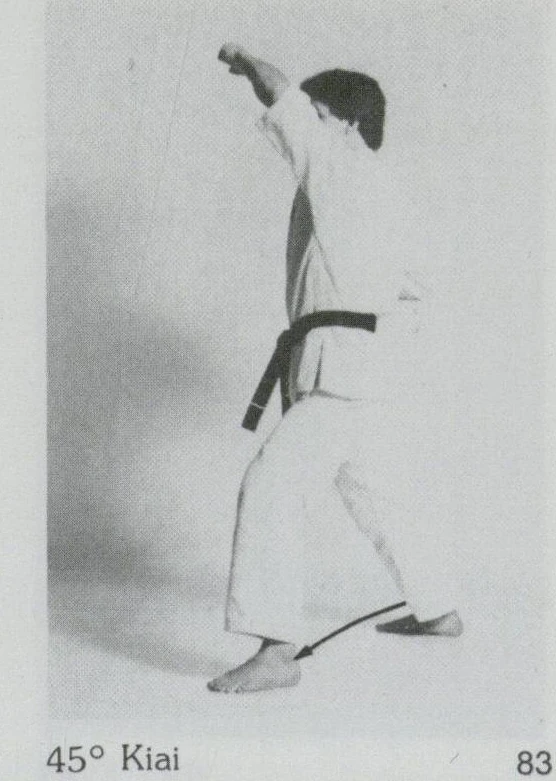
Move the left leg 225° anti-clockwise (ura) turning the body into left zenkutsu dachi at 45° and block left jodan uke and KIAI (figs. 82 and 83).
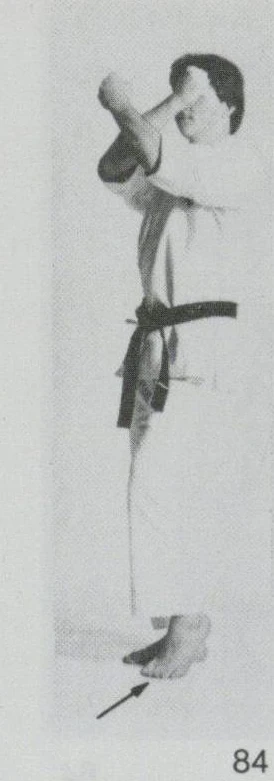
On the command “Naore” move the left foot back into fudo dachi (figs. 84 and 85) to complete the kata.
Ready to Start Training?
Train with us in Wimbledon and start working towards your first grading.
Join Our Classes