Kata
Kata are the formal sequences at the heart of Kyokushin. Every movement is set out below, step by step, with the photographs that go with it. Choose a kata from the list to begin.
Select Kata
Sanchin No Kata
The three points 1. Tempo 2. Power – point of focus 3. Breath control (All of these katas can also be performed in kiai)
- Approximate performance time
- 2 minutes 14 seconds minimum; 2 minutes 17 seconds maximum Kiai 19 seconds minimum; 22 seconds maximum
- Stances
- Fudo Dachi Musubi Dachi Uchi-Hachi-Ji-Dachi Yoi Dachi Sanchin Dachi
Breathing Methods
In all forms of sports and martial arts it is essential to have and maintain a correct method of breathing in order to maximise your efforts, as breathing is indispensible to human life.
By breathing correctly and efficiently you can create an increase in overall power in not only Karate but other martial arts or sports.
There are various methods of breathing used in the martial arts and I will concentrate on two methods: Ibuki breathing and Nogare breathing.
In Sanchin No Kata and other advanced katas ibuki breathing is used.
Throughout the kata the ibuki breathing is performed as explained below whereby the completion of the last forced breath of the ibuki occurs on the completion of the actual technique used (i.e. block or punch).
Ibuki Breathing
By using the ibuki method of breathing from the stomach you can increase your lung capacity and can clean the respiratory system by inhaling clean oxygen which is in turn circulated within the blood stream. Ibuki breathing can also contribute to a hardening of the body. This hardening can take the form of strengthening the stomach and diaphram. You should note that the diaphram in the martial arts is an important source of power. Ibuki breathing can also as circumstances permit correct irregularities in your breathing pattern, brought on by external forces. It is said that if your stomach is controlled then your emotions can be controlled and that in addition ibuki breathing can positively develop an increase in both fighting spirit and concentration. If you can master this method of breathing from the stomach you will have a very good chance of controlling both mental and physical emotions.
Performance Ibuki
- Quickly inhale sharply through the nose or mouth taking the air to the bottom of the lungs.
- Harden the abdomen and force out a sharp long breath, with the tip of the tongue pushing behind the lower teeth. The remainder of the tongue should fall naturally back to the throat. The throat is to be kept wide open and you should harden all the muscles of the body, the abdomen in particular.
- Your chest should maintain expansion throughout and the air in the stomach is forced out for a mental count of five by the stomach’s contraction from deep down in the region of the lower abdomen. The noise of the ibuki should not vary in force or pitch but remain constant from start to finish.
- When the ibuki is nearly complete you should then force out a strong last breath which should harden the abdomen; this last breath must be very strong and should expel all air. This finalises the ibuki breath.
- As a final note it is advised that you practice ibuki in sets of three.
Nogare Breathing
Nogare breathing is simply a method of controlling and calming your breathing pattern after strenuous activity. It can also be used to control your breathing during actual combat, so as to give no indication to your opponent of your breathing condition.
Performance of Nogare
- Inhale quietly through the nose or mouth into the lungs and exhale quietly.
- To control the noise of your breathing on the exhaling action you should place the tongue firmly against the upper palet of the mouth with the tip of the tongue pushed lightly against a slight gap formed between your teeth. It is again important to maintain chest expansion throughout this exercise.
Other methods of performing Sanchin include:
Zenkutsu dachi
Kokutsu dachi
Kiba dachi
under the guidance of an instructor.
These katas can be performed in ibuki nogare in a permanent state of tension and kiai at a faster, more rhythmic pace and can also be performed with kiai or slowly in nogare in a permanent state of tension.
PLEASE NOTE: Only to be performed by shodans and above or at the discretion of the instructor. Kata to be performed purely in each stance followed by change with each movement to the next stance as listed above. Finally random changing, at each student’s discretion, at a four second count between each movement. All of these katas can also be performed in kiai.
Sanchin No Kata
All movements are done slowly unless indicated.
The performance of this kata is based on the principle of torque, isometrics and breathing. It is a kata to build up strength throughout the body and to perfect the techniques used.
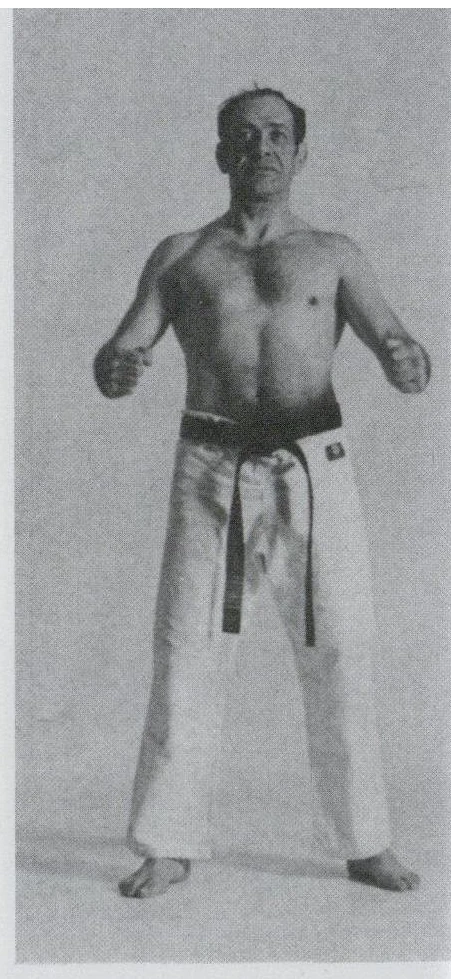
Start the kata in fudo dachi (fig. 1).
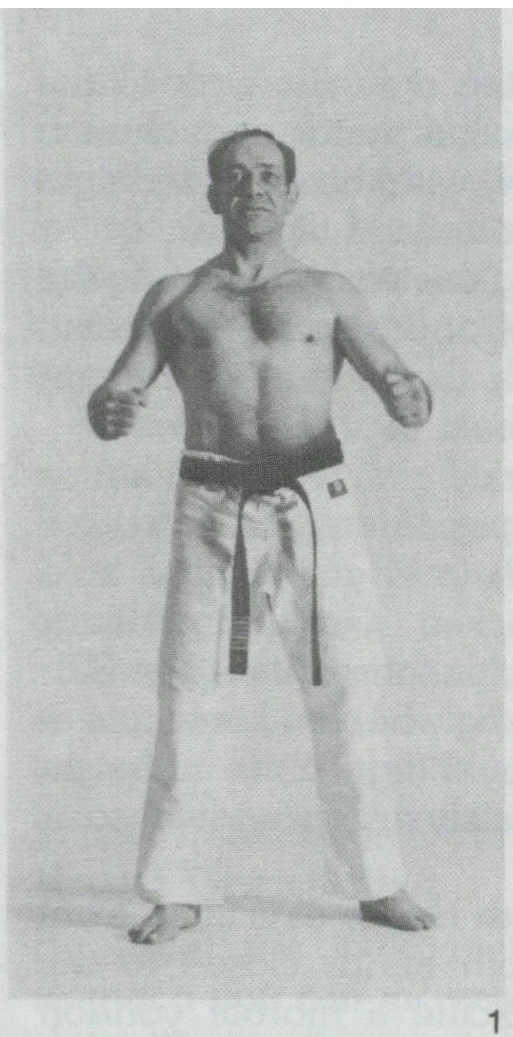
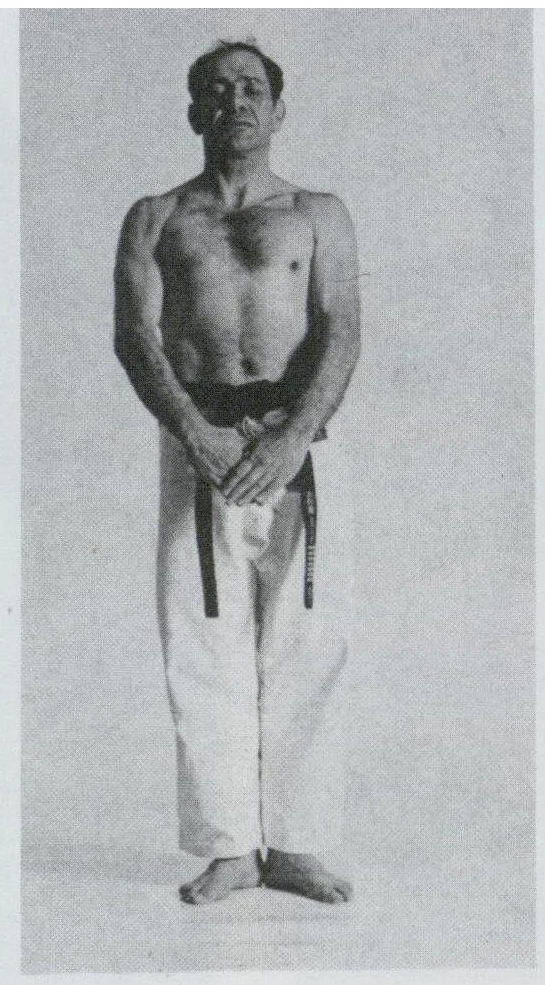
On the command “Mokuso” move into musubi dachi and mokuso (fig. 2).
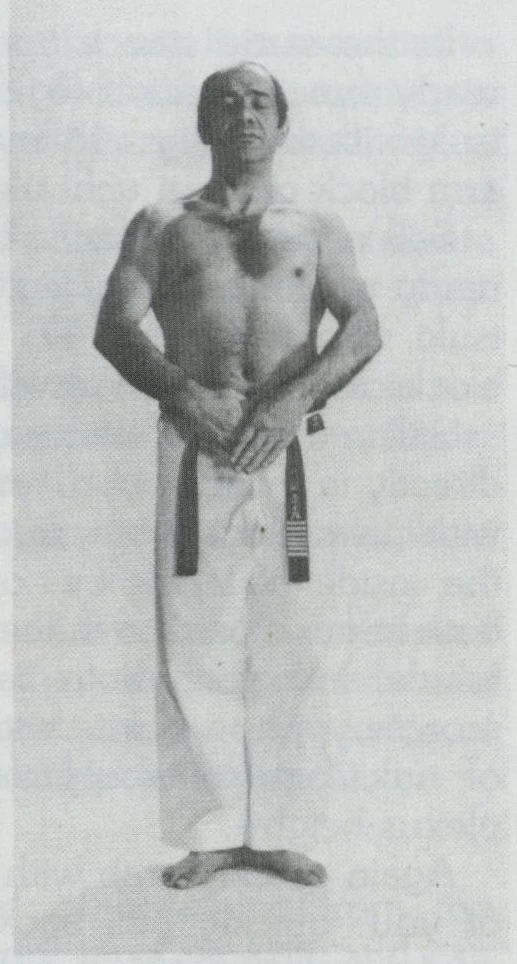
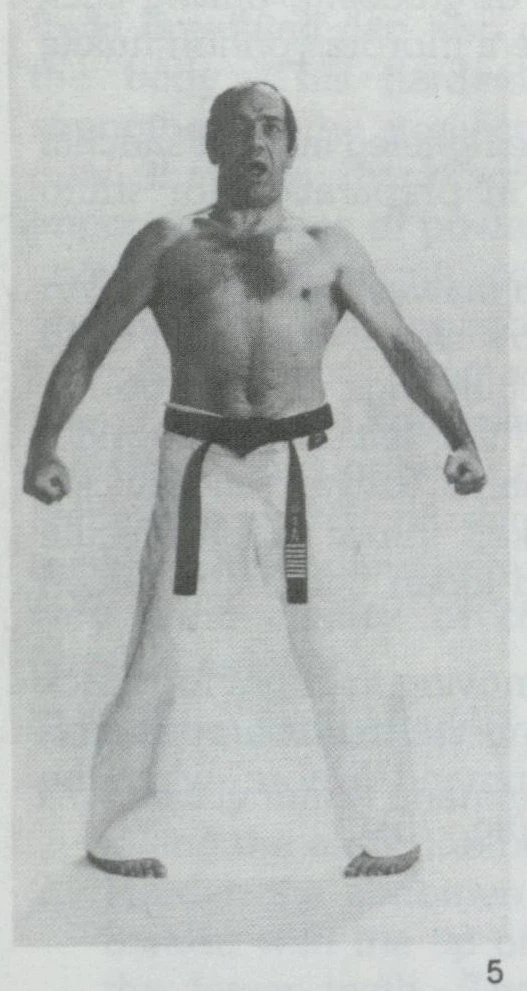
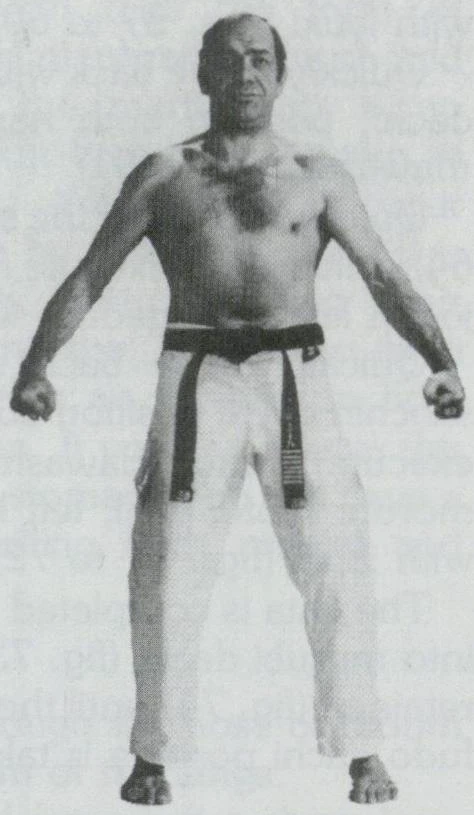
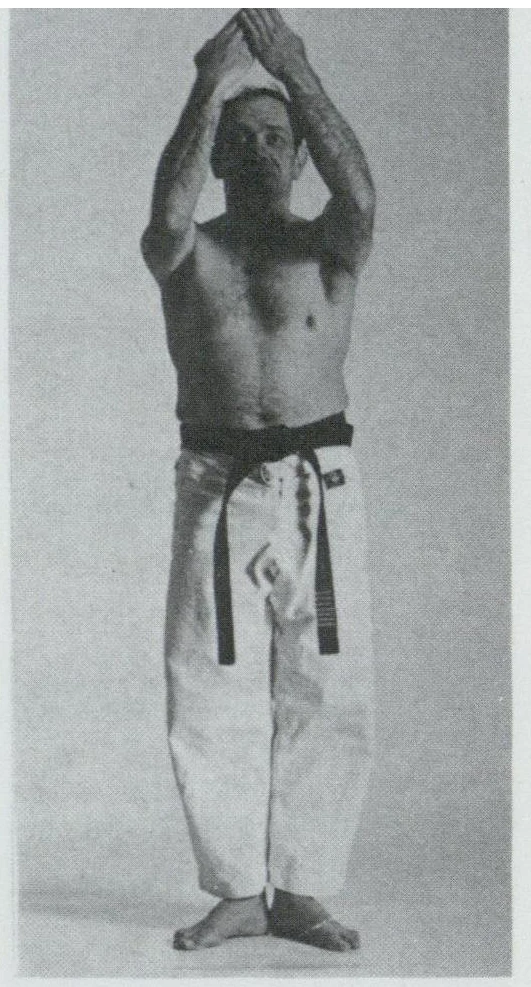
On the second command “Sanchin”, open eyes, move into the yoi position with ibuki (figs. 3 to 6).
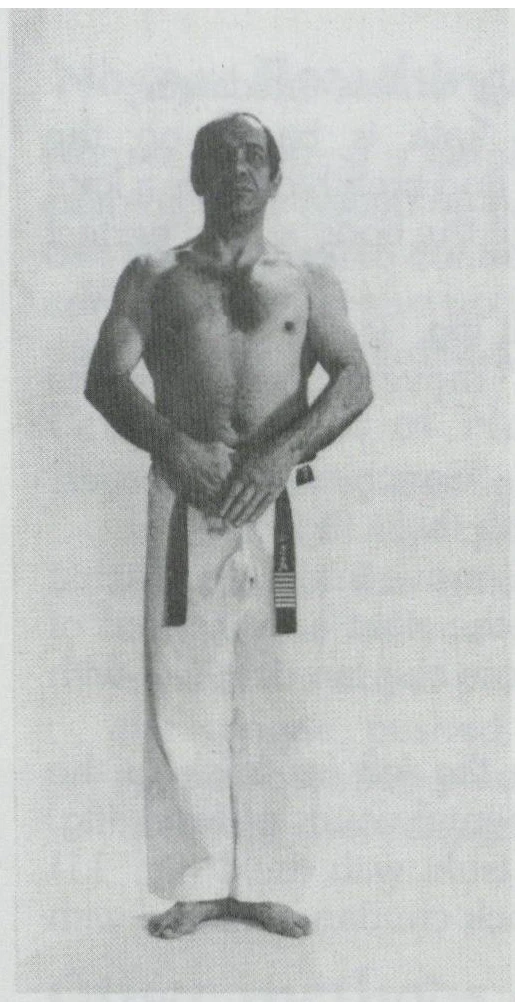
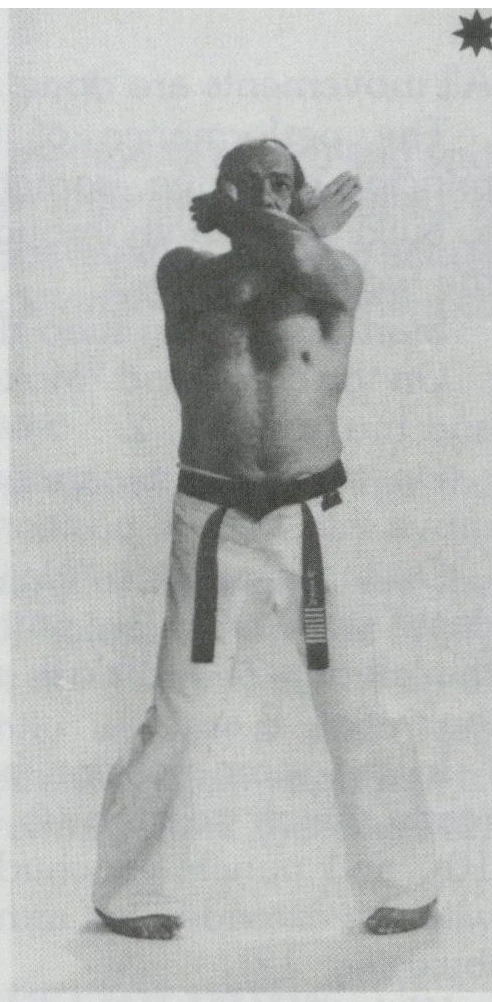
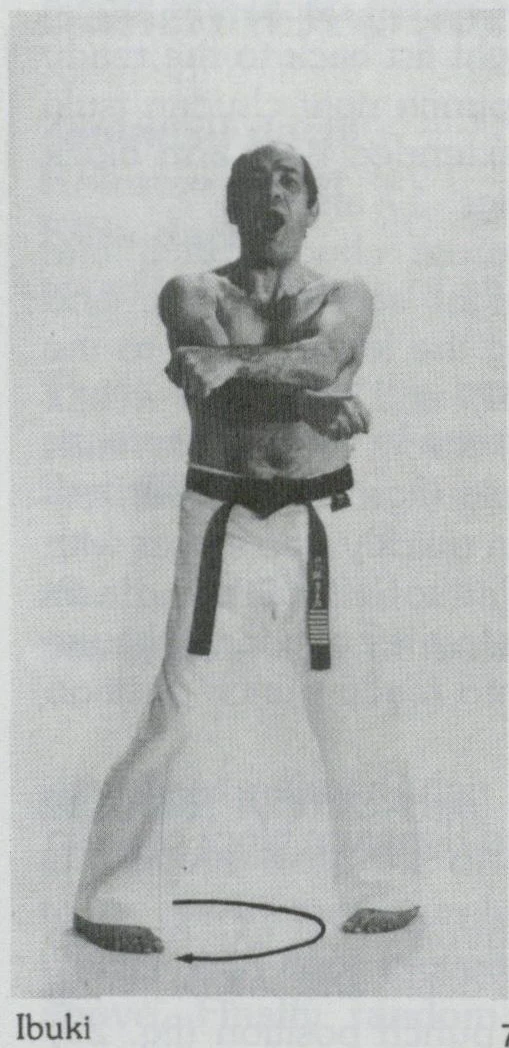
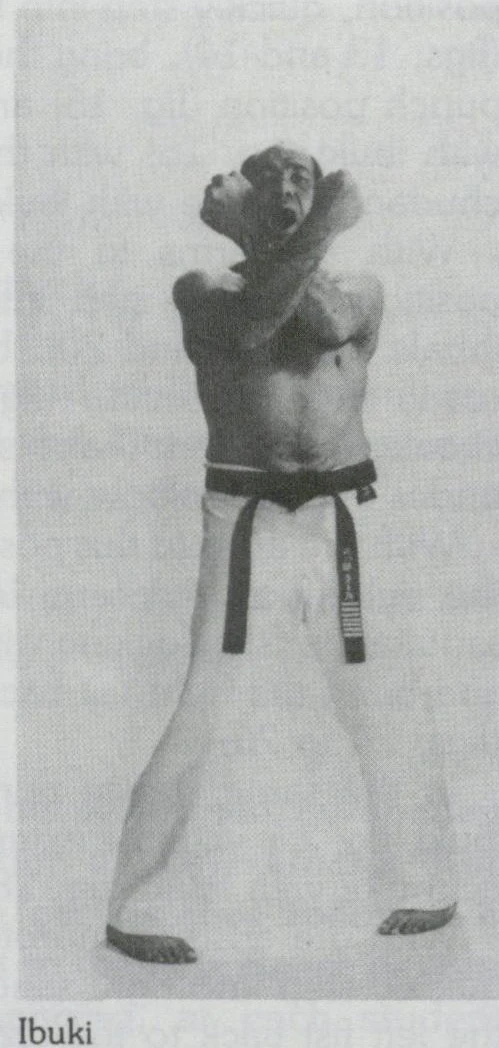
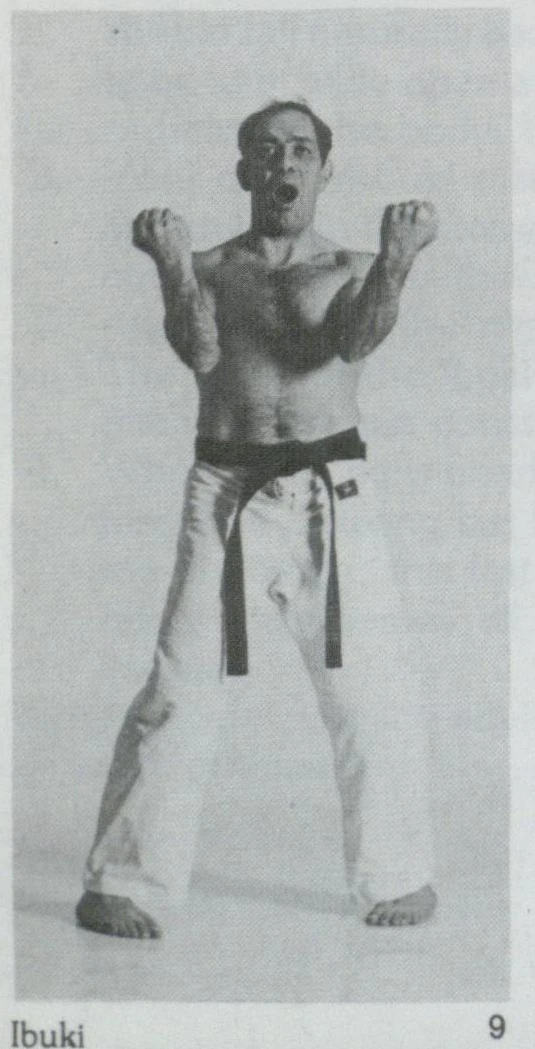
On the command “Hajime” move into right sanchin dachi simultaneously putting the right arm in front of the left (fig. 7) and block morote chudan uchi uke with ibuki (figs. 8 and 9).
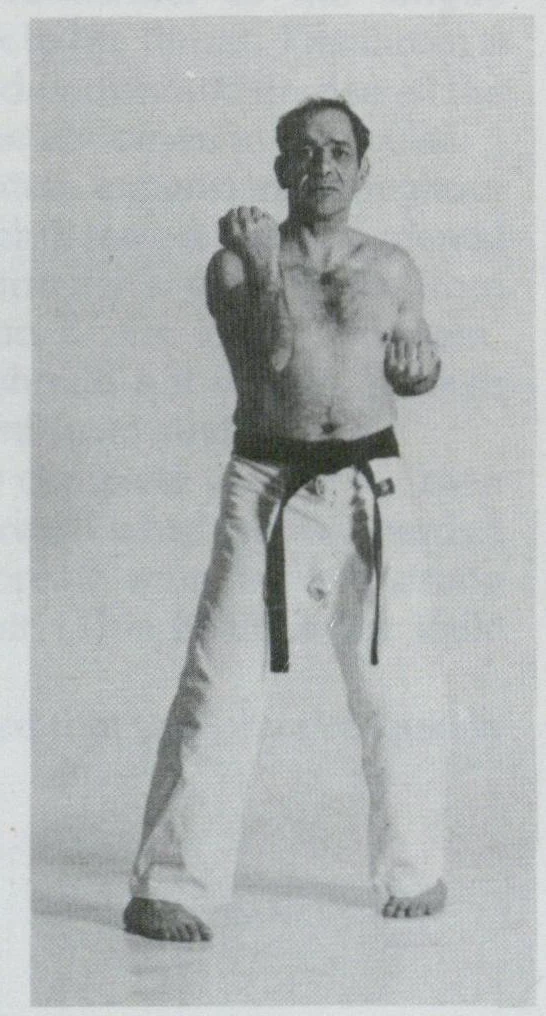
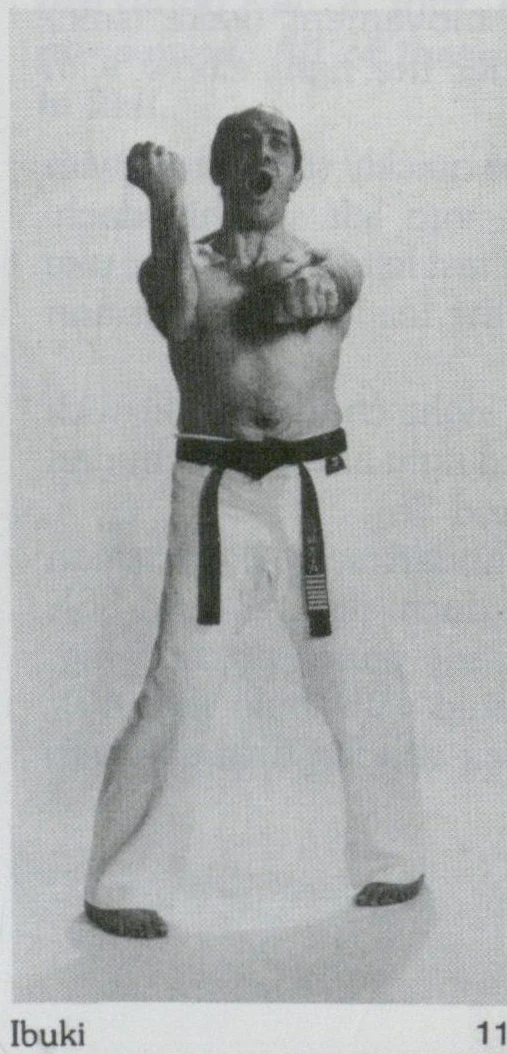
In the same position bring the left fist back to the ready punch position (to a mental count of four) (fig. 10), and punch left chudan tsuki with ibuki (fig. 11) with the extended left arm block chudan uchi uke with ibuki (fig. 12).
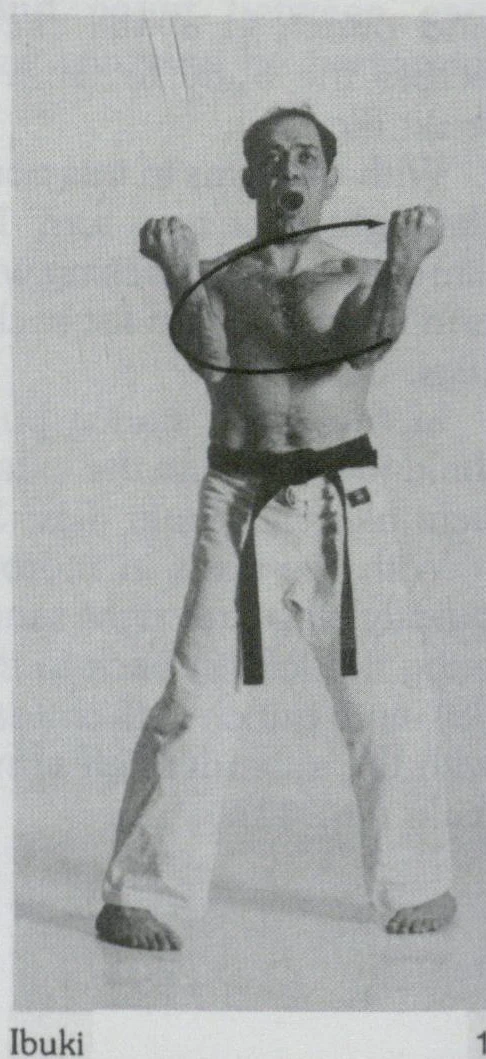
With the arms in the morote chudan uchi uke position, quickly step into left sanchin dachi and inhale (figs. 13 and 14), bring the right fist back to the ready punch position (fig. 15) and punch right chudan tsuki with ibuki (fig. 16) with the extended right arm block chudan uchi uke with ibuki (figs. 17 and 18).
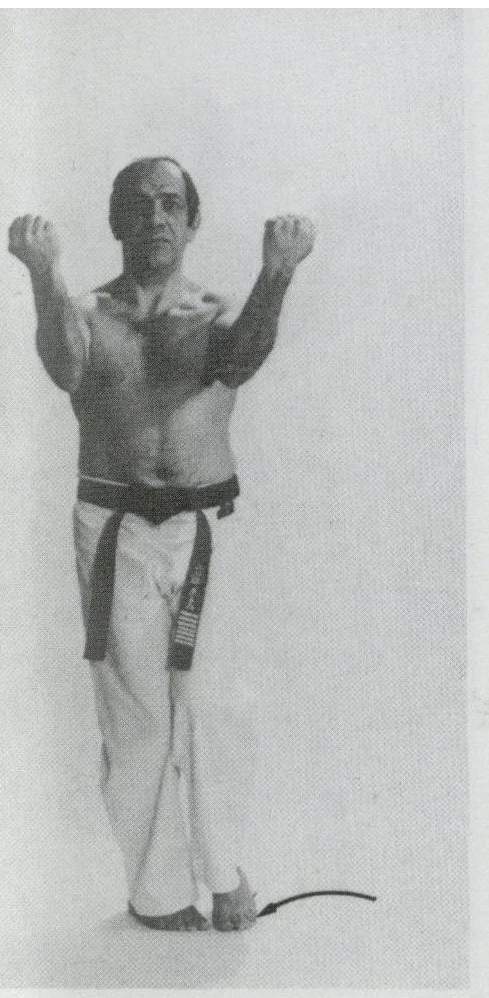
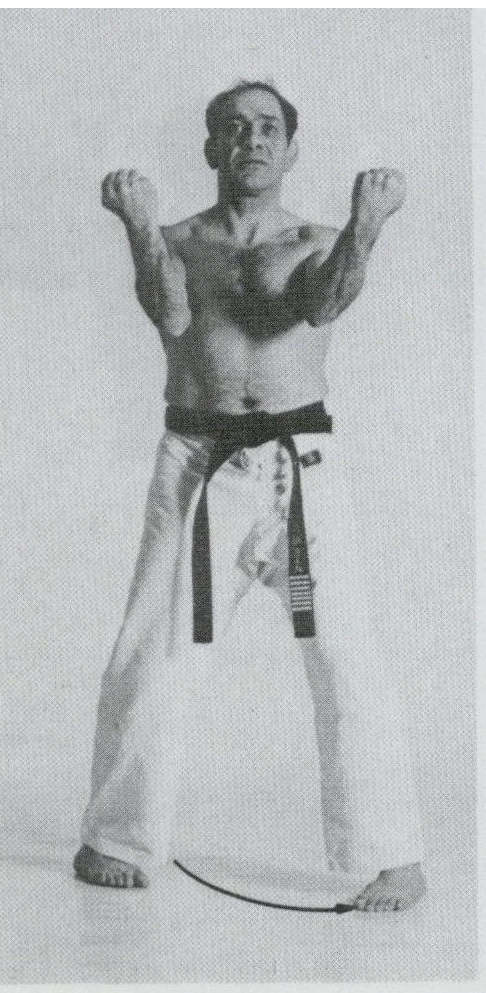
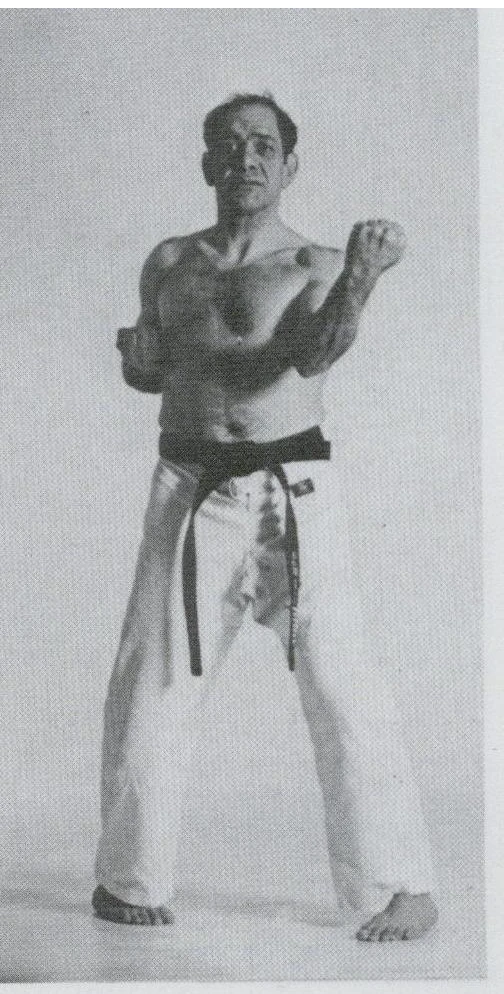
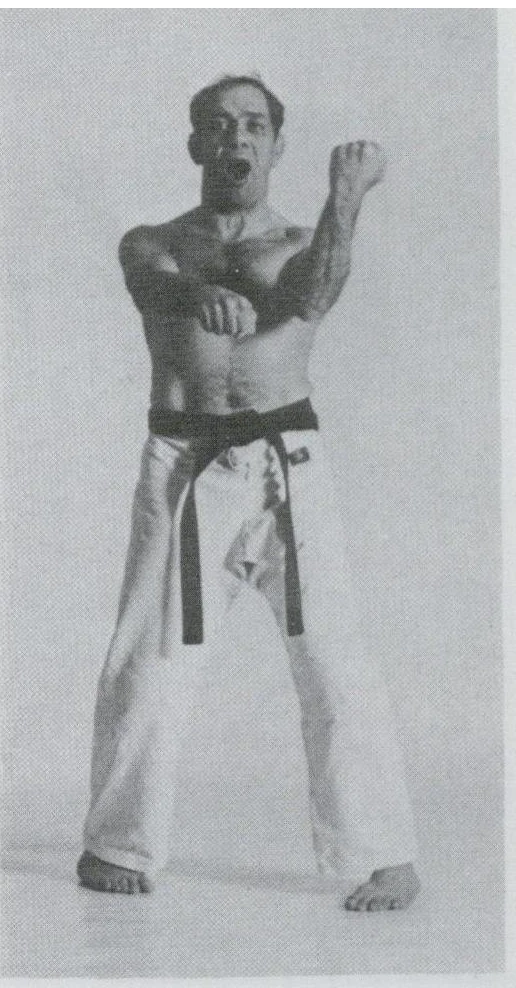
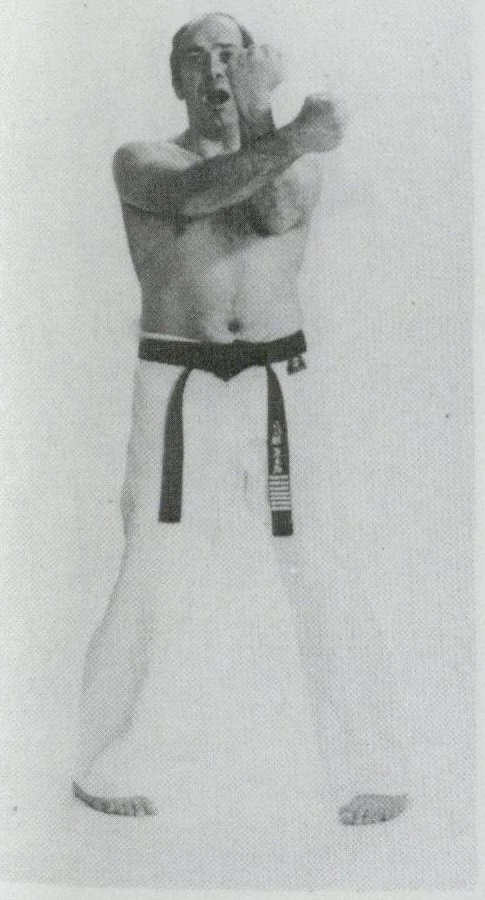
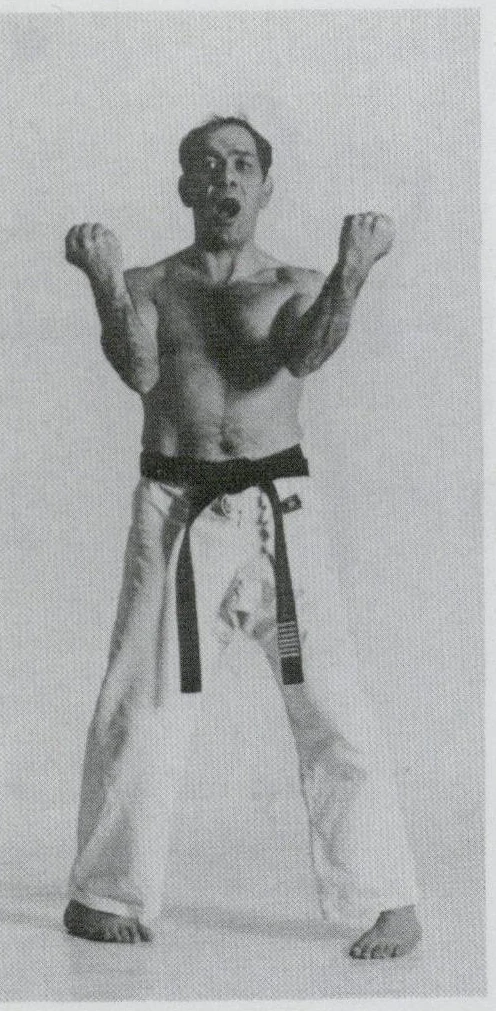
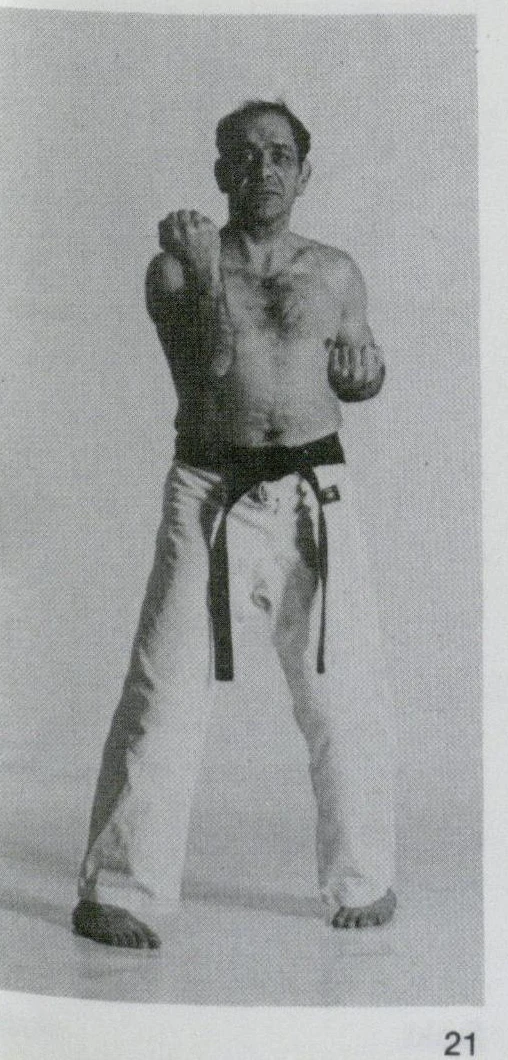
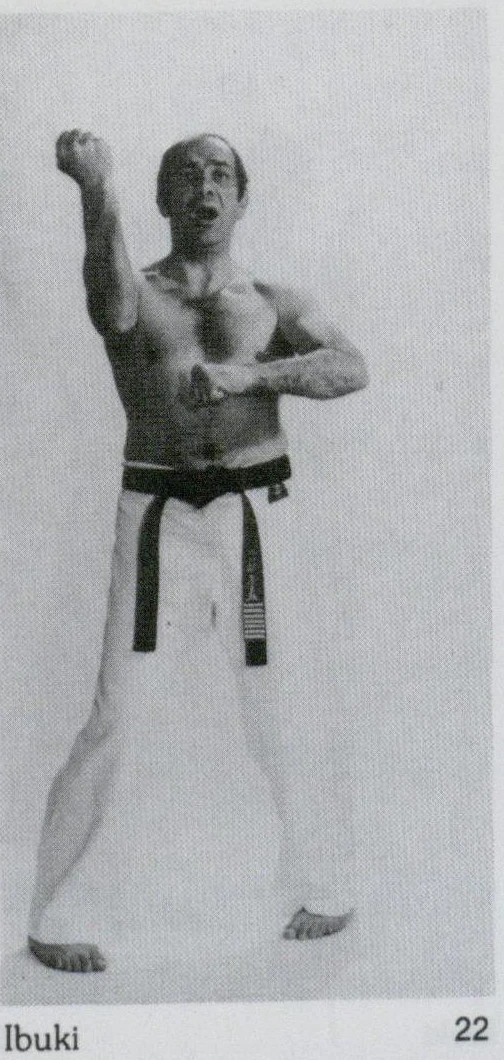
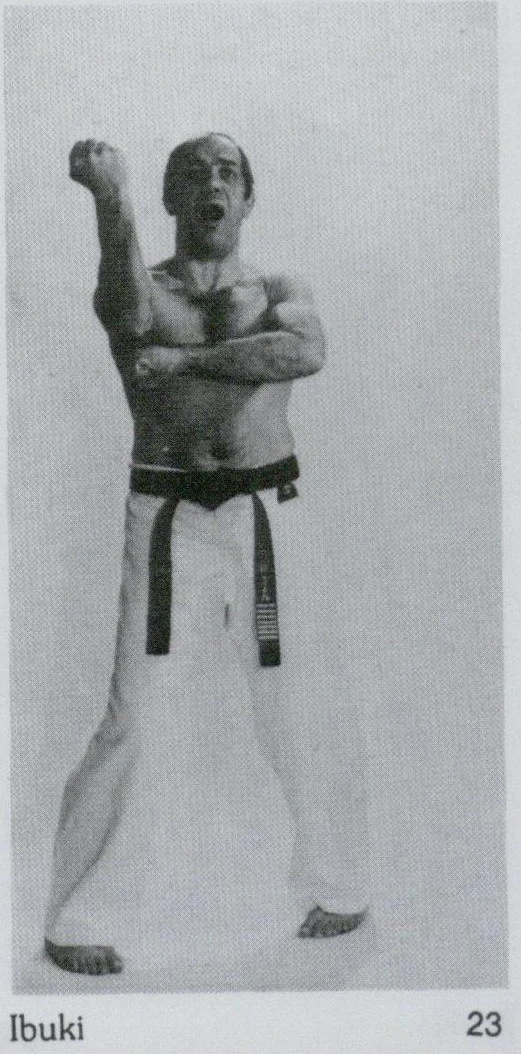
With the arms in the morote chudan uchi uke position, quickly step into right sanchin dachi and inhale (figs. 19 and 20), bring the left fist back to the ready punch position (fig. 21) and punch in a half circular movement (kake tsuki) across the body to finish under the right elbow with ibuki (figs. 22 and 23).
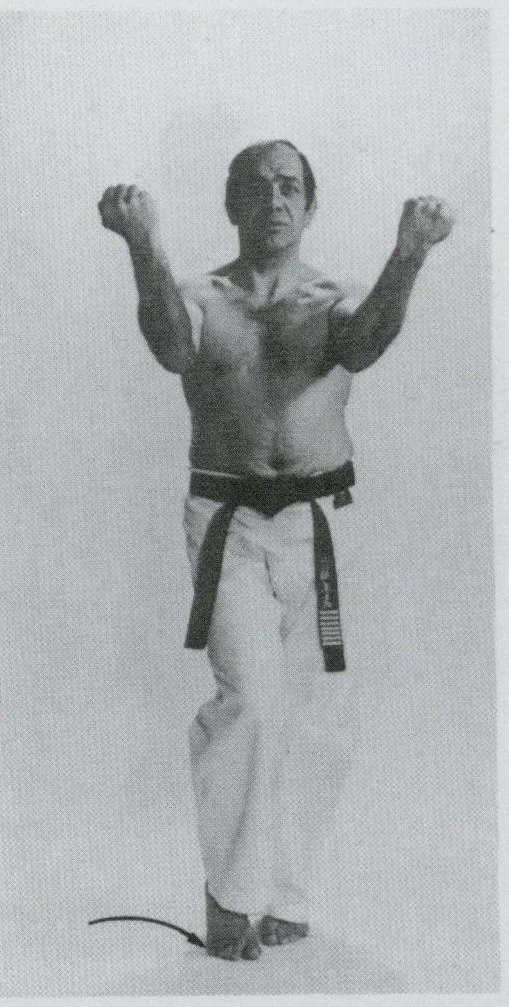
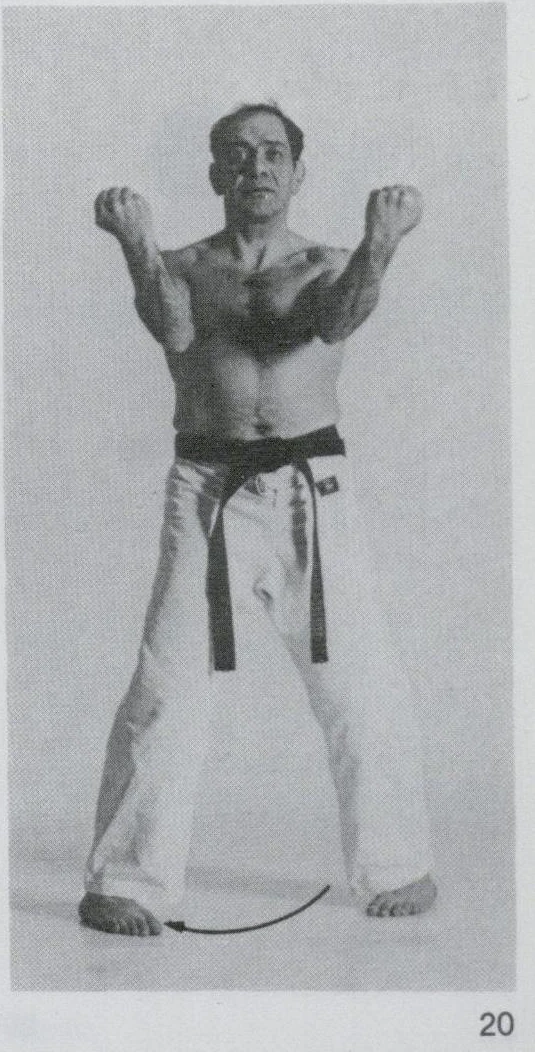
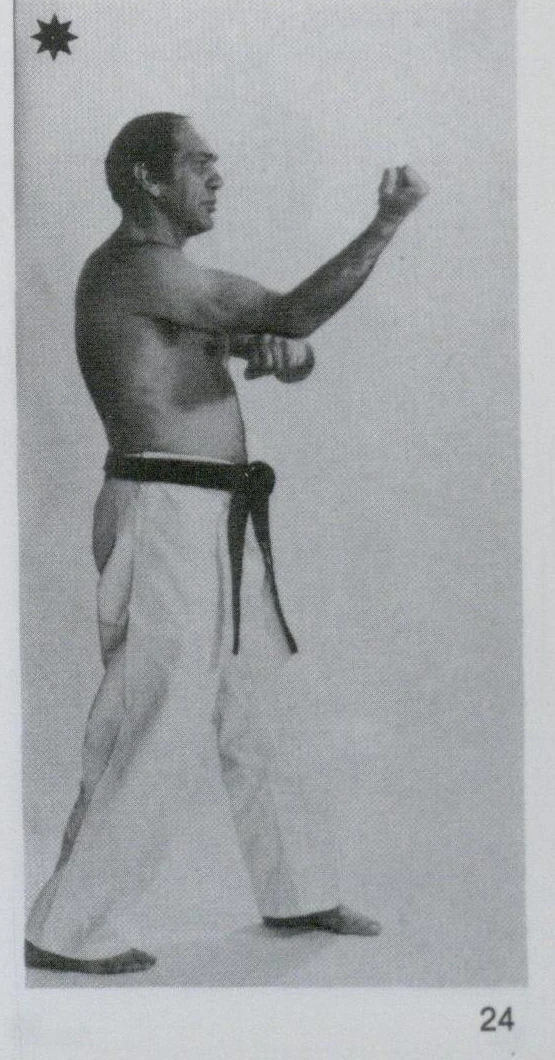
With the arms in this position quickly step across with the right foot and turn 180° into left sanchin dachi simultaneously blocking with a fast left chudan uchi uke and bring the right fist back into ready punch position (figs. 24 to 26).
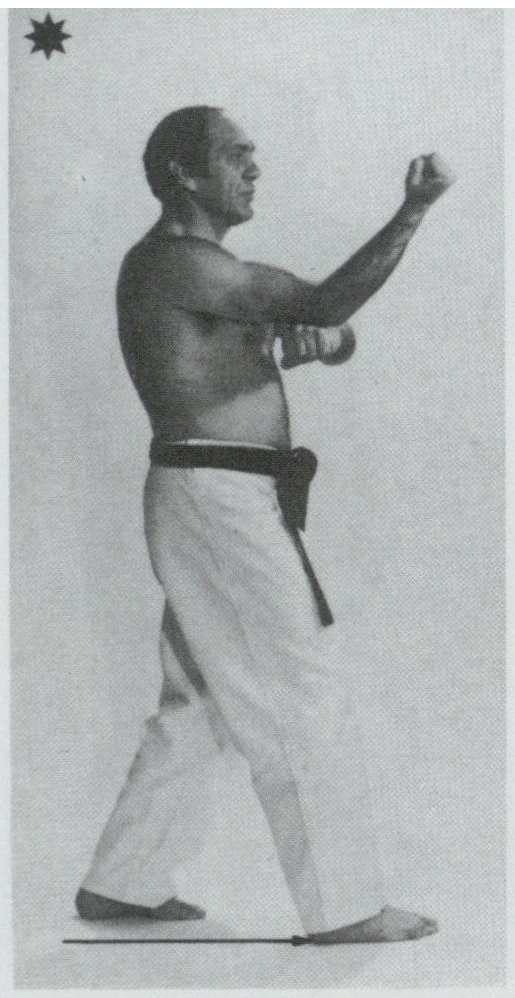
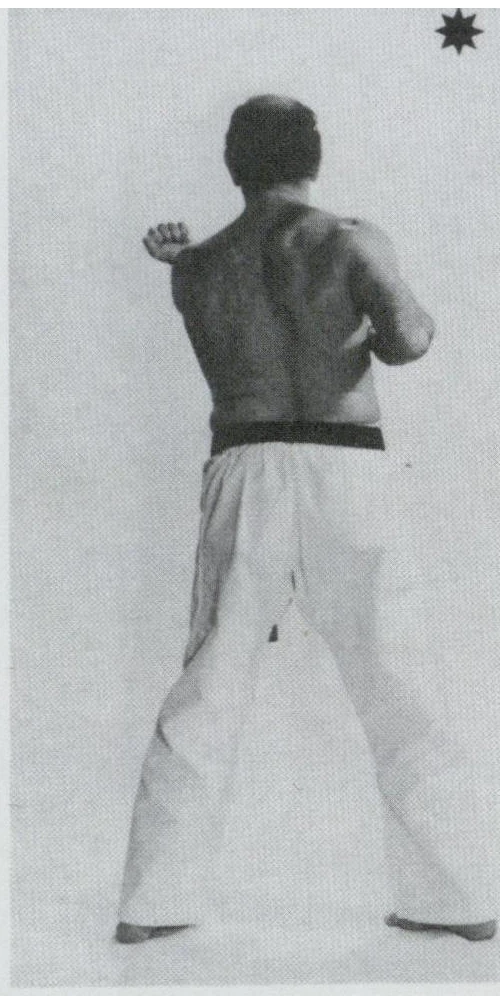
In the same stance punch right chudan tsuki with ibuki (fig. 27) with the extended right arm block chudan uchi uke with ibuki (fig. 28).
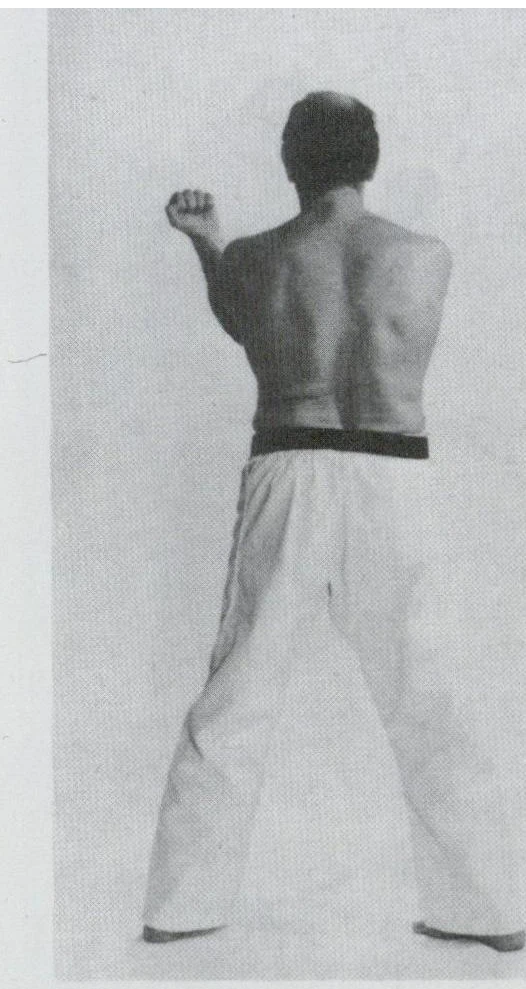
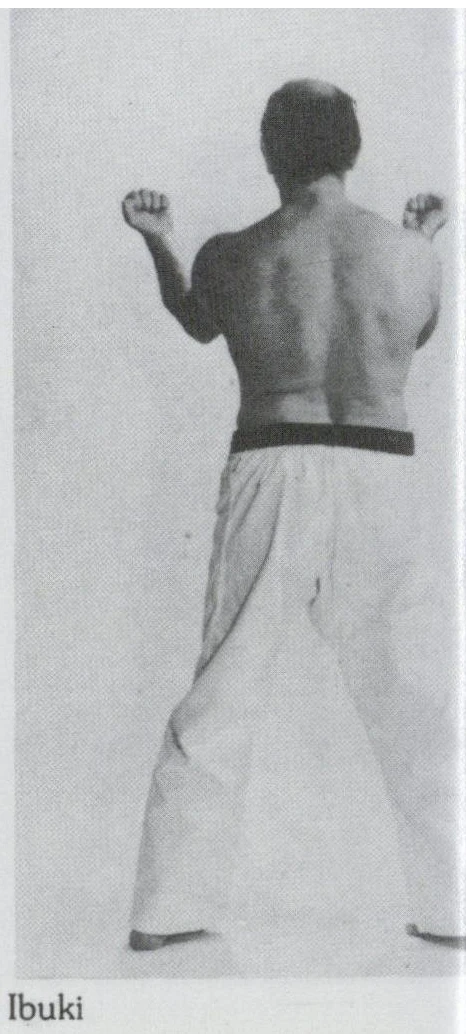
With the arms in morote chudan uchi uke position quickly step into right sanchin dachi and inhale, bring the left fist back to the ready punch position (fig. 29) and punch in a half circular movement (kake tsuki) across the body to finish under the right elbow with ibuki (fig. 30).
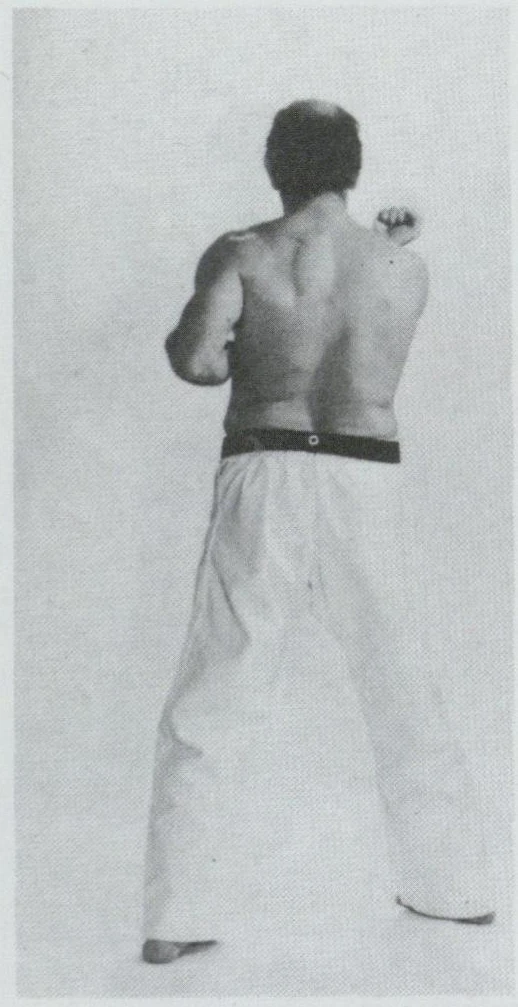
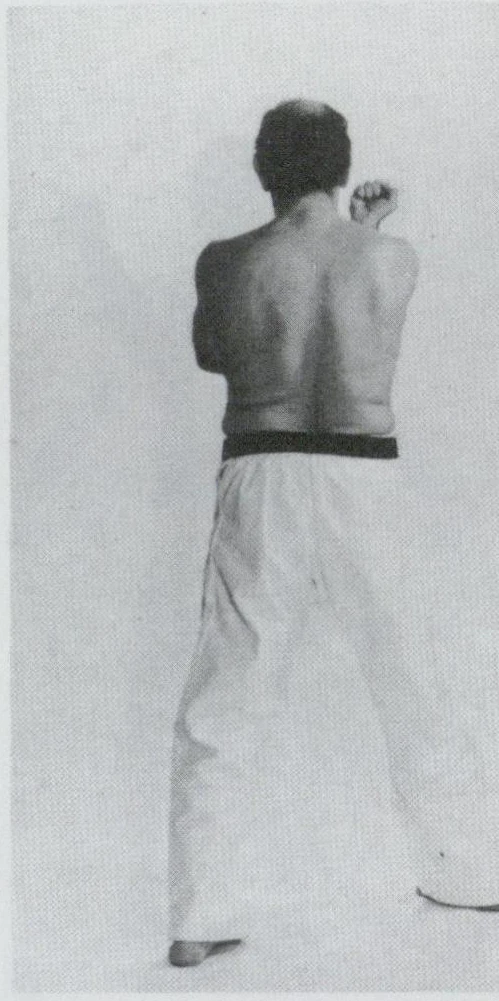
With the arms in this position quickly step across with the right foot and turn 180° into left sanchin dachi simultaneously blocking with a fast left chudan uchi uke and bring the right fist back to the ready punch position (figs. 31 to 33).
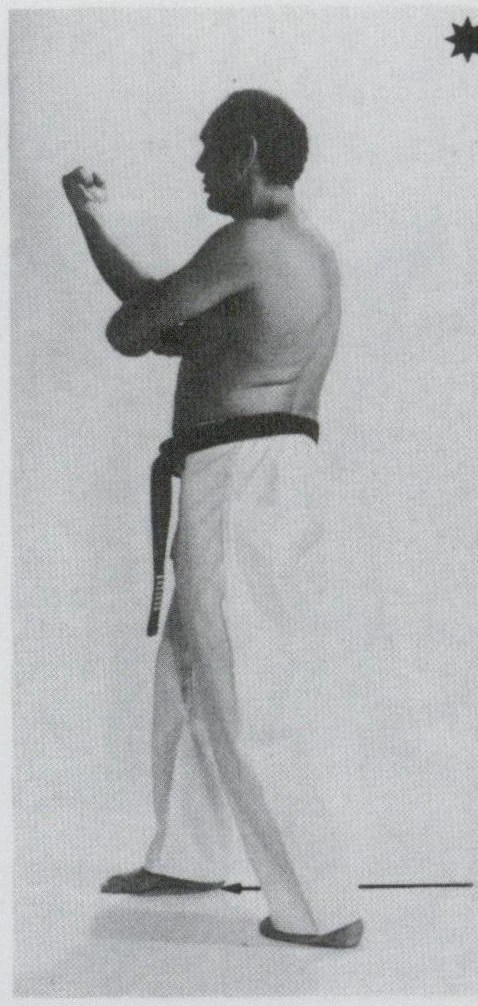
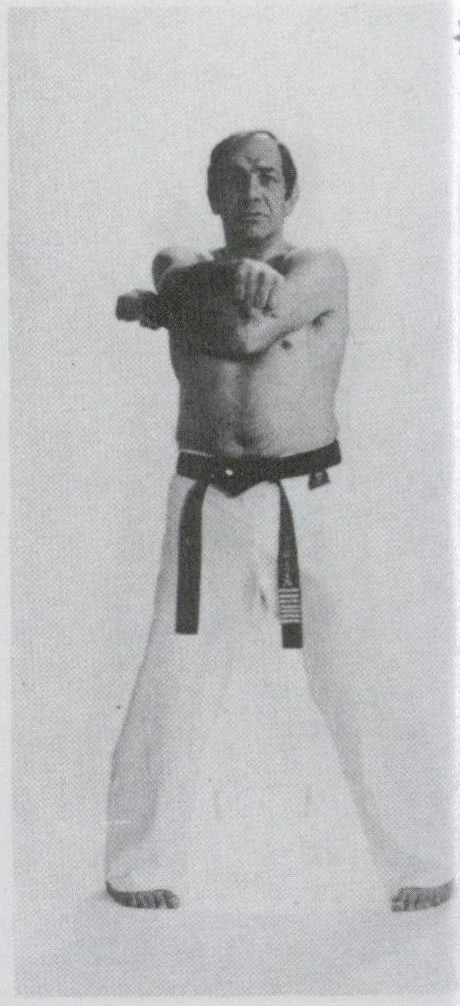
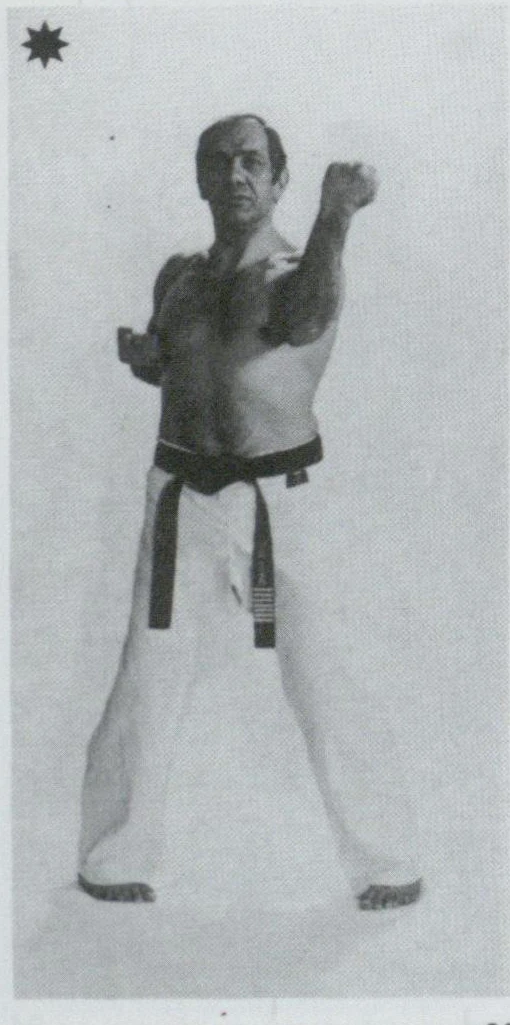
In the same stance punch right chudan tsuki with ibuki (fig. 34) with the extended right arm block chudan uchi uke with ibuki (figs. 35 and 36).
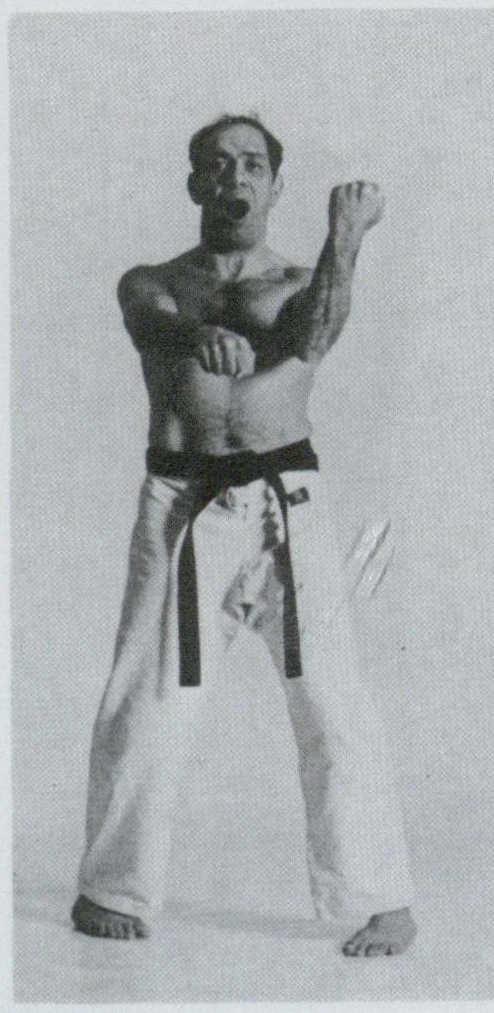
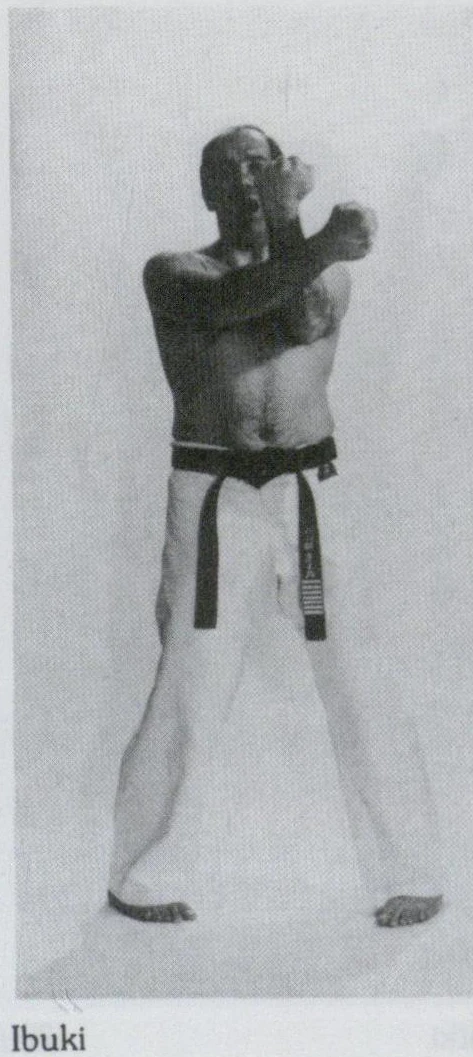
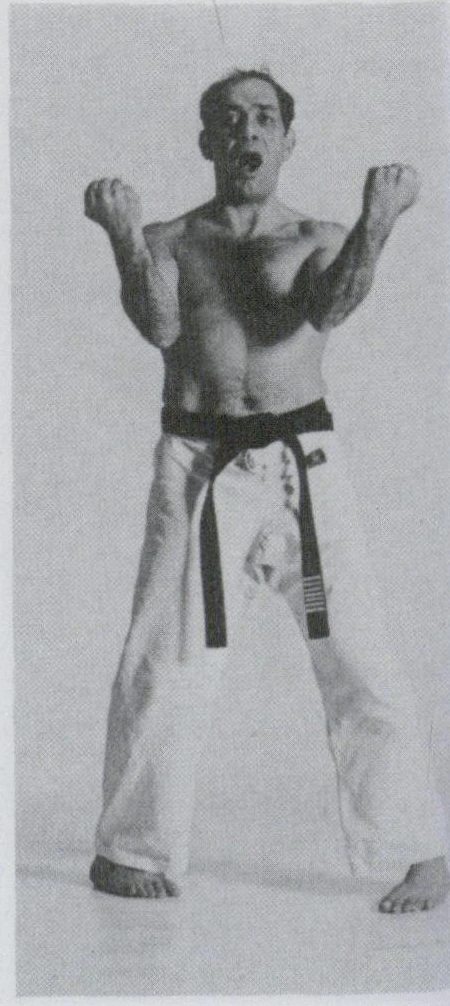
With the arms in morote chudan uchi uke position quickly step into right sanchin dachi (figs. 37 and 38), bring the left fist back to the ready punch position (fig. 39) and punch left chudan tsuki with ibuki (fig. 40), with the extended left arm block chudan uchi uke with ibuki (fig. 41).
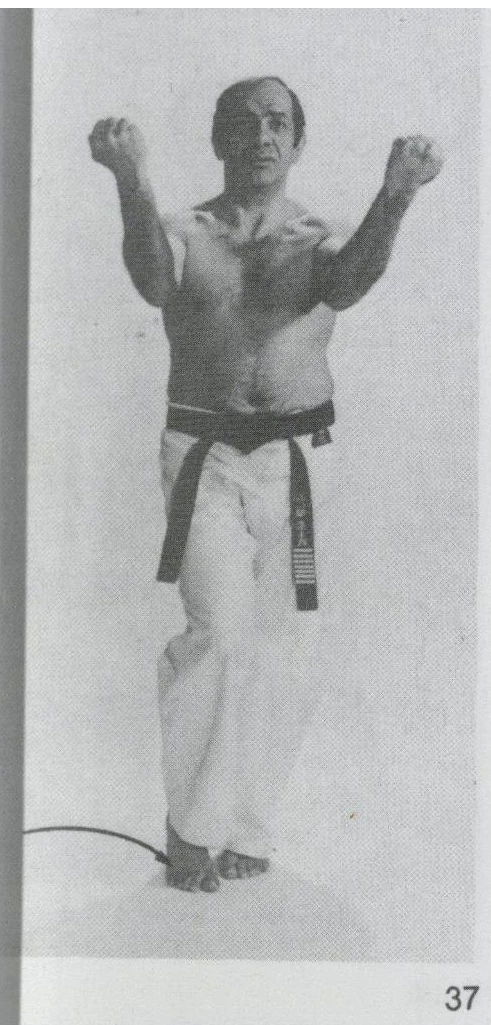
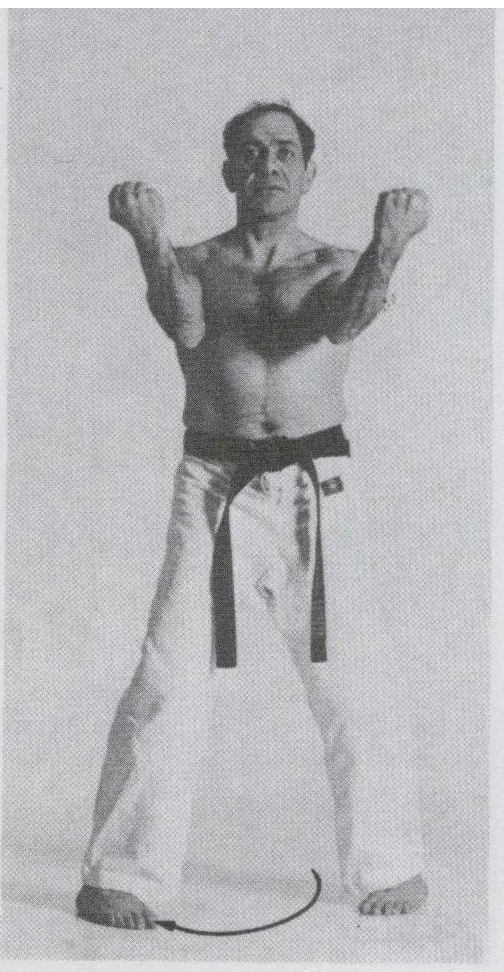
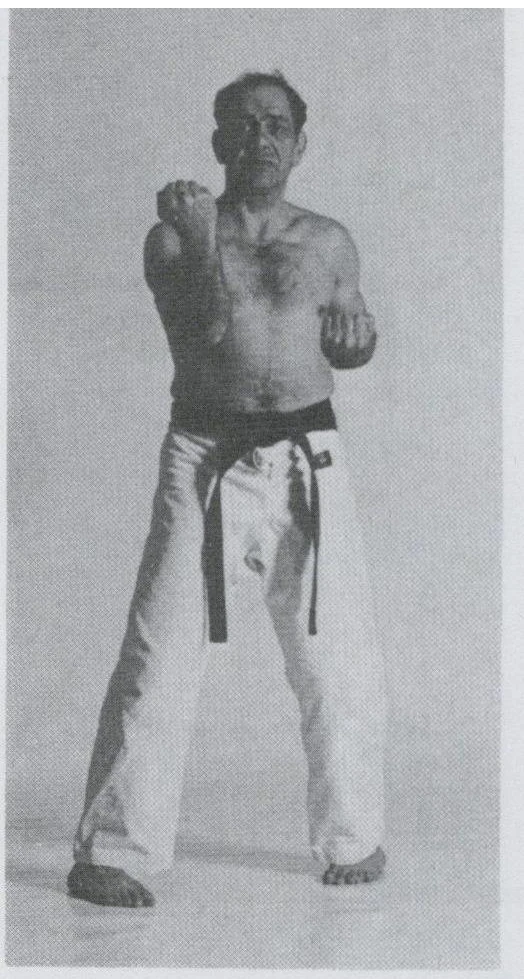
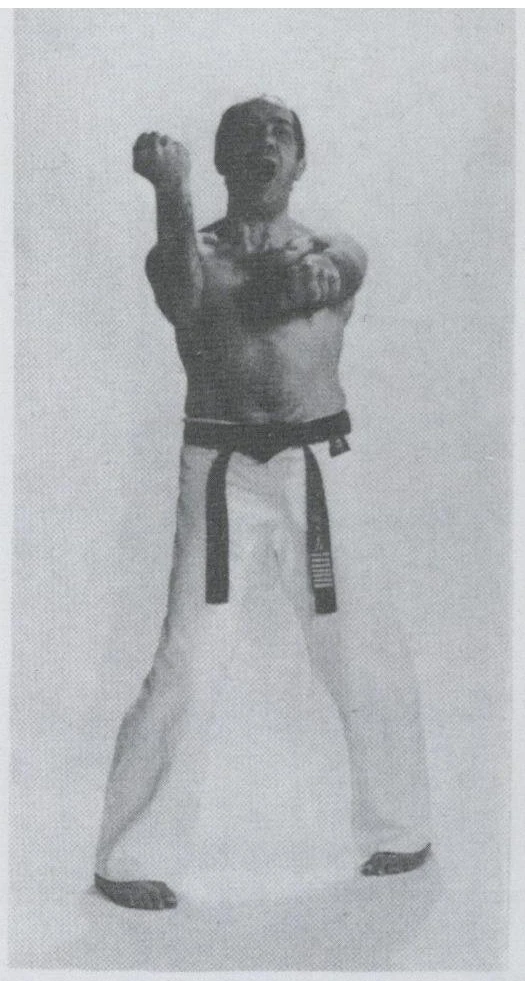
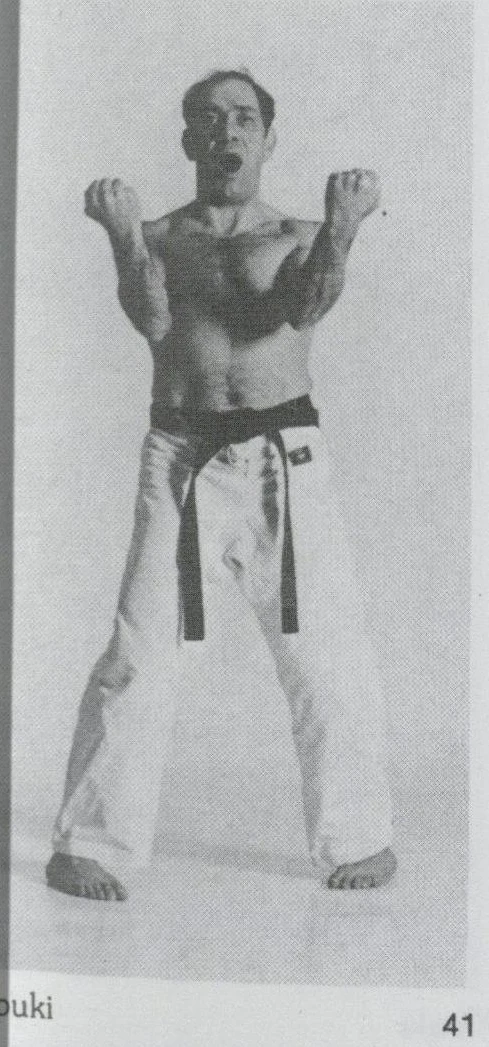
In the same stance bring the right fist back to the ready punch position (fig. 42) and punch right chudan tsuki with ibuki (figs. 43 and 44) with the extended right arm block chudan uchi uke with ibuki (fig. 45).
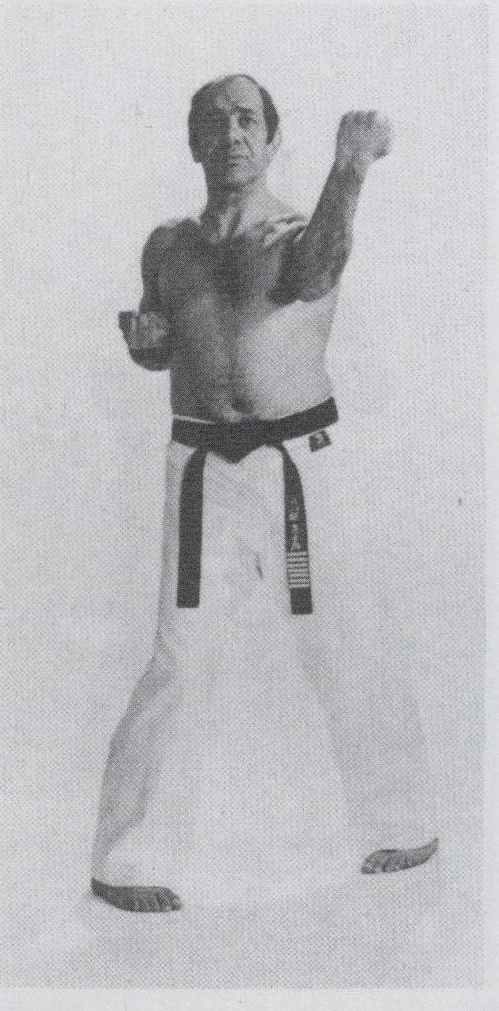
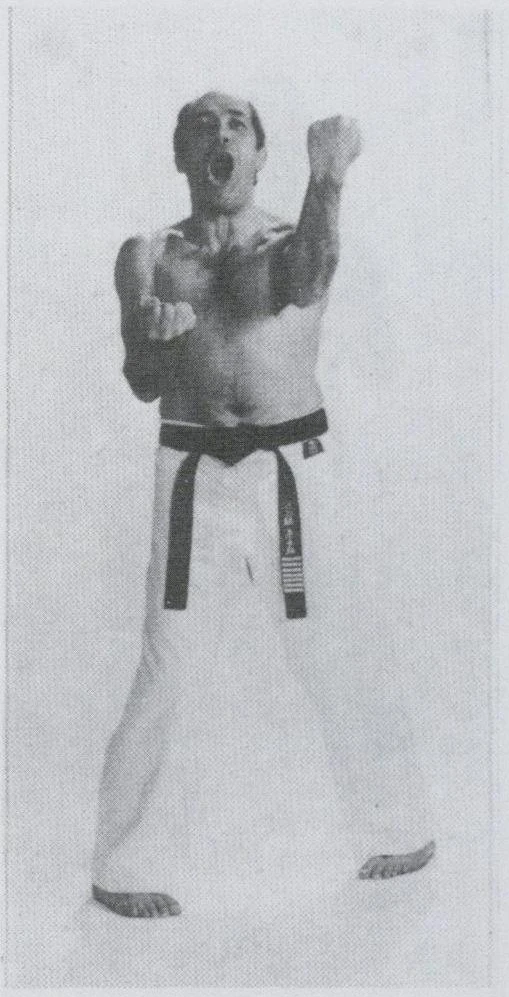
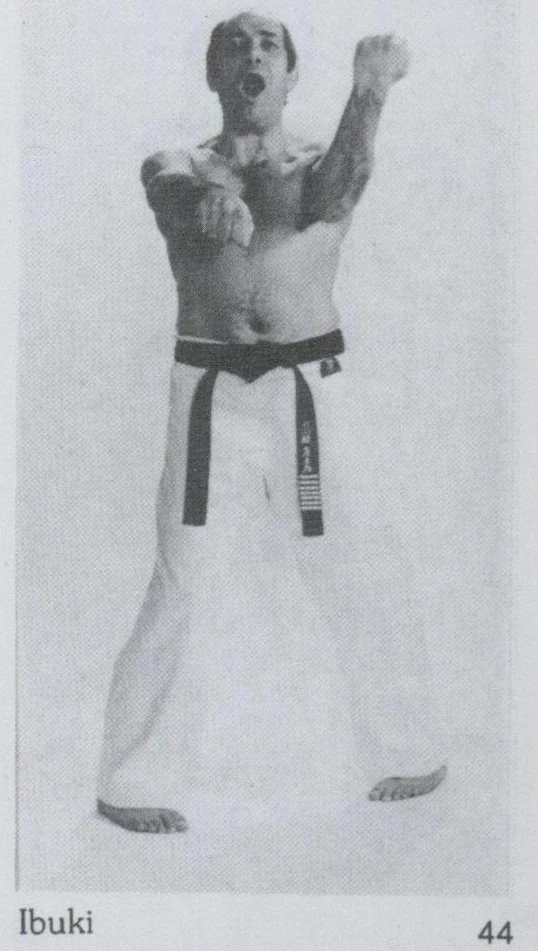
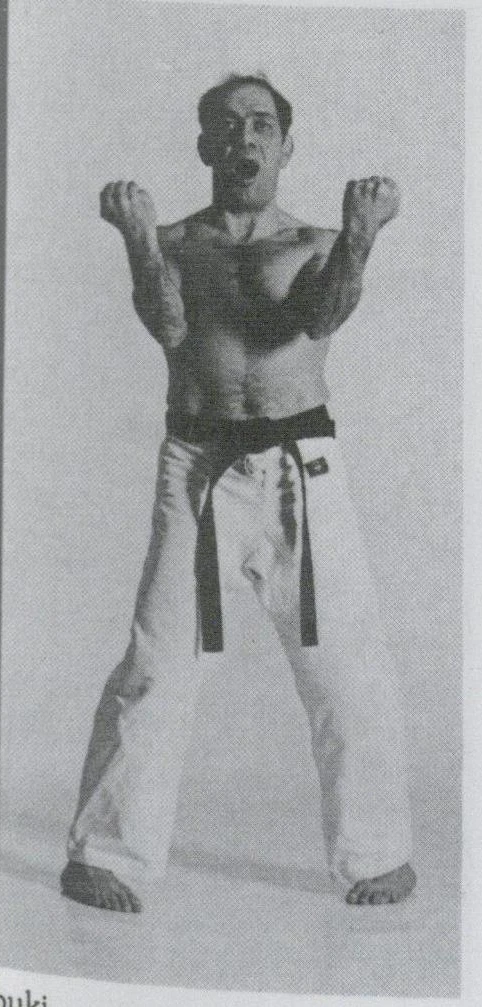
Still in the same stance bring the left fist back into the ready punch position (fig. 46) and punch left chudan tsuki with ibuki (fig. 47) with the extended left arm block chudan uchi uke with ibuki (fig. 48).
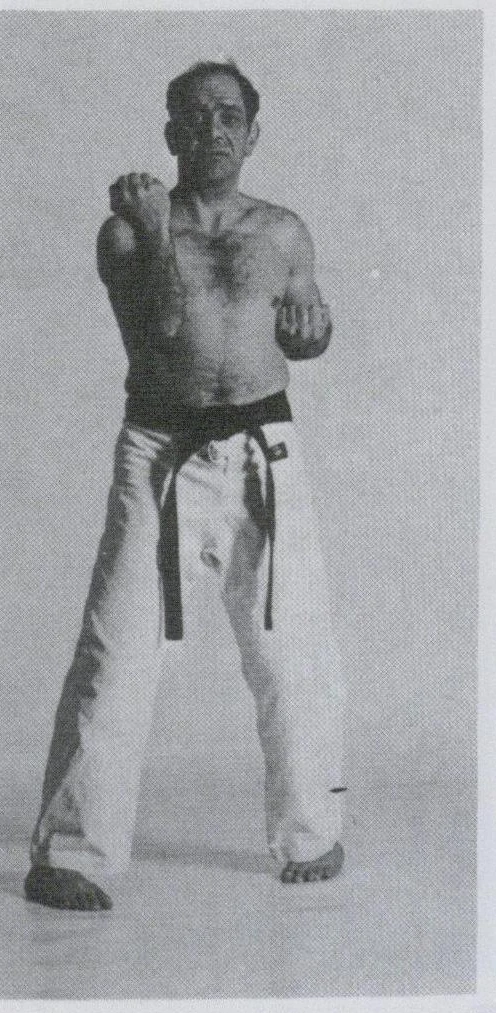
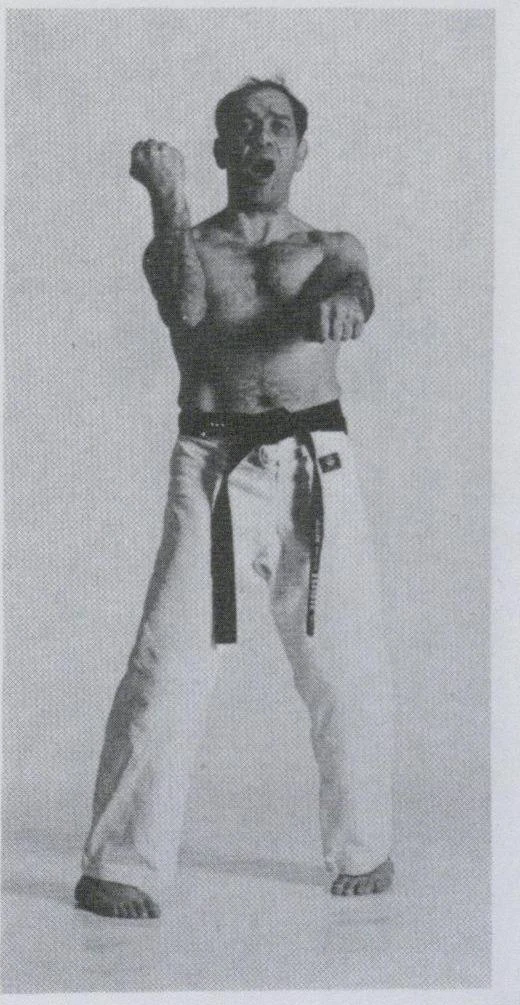
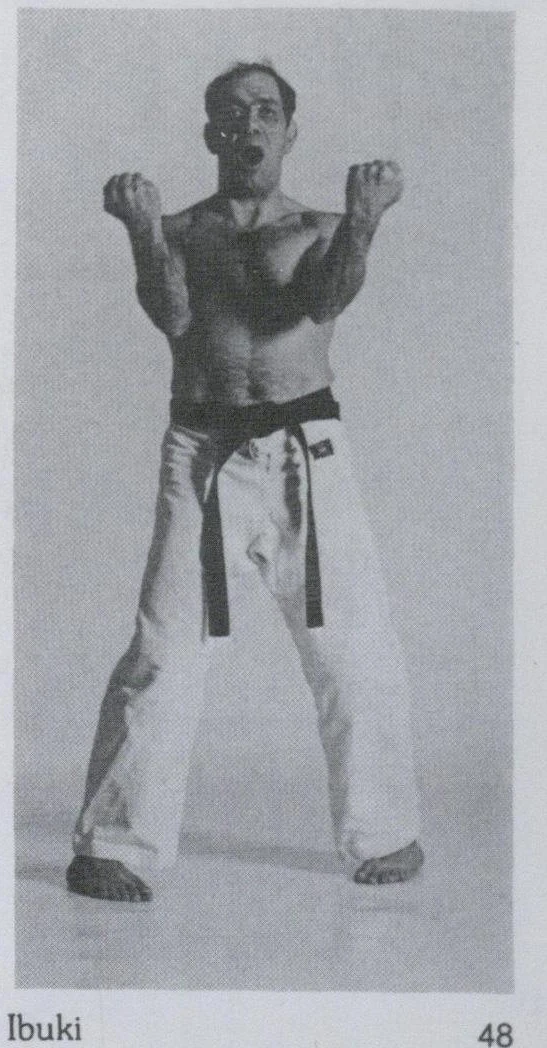
Still in the same stance quickly grab with both hands directly in front of you, at approximately neck height, with palms facing out (fig. 49) (n.b. grab as if to hold the inside of lapels i.e. of jacket). Quickly pull back both hands closed to the ready punch position (fig. 50). Inhale and open both fists (fig. 51) and execute a morote yonhon nukite with ibuki (fig. 52) (n.b. height of nukite strike is approximately at your own solar plexus height).
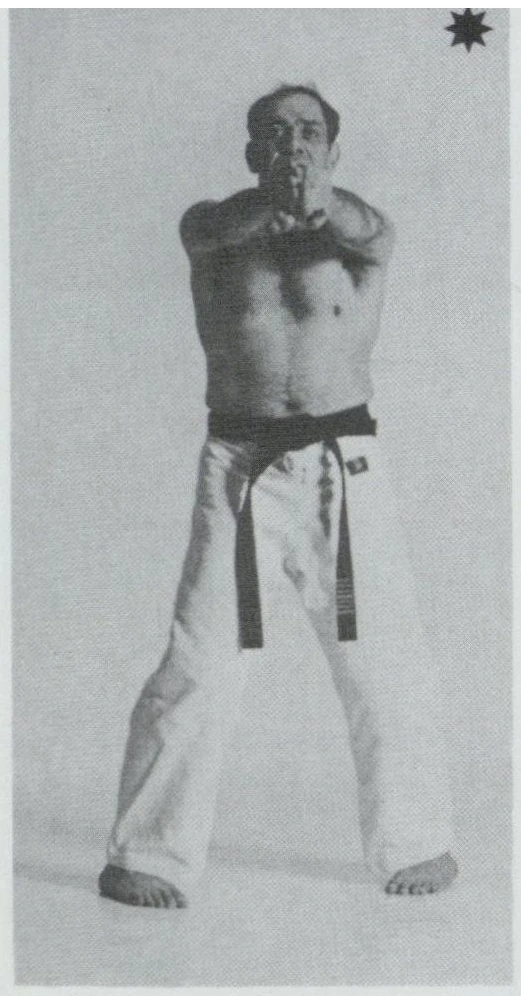
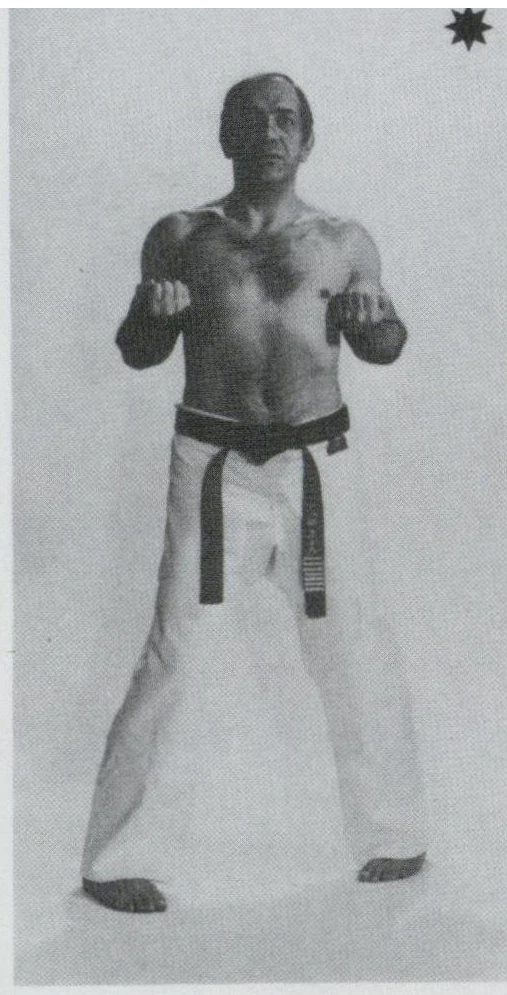
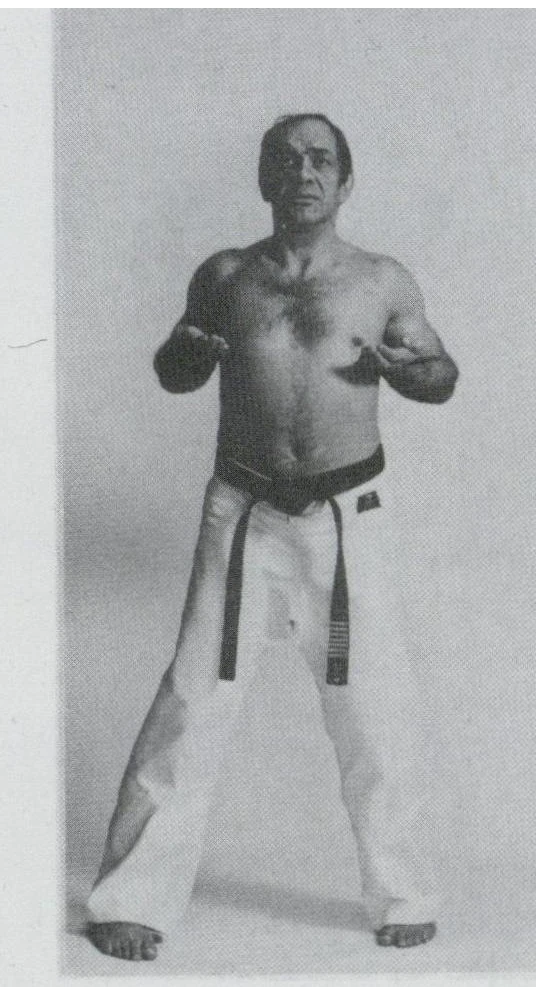
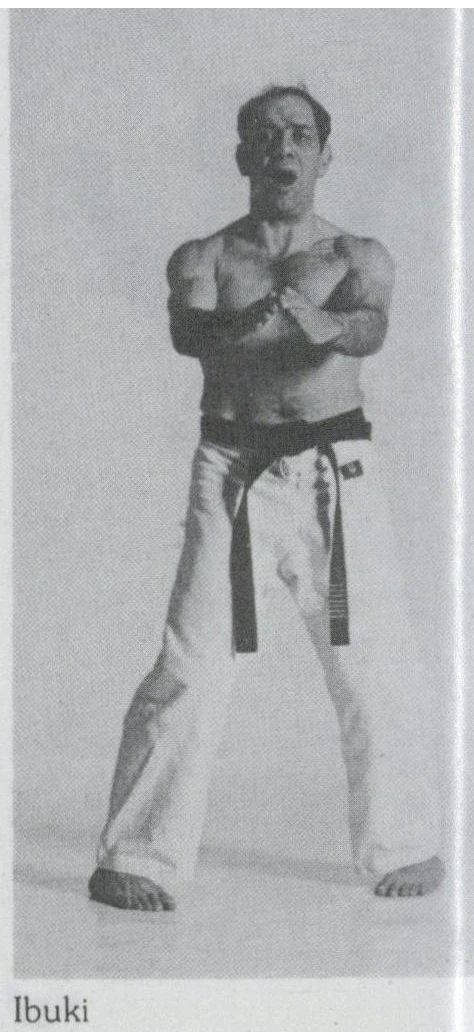
Again quickly grab with both hands directly in front of you, quickly pull back both hands closed to the ready punch position and execute a morote yonhon nukite with ibuki (figs. 53 to 56).
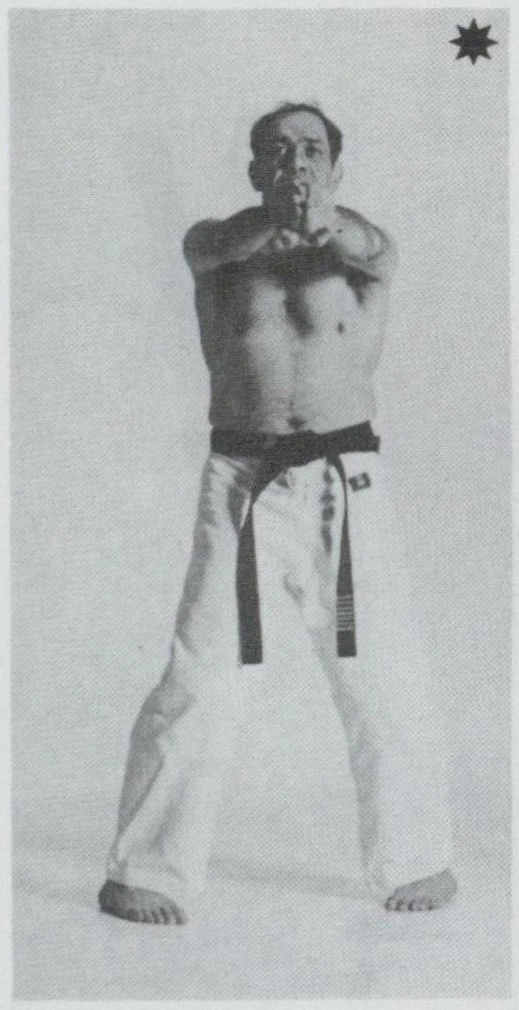
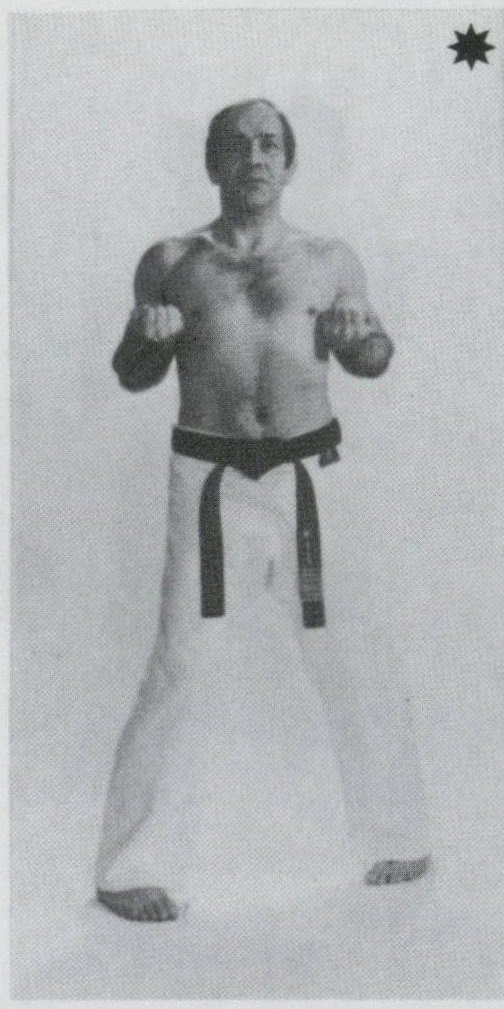
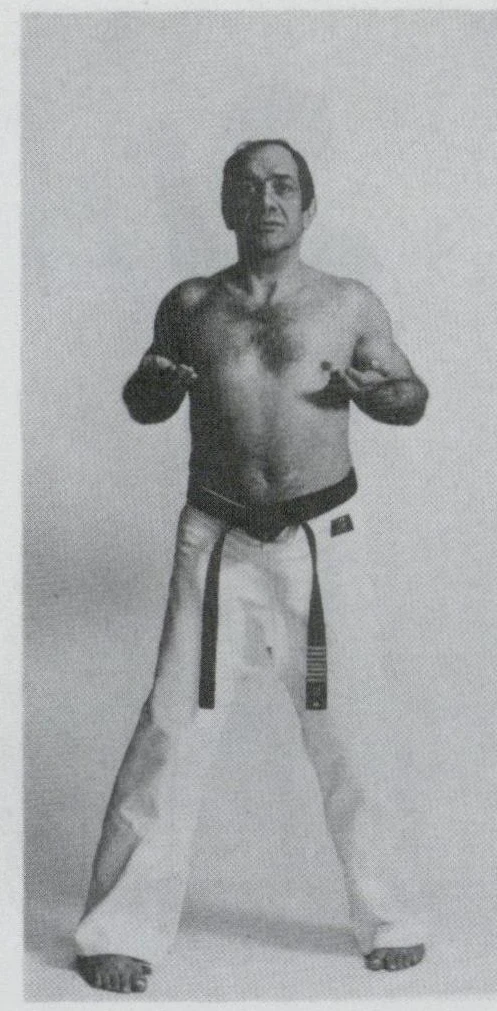
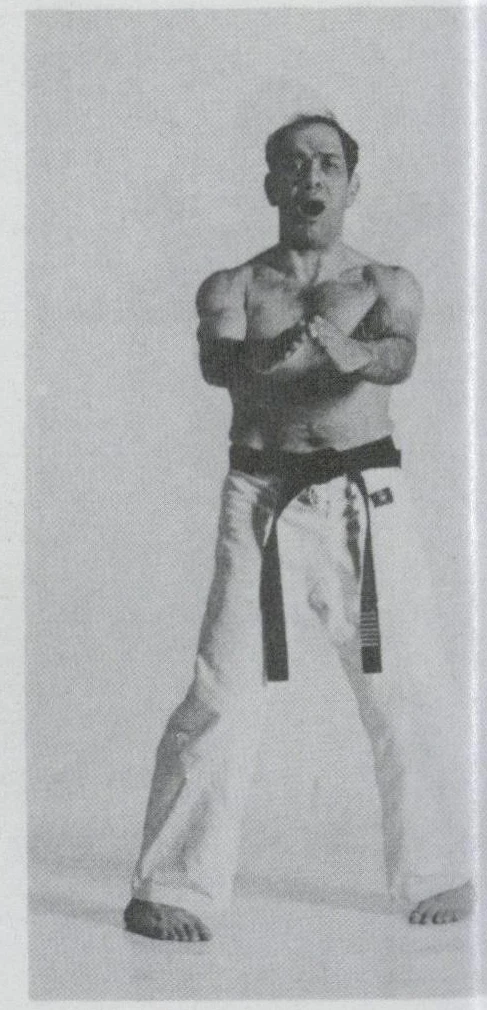
Repeat the last sequence of grabbing, pulling back the hands closed and execute a morote yonhon nukite with ibuki (figs. 57 to 60).
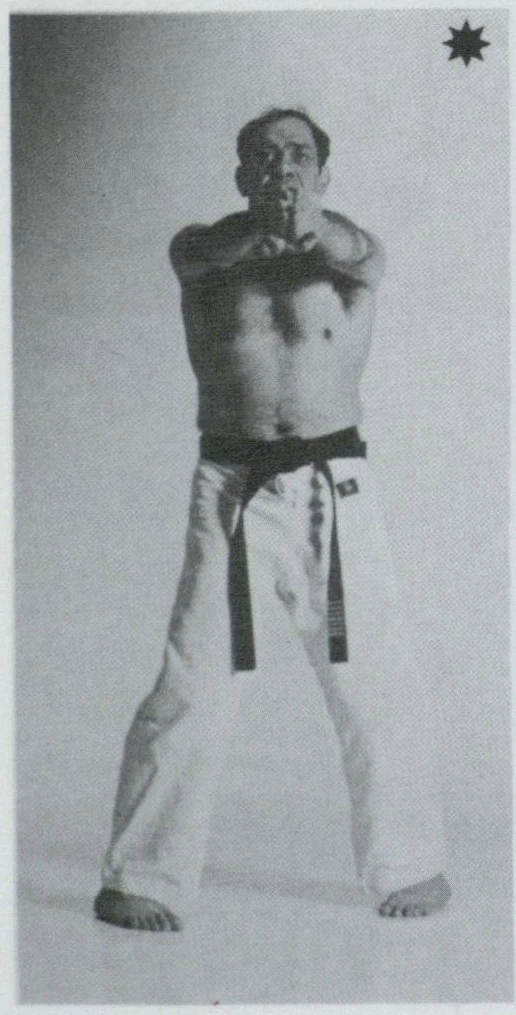
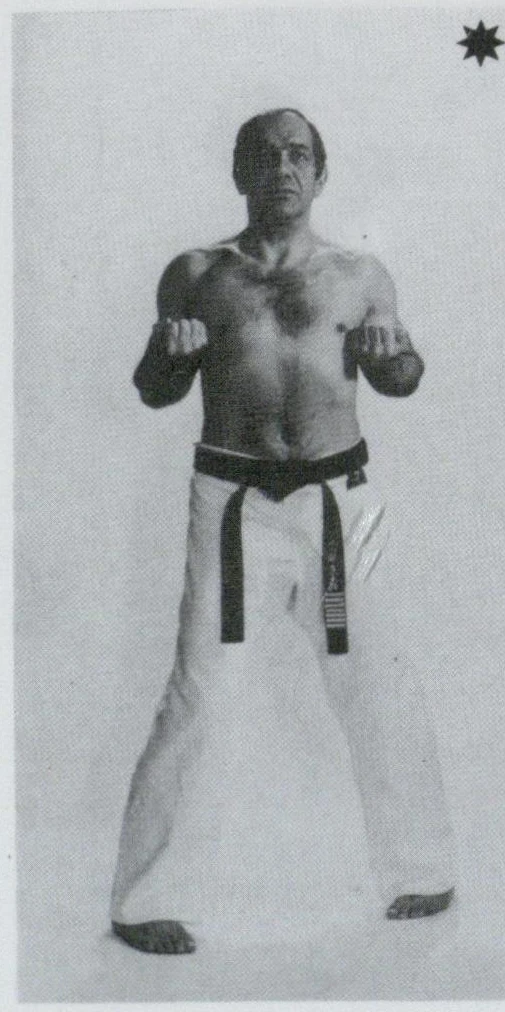
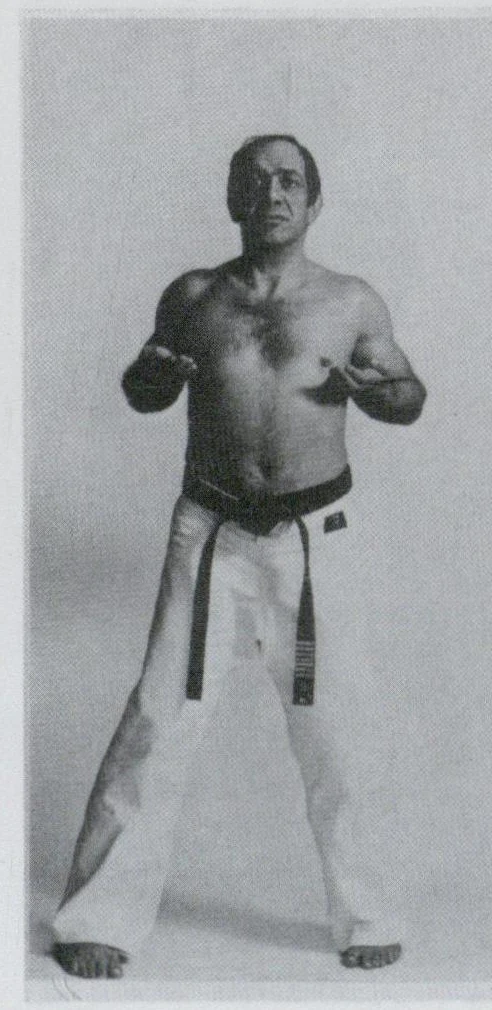
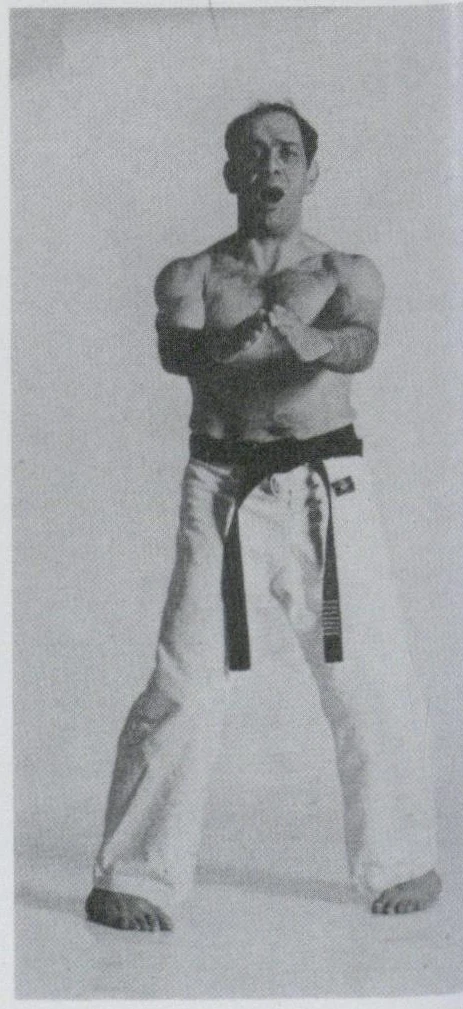
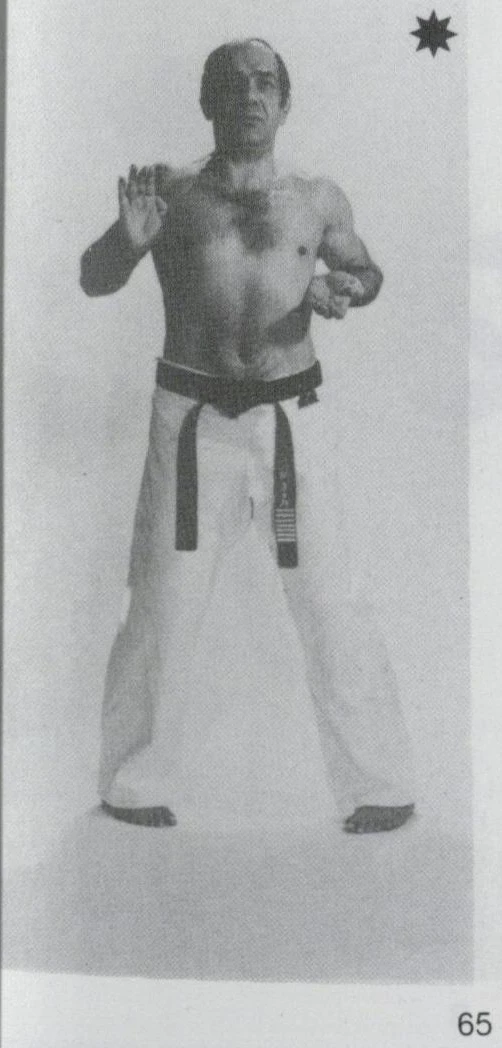
Quickly move back with the right leg into left sanchin dachi, position both hands in preparation for shuto mawashi uke (fig. 61).
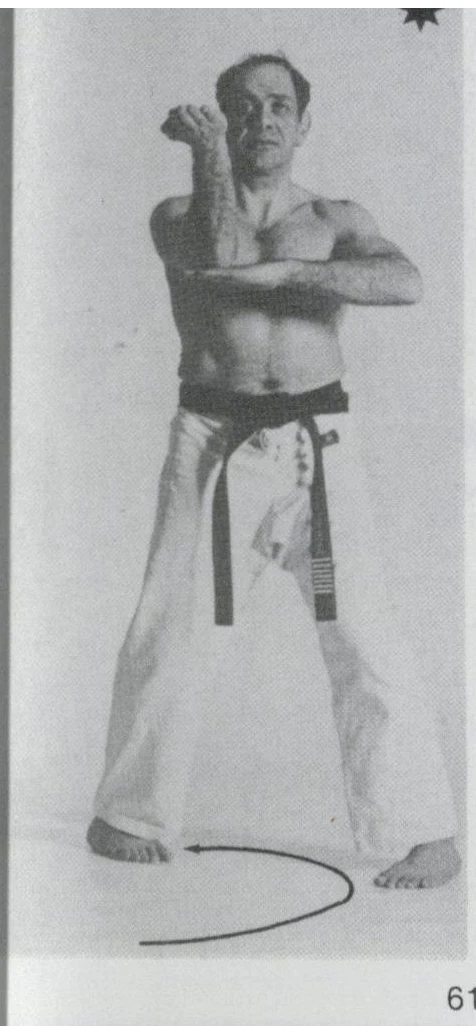
Quickly complete the shuto mawashi uke (figs. 62 to 64). Inhale and execute morote shotei uchi, right hand jodan left hand gedan, with ibuki (figs. 65 and 66).
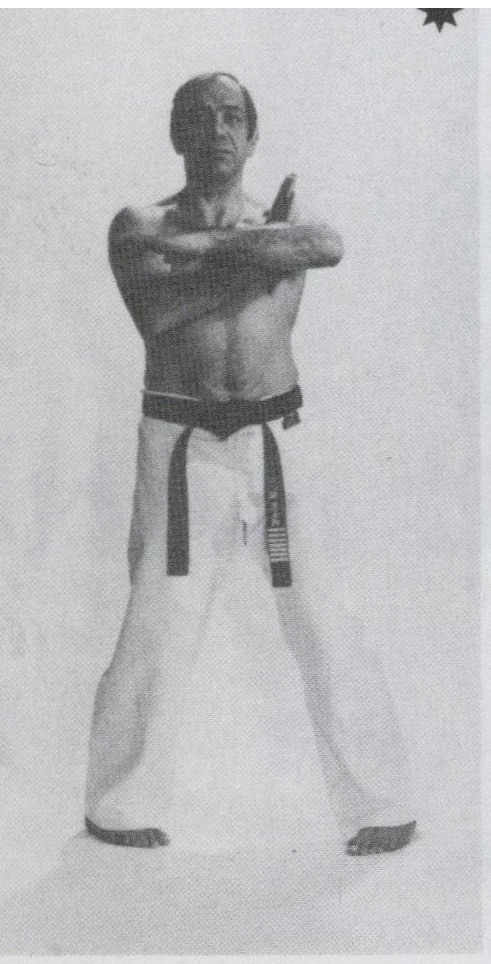
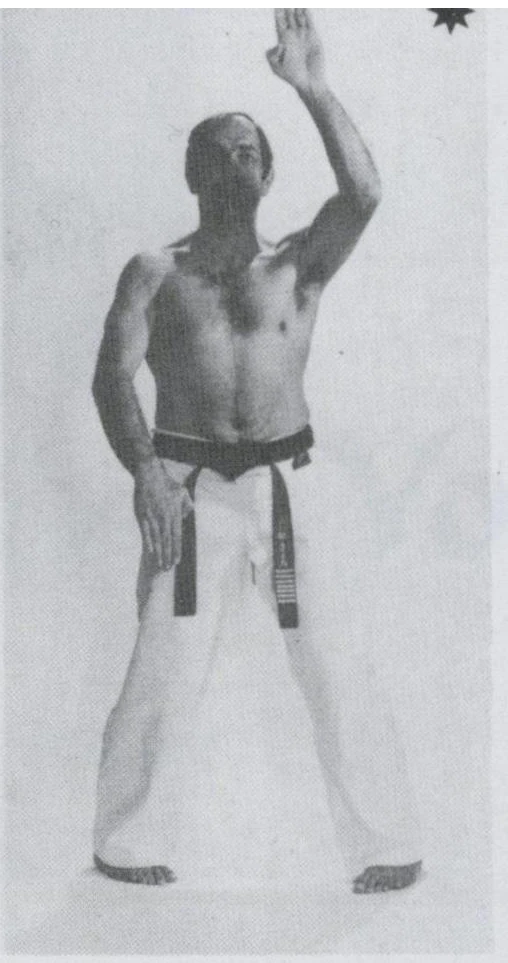
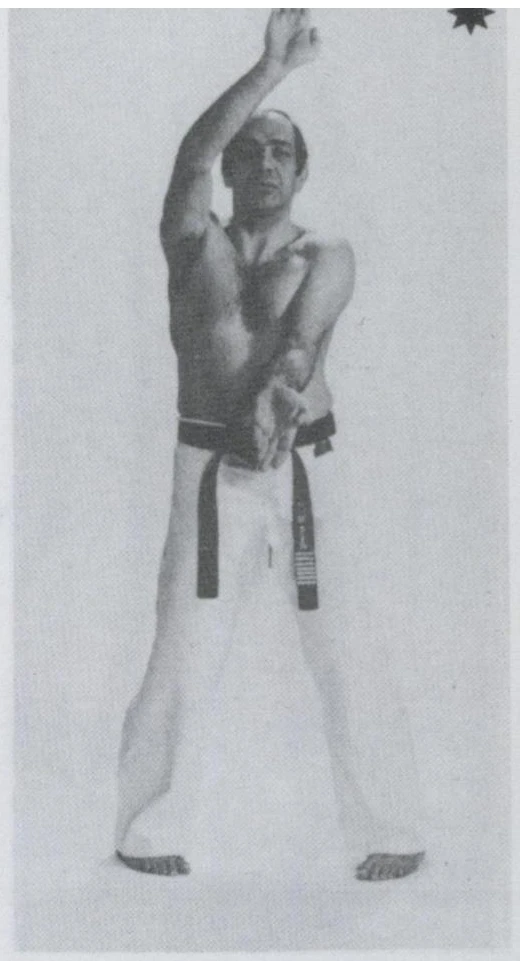
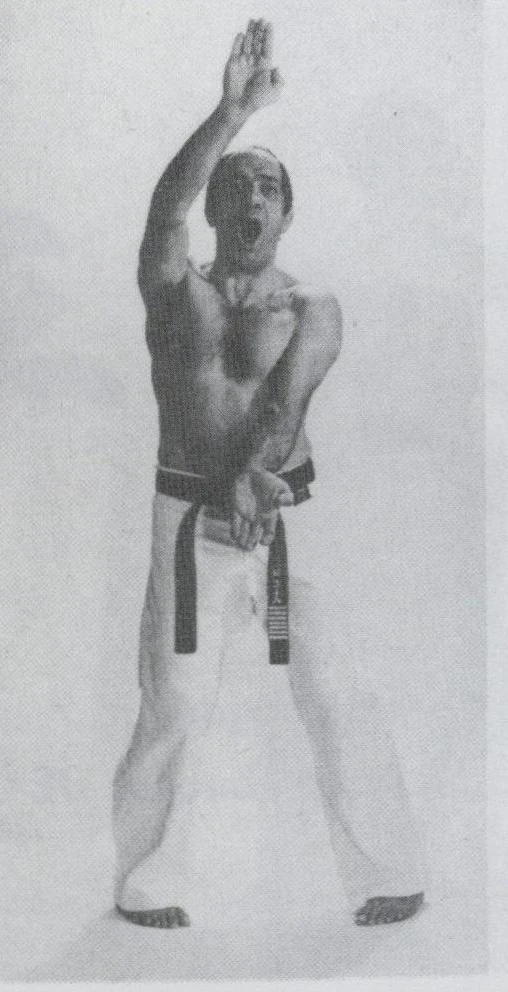
Quickly move back with the left foot into right sanchin dachi position both hands forward and quickly execute shuto mawashi uke, inhale and execute morote shotei uchi, left hand jodan right hand gedan with ibuki (figs. 67 to 72).
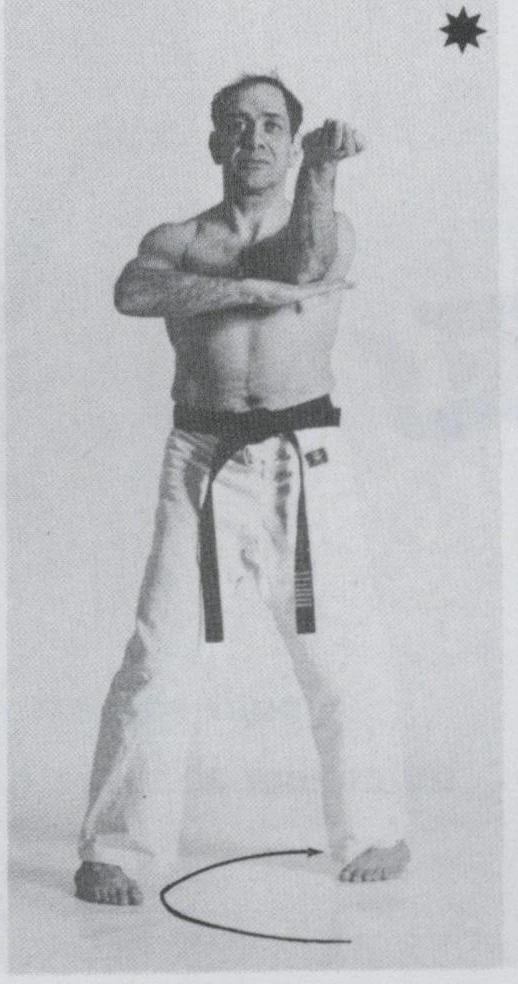
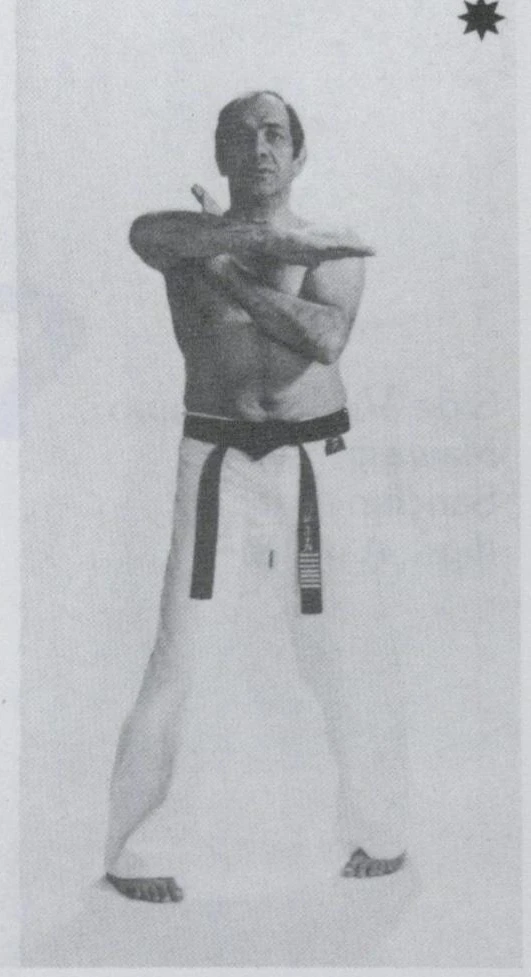
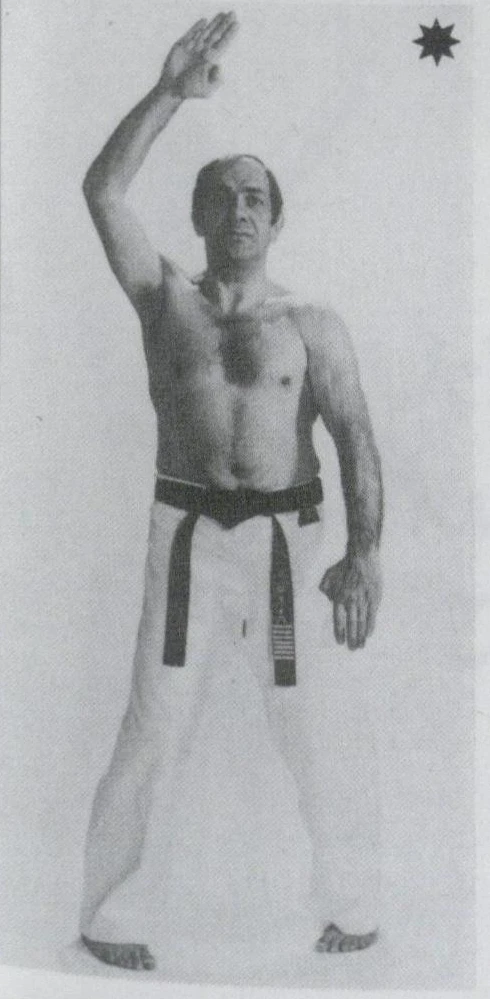
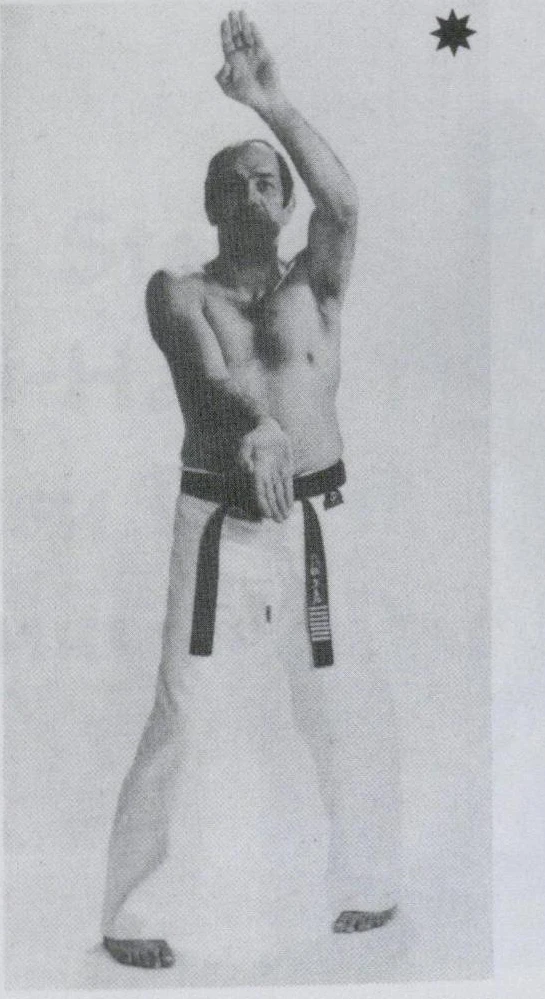
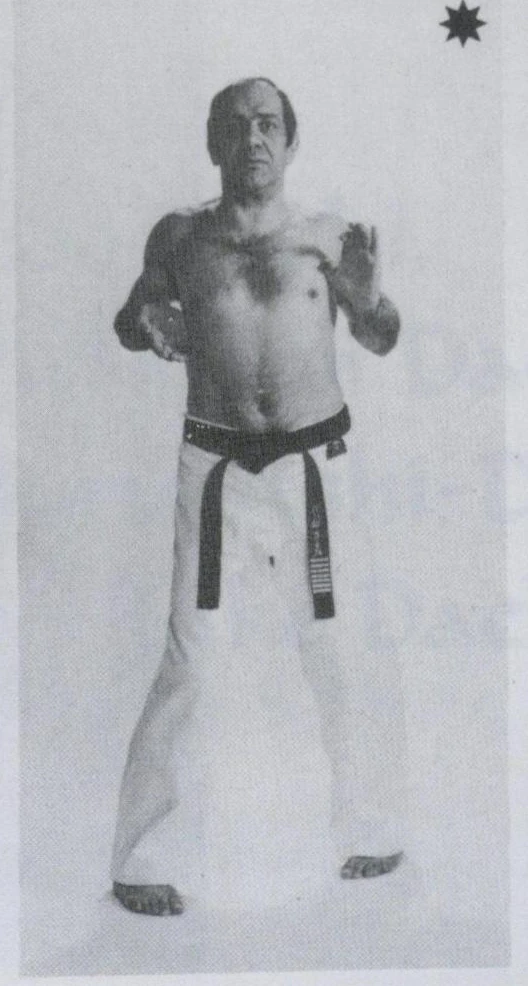
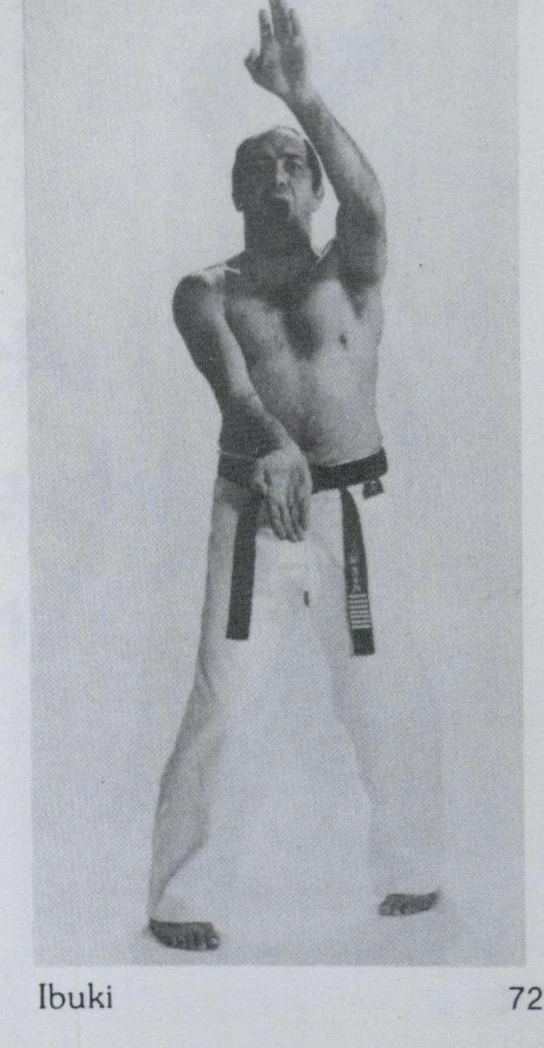
The kata is completed by moving the right foot back into musubi dachi (fig. 73) and the mokuso position is retained (fig. 74) until the command “Naore” when the fudo dachi position is taken (fig. 75).
Ready to Start Training?
Train with us in Wimbledon and start working towards your first grading.
Join Our Classes